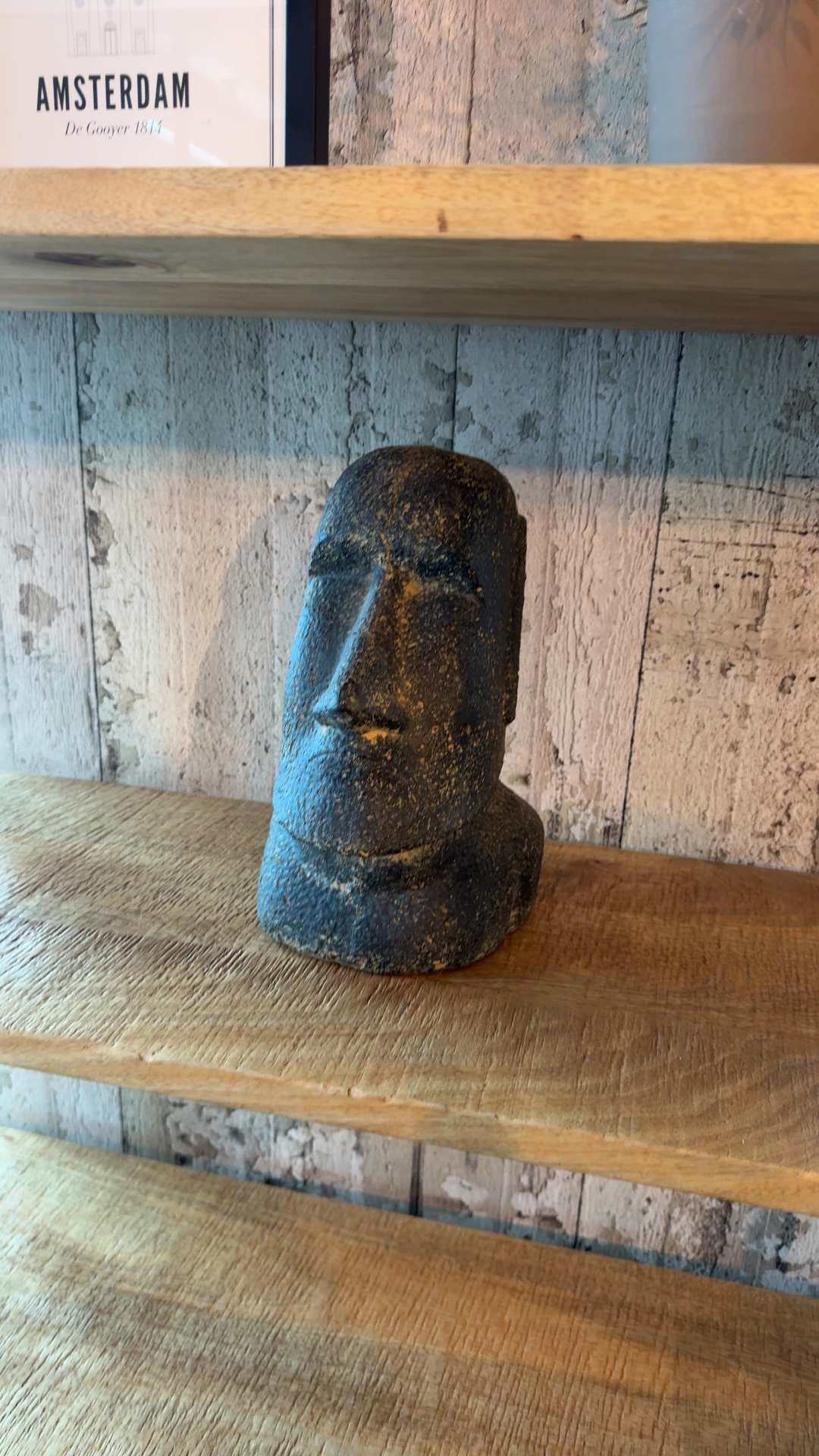
Decorative Moai Head Sculpture
QUICK FACTS
Categories
Era
Post-2000
Origin
🌍 International
Rarity
Common (2/10)
Discovered
Jan 29, 2026
1 months ago
DESCRIPTION
This appears to be a modern decorative sculpture, crafted to resemble a Moai head from Easter Island (Rapa Nui). It is made from a composite or concrete-like material, possibly resin, with an intentionally textured, weathered finish designed to mimic ancient stone. The granular surface gives it an aged, eroded aesthetic. The form is a simplified representation of the distinctive elongated facial features and head shape typical of the colossal Moai statues, rendered as a bust or head-only piece.
CULTURAL ECHOES
Where This Object Echoes
The original Moai statues are iconic examples of monumental sculpture, reflecting ancestral veneration and spiritual power.
Stylized reproductions of ancient artifacts, especially those with strong silhouettes like the Moai, are popular elements in modern interior design, often used to add character or a 'global' aesthetic.
Meaning Through Time
Deified ancestors, sacred guardians, symbols of chiefly power and spiritual connection.
Objects of anthropological study and mystery, symbolizing an enigmatic lost civilization.
Popular culture icon, decorative motif, symbol of ancient wisdom, mystery, or even whimsical kitsch, often divested of original sacred meaning.
HISTORICAL STORY
DID YOU KNOW?
The largest Moai ever carved, known as Paro, stands over 33 feet (10 meters) tall and weighs approximately 82 tons.
The Moai were primarily carved from volcanic tuff found at the Rano Raraku quarry on Easter Island, and then were controversially moved across the island for placement on stone platforms called 'ahu'.
MATERIAL & CONDITION
Surface
The surface is rough and granular, resembling weathered volcanic rock or aged concrete. There are visible specks and irregularities in the dark gray material, with lighter, possibly beige or white, flecks embedded or applied to create a distressed, faux-ancient appearance. The texture is consistent and appears uniform across the piece.
Weight & Feel
Given its size and the apparent material, it likely has a moderate to substantial weight, providing stability. It probably feels solid for its dimensions, heavier than plastic but lighter than solid stone.
Condition
The object appears to be in very good condition with no obvious chips, cracks, or significant damage. The 'weathered' effect is intentional and part of its design, not indicative of actual age or wear.
RARITY ANALYSIS
Older mass-produced items still widely available. Easy to find on eBay, antique malls, and estate sales in large quantities.
Typical Characteristics
- Mass produced historically
- High survival rate
- Readily available everywhere
EXPERT ANALYSIS
Decorative Arts Specialist
Confidence is high due to the clear visual evidence of modern manufacturing techniques and materials, which are distinct from ancient stone carving. The 'aged' aesthetic is clearly applied rather than developed organically over centuries.
KEY EVIDENCE
- 1Textured, granular surface suggestive of a composite/concrete material rather than carved stone.
- 2Overall form is a simplified, stylized representation consistent with modern decorative pieces.
- 3Lack of authentic tool marks, patina, or wear patterns expected from an ancient artifact.
- 4The intentional 'weathered' finish is a common aesthetic choice for contemporary reproductions.
WHAT WOULD IMPROVE CERTAINTY
- →Examine base for any maker's marks, labels, or production stamps.
- →Perform a 'tap test' to assess if the material is solid or hollow.
- →If possible, determine the exact composition of the material (e.g., resin composite, concrete).
ESTIMATED VALUE
Updated: Feb 27, 2026
- Market comparables from auctions & retail
- Condition, completeness & craftsmanship
- Current collector demand & trends
- Low = quick sale, high = patient seller
For informational purposes only, not a formal appraisal.

ABOUT DECORATIVE OBJECTS
Ceramics, silver, porcelain, glassware, and decorative arts.
Browse all Decorative ObjectsSHARE THIS CURIOSITY
Have your own curiosities to discover?
Scan Your Curiosity
COMMENTS
No comments yet. Be the first to share your thoughts!
Sign in to leave a comment