Wall-Mounted Organic Form Sculptural Tiles - Silver Glaze
QUICK FACTS
Categories
Era
Late 20th Century - Present
Origin
🌍 International
Brand
HKliving
Rarity
Average (4/10)
Discovered
Feb 25, 2026
3 days ago
DESCRIPTION
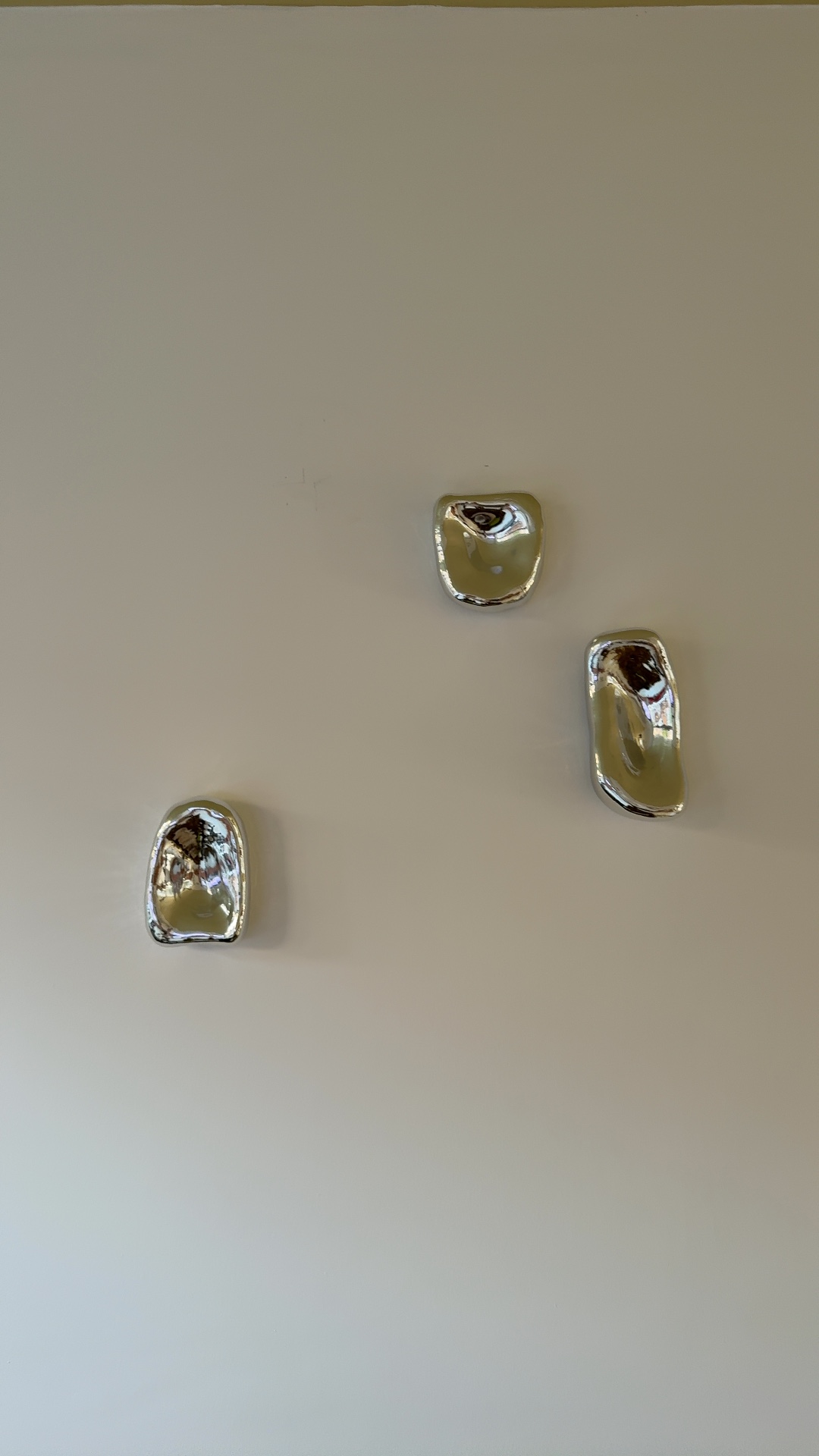
These appear to be a set of three wall-mounted decorative elements, likely ceramic given the high-gloss, metallic silver glaze. Their forms are amorphous and organic, suggesting a contemporary or modern design aesthetic. The reflective surface captures ambient light and color from the surroundings, creating a dynamic visual effect. Each piece has a recessed central area, contributing to their sculptural quality.
CULTURAL ECHOES
Where This Object Echoes
The emphasis on unique, handcrafted forms and experimental glazes often seen in the post-WWII studio pottery movement.
The use of organic shapes and fluid lines, though translated into a three-dimensional, decorative context, echoes the non-representational art of Abstract Expressionism.
Ritual & Ceremonial Use
- •Adding artistic elements to contemporary interior design to evoke specific moods or design themes, often serving as focal points in minimalist spaces.
HISTORICAL STORY
DID YOU KNOW?
Metallic glazes, like the silver seen here, are achieved by incorporating actual metal oxides or finely ground metals into the glaze formulation. These can include platinum, gold, or silver compounds, which are fired under specific conditions to develop their characteristic luster.
Organic forms in modern design often aim to evoke a sense of calm and natural beauty within a man-made environment, contrasting with the sharp, geometric lines often found in contemporary architecture.
MATERIAL & CONDITION
Surface
The surface exhibits a highly polished, mirror-like silver metallic glaze. Its lustrous quality causes strong reflections, suggesting a very smooth, non-porous finish. The undulations of the organic form are emphasized by the way light plays across the surface.
Weight & Feel
Based on the likely ceramic composition and size, these pieces would feel moderately substantial for wall art, not overtly heavy, but possessing a satisfying heft that speaks to their material density.
Condition
Visually, the glaze appears intact and uniform with no obvious chips, cracks, or significant abrasions. The reflective quality shows very minor surface irregularities, which are expected from high-gloss finishes and do not detract from their aesthetic.
RARITY ANALYSIS
Typical antique shop fare. Requires some searching but regularly available. This is where most genuine antiques fall.
Typical Characteristics
- Standard antique shop items
- Regularly available
- Moderate collector interest
EXPERT ANALYSIS
Decorative Arts Specialist
My confidence is good given the clear visual cues pointing to glazed ceramic material and organic sculptural forms. The primary unknowns involve specific attribution to a maker or a more precise date, which would typically require examination of the reverse side for marks.
KEY EVIDENCE
- 1High-gloss silver metallic glaze, characteristic of ceramic glazes.
- 2Organic, amorphous forms suggesting contemporary design.
- 3Wall-mounted installation implies decorative purpose.
- 4Lack of identifying marks visible in the images.
UNCERTAINTIES
- •No visible maker's marks or signatures, which are crucial for attribution and precise dating.
- •The forms are generic enough that they could be produced by numerous contemporary artists or manufacturers.
WHAT WOULD IMPROVE CERTAINTY
- →Examine the reverse of each piece for any maker's marks, labels, or hanging mechanisms.
- →Measure the dimensions of each individual piece to understand their scale.
- →A tap test on the ceramic body could reveal if there are any hidden cracks or internal damage.
- →Use a black light (UV light) to check for any professional repairs or invisible touch-ups on the glaze.
ESTIMATED VALUE
Updated: Feb 25, 2026
- Market comparables from auctions & retail
- Condition, completeness & craftsmanship
- Current collector demand & trends
- Low = quick sale, high = patient seller
For informational purposes only, not a formal appraisal.

ABOUT DECORATIVE OBJECTS
Ceramics, silver, porcelain, glassware, and decorative arts.
Browse all Decorative ObjectsSHARE THIS CURIOSITY
Have your own curiosities to discover?
Scan Your Curiosity
COMMENTS
No comments yet. Be the first to share your thoughts!
Sign in to leave a comment