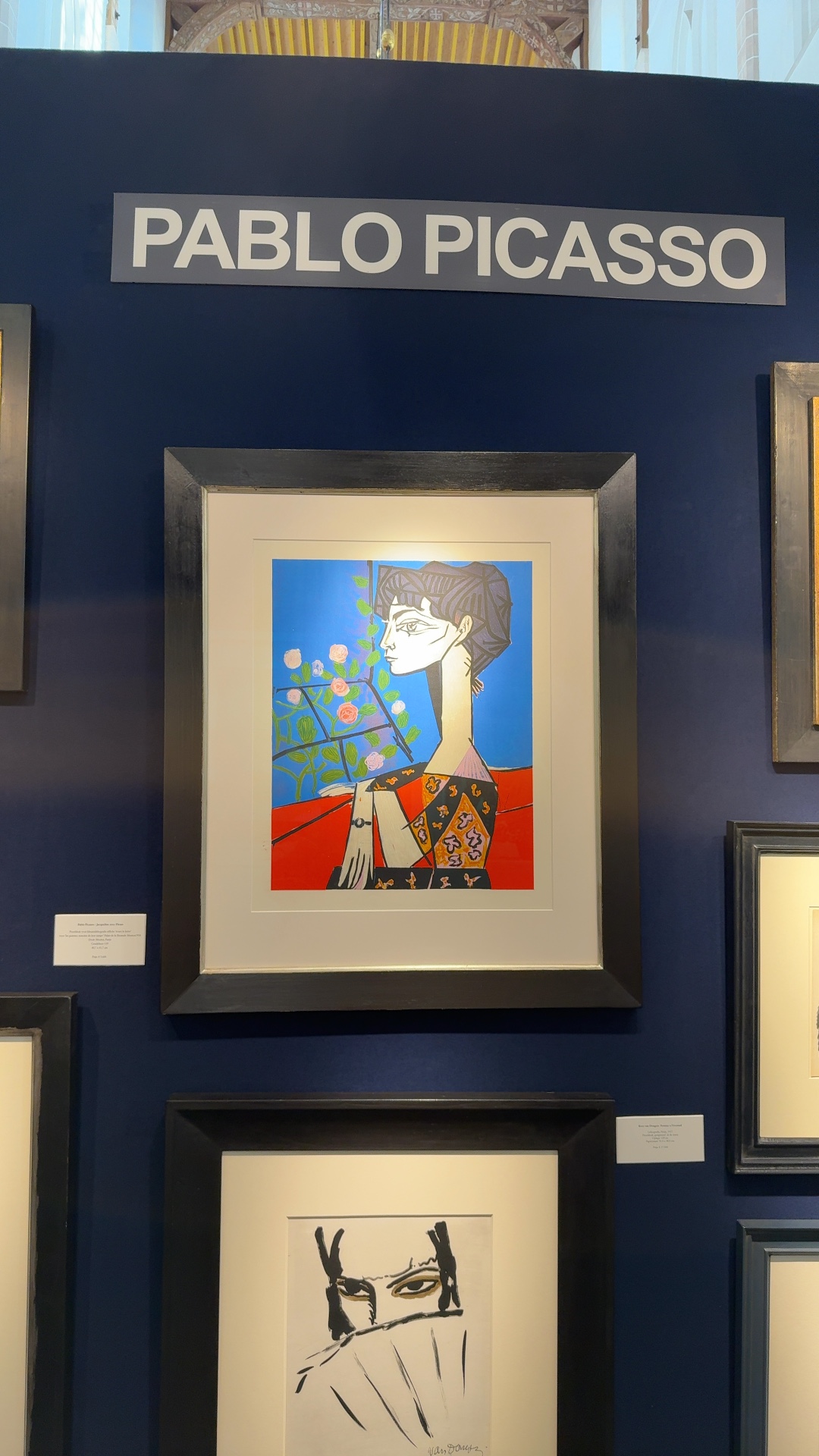
Femme à la Fenêtre (Woman at the Window), after Pablo Picasso
Estimated value
$1,500 - $4,500Rarity
Uncommon(5/10)Type
Museum ObjectCategory
Prints & PostersBrand
Atelier MourlotEra
c. 1970-1990Origin
🇫🇷 FranceArtist / Creator
After Pablo PicassoAuthenticity
FEMME À LA FENÊTRE (WOMAN AT THE WINDOW), AFTER PABLO PICASSO: IDENTIFICATION
This is a fine art print after Pablo Picasso's original 1952 painting, "Femme à la Fenêtre." The subject is Françoise Gilot, his partner and muse during that period. From a connoisseur's perspective, the print's execution is notable for its exceptionally flat, opaque, and unmodulated color planes, particularly in the vibrant blue background and red foreground. This quality, along with the razor-sharp edges between colors, strongly suggests the technique is serigraphy (screenprinting), a method for such graphic precision. While Picasso himself was a master of lithography and linocut, high-quality serigraphic editions like this were often produced after his major works by specialist workshops, such as that of Guy Spitzer, to meet market demand.
Compare with other prints in the archive: Miniature Print of Rembrandt's 'The Night Watch' in Rococo-Style Frame, Set of Four Prints after Henri Matisse's "Blue Nudes" (Nus Bleus I-IV), Wouter Tulp, 'Erden aan wie wij zijn' (We are what we are), Print, 1999.
CROSS-CULTURAL PARALLELS
Where This Object Echoes
This work is emblematic of the post-war European avant-garde centered in Paris, where artists like Matisse, Chagall, and Léger similarly explored bold color and simplified form.
Picasso's lifelong fascination with the stylized, geometric forms of traditional African masks and sculpture is a foundational 'echo' in his fragmentation and reinterpretation of the human face.
Ritual & Ceremonial Use
- •The collecting of limited-edition prints by modern masters became a significant 20th-century cultural practice, allowing connoisseurs to build historically important collections without the immense cost of unique paintings.
Meaning Through Time
In early Cubism, fragmented portraits signified a radical, analytical deconstruction of reality and perspective.
In Picasso's late work, the same stylistic language is used more decoratively and lyrically, expressing emotional states and celebrating the human form rather than dissecting it.
PRINT LINEAGE
COLLECTOR NOTES
Picasso was an incredibly prolific printmaker, creating over 2,400 distinct editions. He treated printmaking not as a secondary medium for reproduction, but as a primary vehicle for experimentation, especially in lithography and linocut.
SCARCITY
Genuine antiques with fewer examples on the market. Named makers, documented provenance, or early production examples.
Rarity 5/10. Curiosa currently catalogues 11 prints items at rarity 5 or higher.
Typical Characteristics
- Limited production
- Named makers
- Growing collector demand
Confidence Factors
- The market for Picasso prints is vast and includes many unauthorized or purely decorative reproductions alongside valuable editions.
- Critical information for authentication—such as a signature, edition number, or printer's chop mark—is not visible in the images provided.
- The serigraphic technique, while resulting in high-quality prints, was a method less frequently used by Picasso's own hand compared to lithography, etching, or linocut.
- The value is entirely dependent on its status as a limited, authorized edition, which cannot be confirmed.
PRINT SPECIALIST'S TAKE
Museum-Trained Art Historian
Confidence is strong in identifying the source artwork and its general style, but moderate overall because the object's specific identity as a collectible hinges on details (signature, editioning) that are not visible. The assessment of it being a serigraph is based on strong visual cues but cannot be definitively confirmed without physical inspection.
KEY EVIDENCE
- 1The artwork is definitively identified as a version of Pablo Picasso's 1952 painting "Femme à la Fenêtre."
- 2The subject is clearly identifiable as Françoise Gilot, a key figure in Picasso's life and art of the period.
- 3The visual characteristics of the print—flat color, sharp edges—strongly point to serigraphy as the medium.
- 4The context of a gallery display with professional labeling suggests this is a formal, recognized edition rather than a simple poster.
- 5The style is characteristic of Picasso's post-war, synthetic period, blending Cubist structure with bold, expressive color.
UNCERTAINTIES
- •The edition size and any potential signature are not visible, which are the primary determinants of value.
- •The publisher or print workshop is unknown.
- •Without knowing the edition, it's impossible to distinguish this from a a high-quality decorative poster versus a valuable, collectible limited edition.
WHAT WOULD IMPROVE CERTAINTY
- →Photograph the area below the image, outside the mat, to locate any signature, edition numbering (e.g., '57/200'), or publisher's blind stamp.
- →Take a clear, readable photograph of the small white identification label visible to the left of the frame.
- →Examine the reverse of the frame for any gallery labels, inventory stickers, or authentication documents.
- →If it is a lithograph, the next step would be to look for the work in the definitive catalogues raisonnés of Picasso's prints, such as those by Bloch or Mourlot.
CONDITION & GRADE
Condition
From the photographs, the print appears to be in excellent condition, housed under glass in what seems to be a gallery or museum setting. The colors are brilliant and show no signs of fading (light damage), and there is no visible toning or 'mat burn' on the paper margins.
PRINT MARKET VALUATION
Updated: Feb 27, 2026
- Market comparables from auctions & retail
- Condition, completeness & craftsmanship
- Current collector demand & trends
- Low = quick sale, high = patient seller
For informational purposes only, not a formal appraisal.

SIMILAR CURIOSITIES
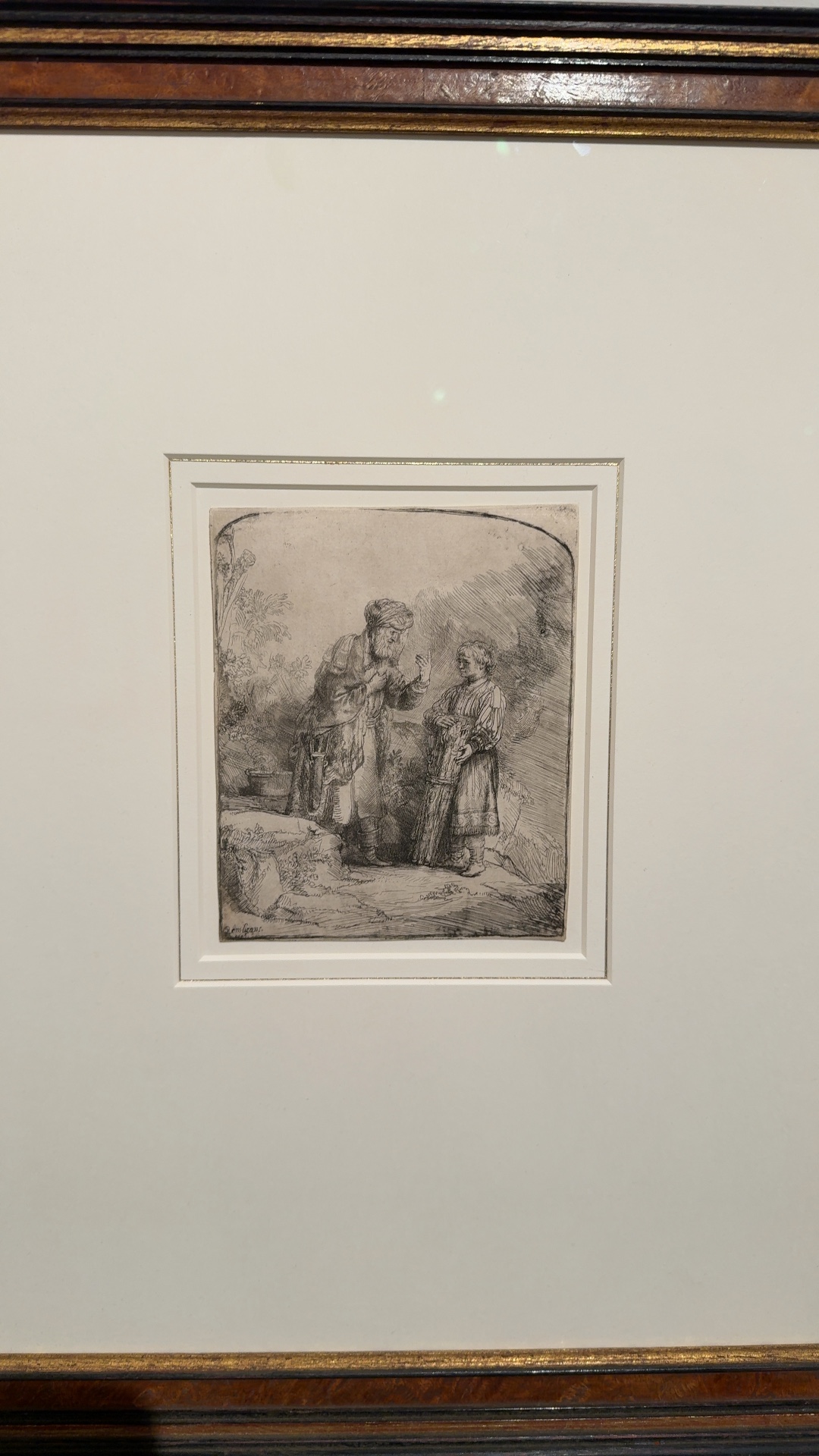
Abraham and Isaac (Bartsch 34), Etching after Rembrandt van Rijn
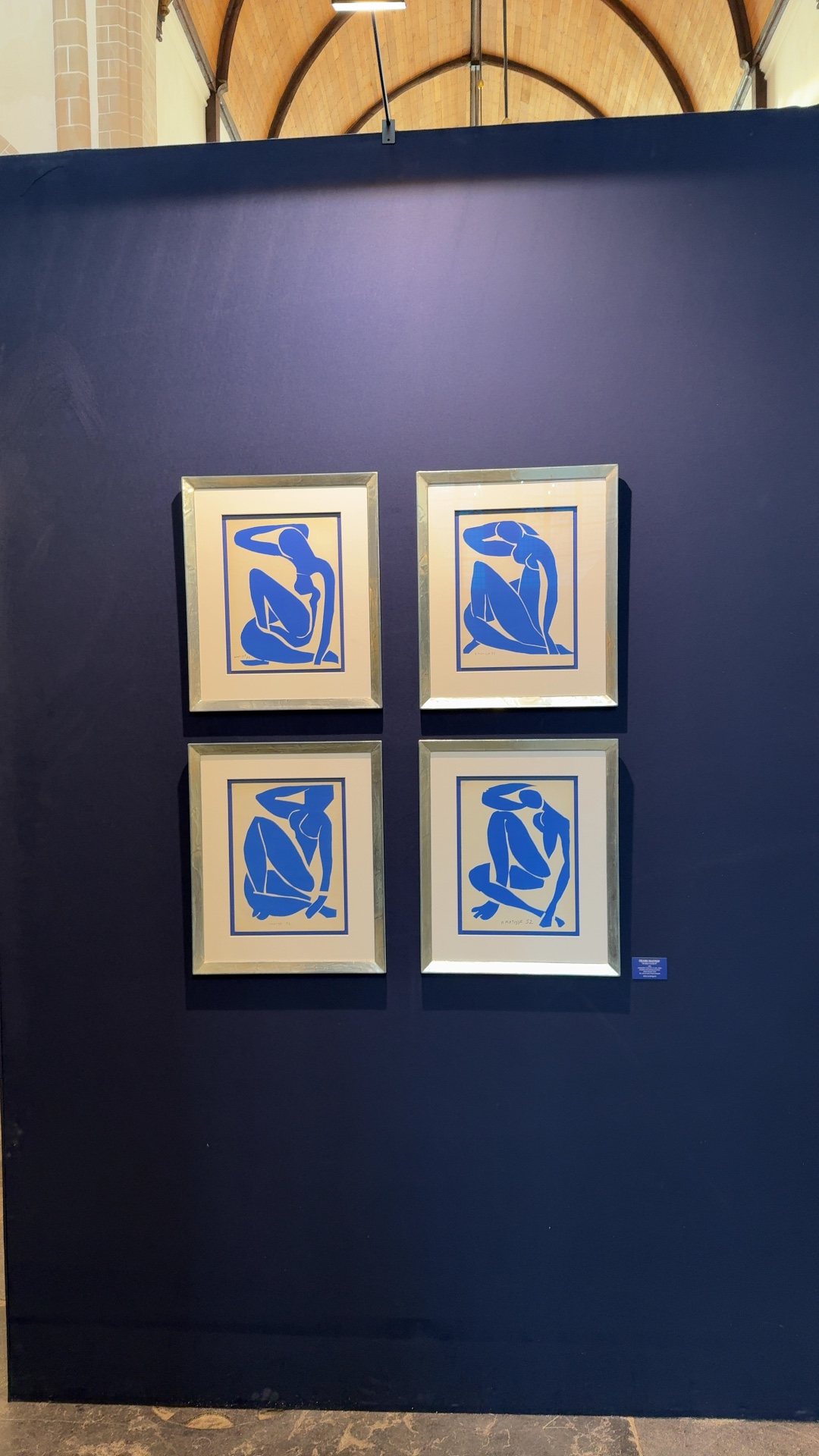
Set of Four Prints after Henri Matisse's "Blue Nudes" (Nus Bleus I-IV)
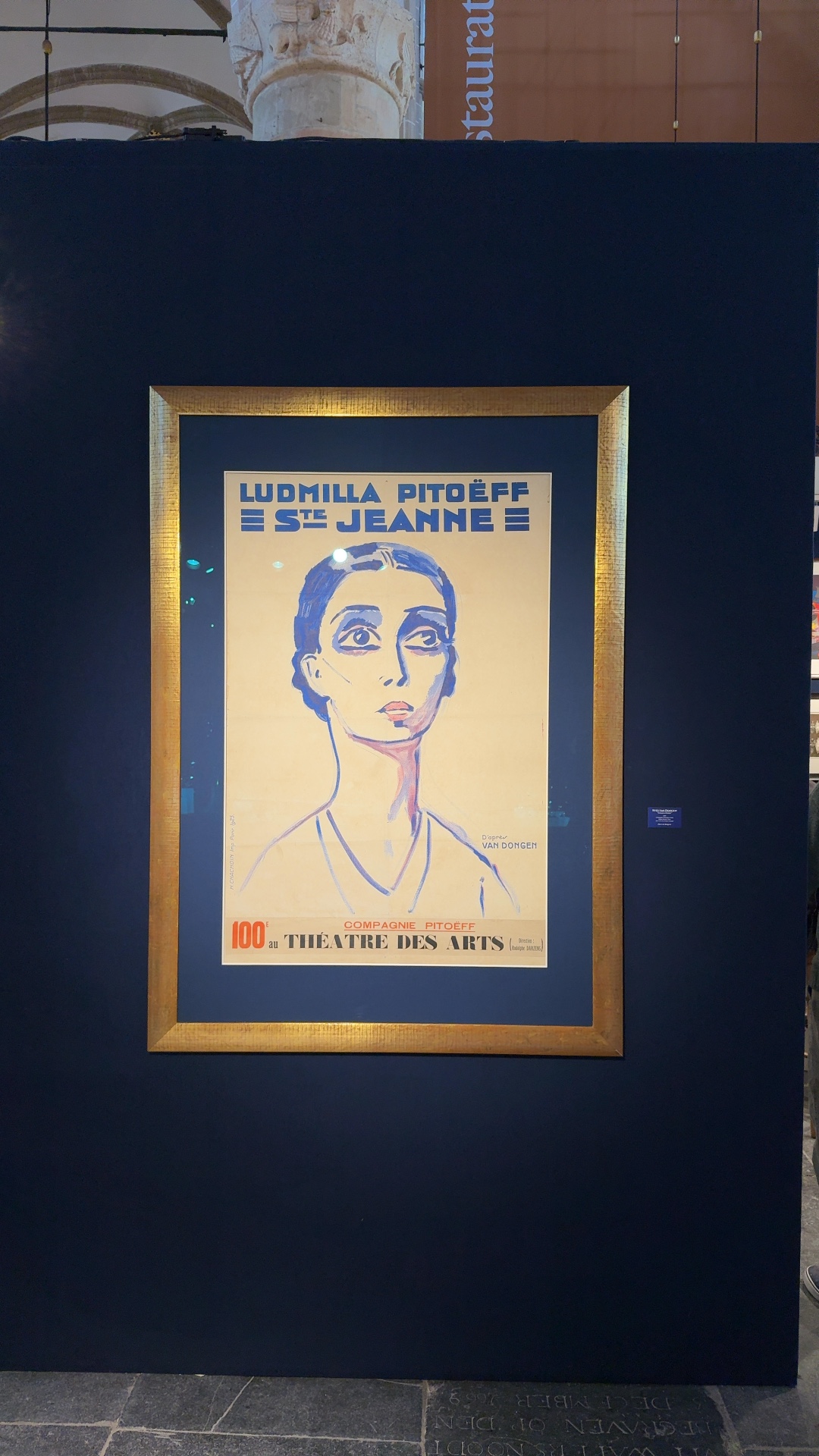
Kees van Dongen (after) - Ludmilla Pitoëff in 'Sainte Jeanne', 1925
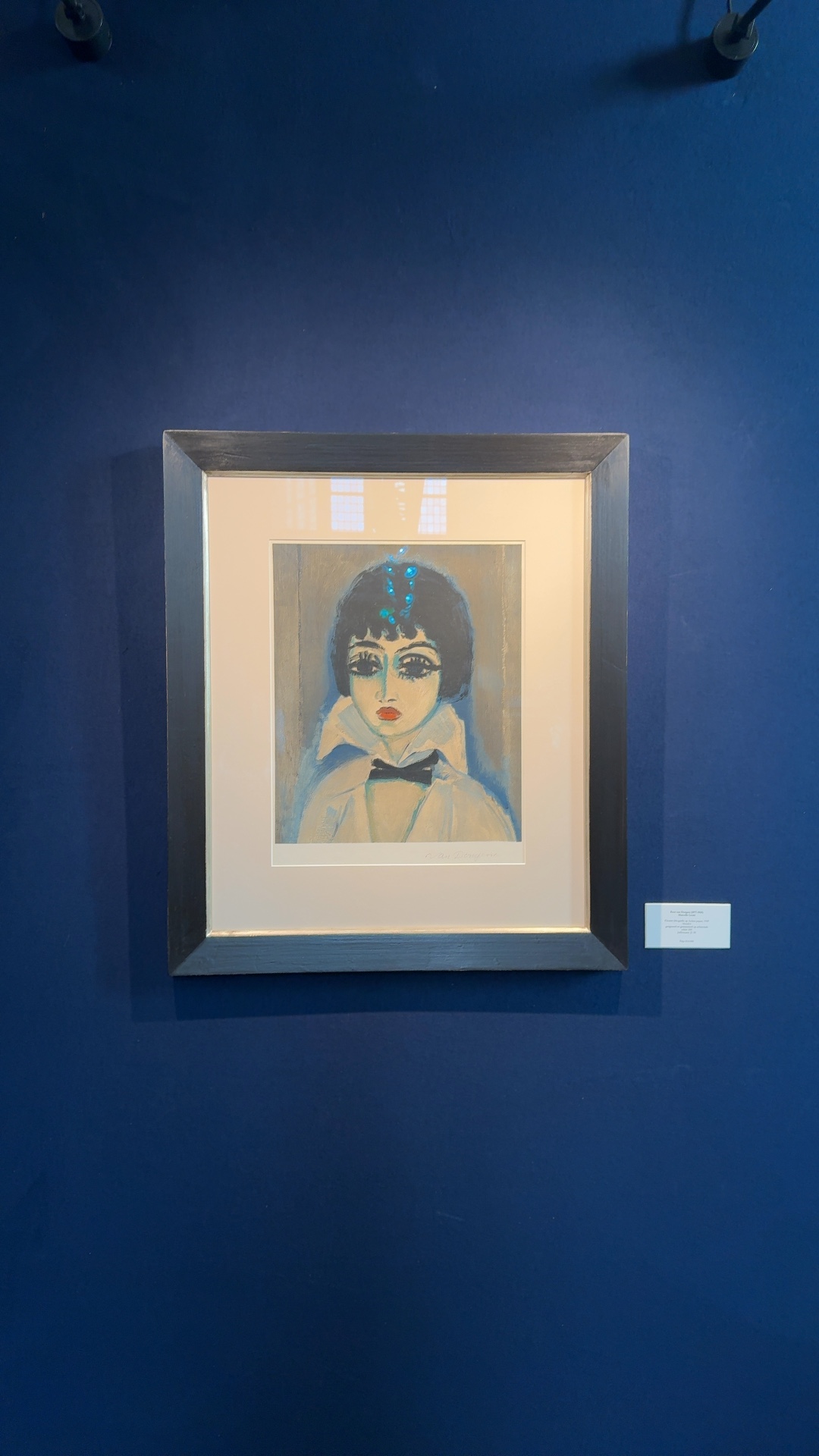
"Marcelle Léoni" Color Lithograph by Kees van Dongen
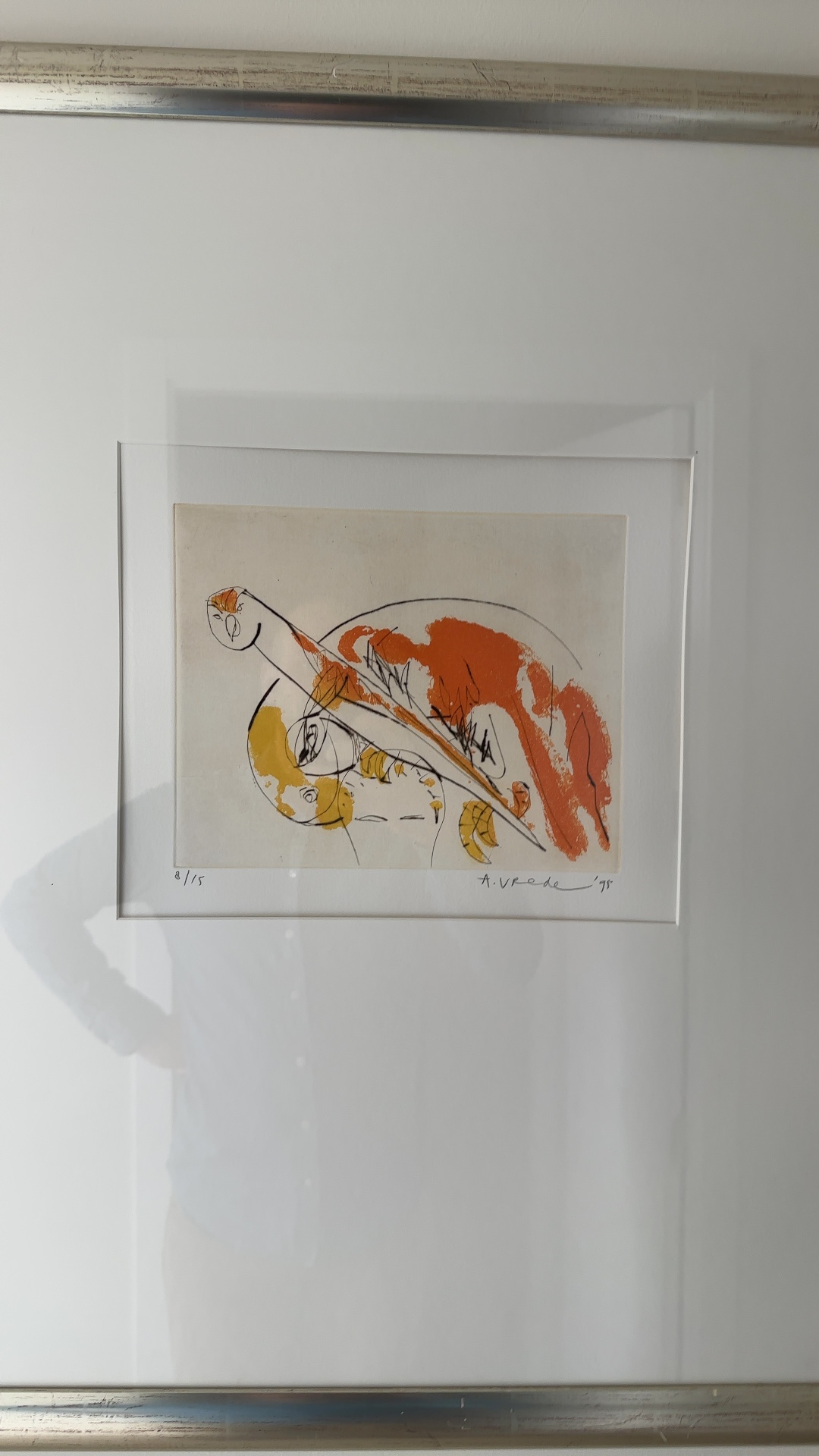
Abstract Chromatic Lithograph by A. Vrede
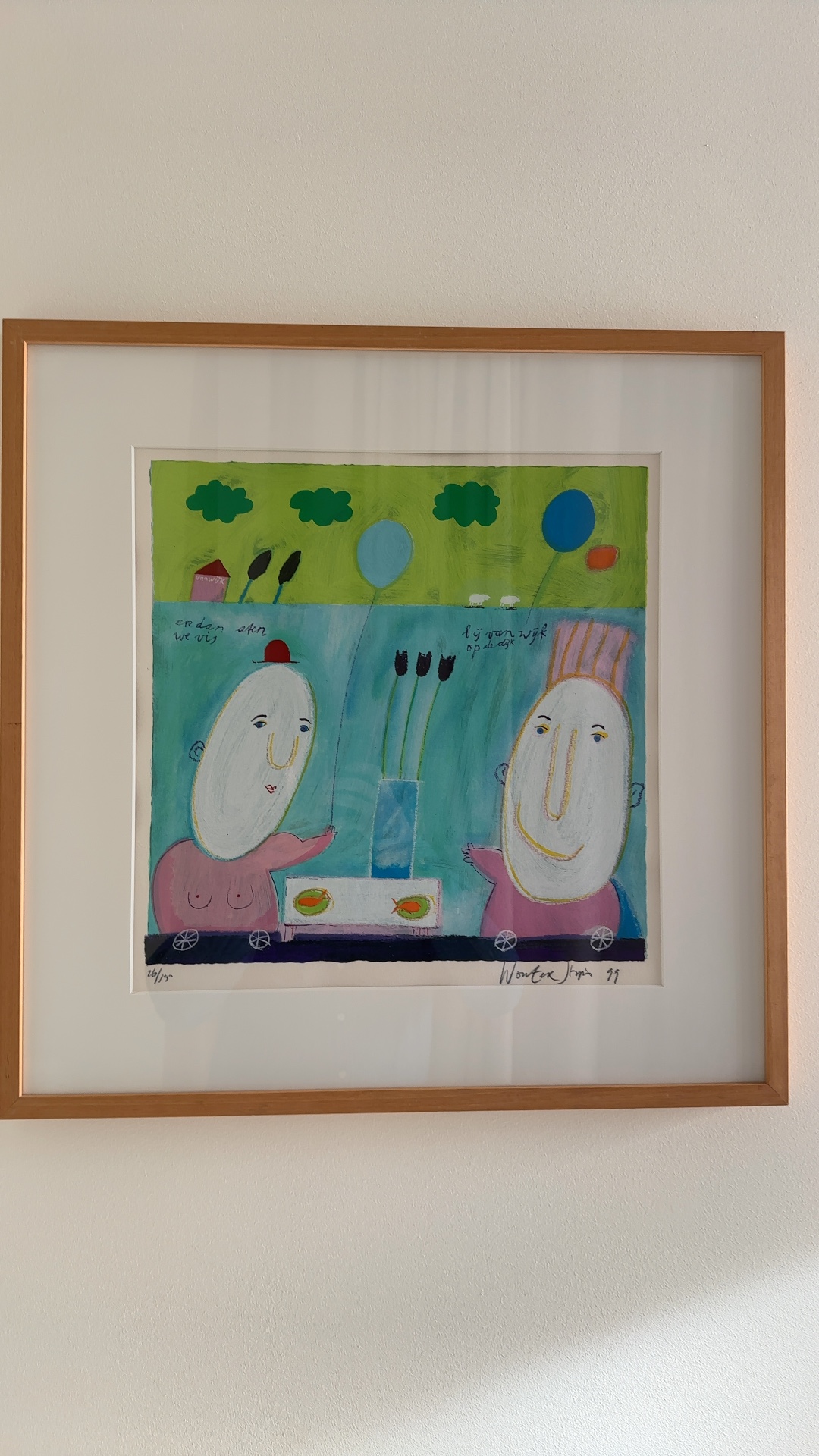
Wouter Tulp, 'Erden aan wie wij zijn' (We are what we are), Print, 1999
MORE FROM ATELIER MOURLOT
Browse all Atelier Mourlot collectiblesABOUT PRINTS & POSTERS
Vintage prints, posters, advertising signs, and graphic art.
Prints & Posters value and rarity guideSHARE THIS CURIOSITY
Have your own curiosities to discover?
Scan Your Curiosity
COMMENTS
No comments yet. Be the first to share your thoughts!
Sign in to leave a comment