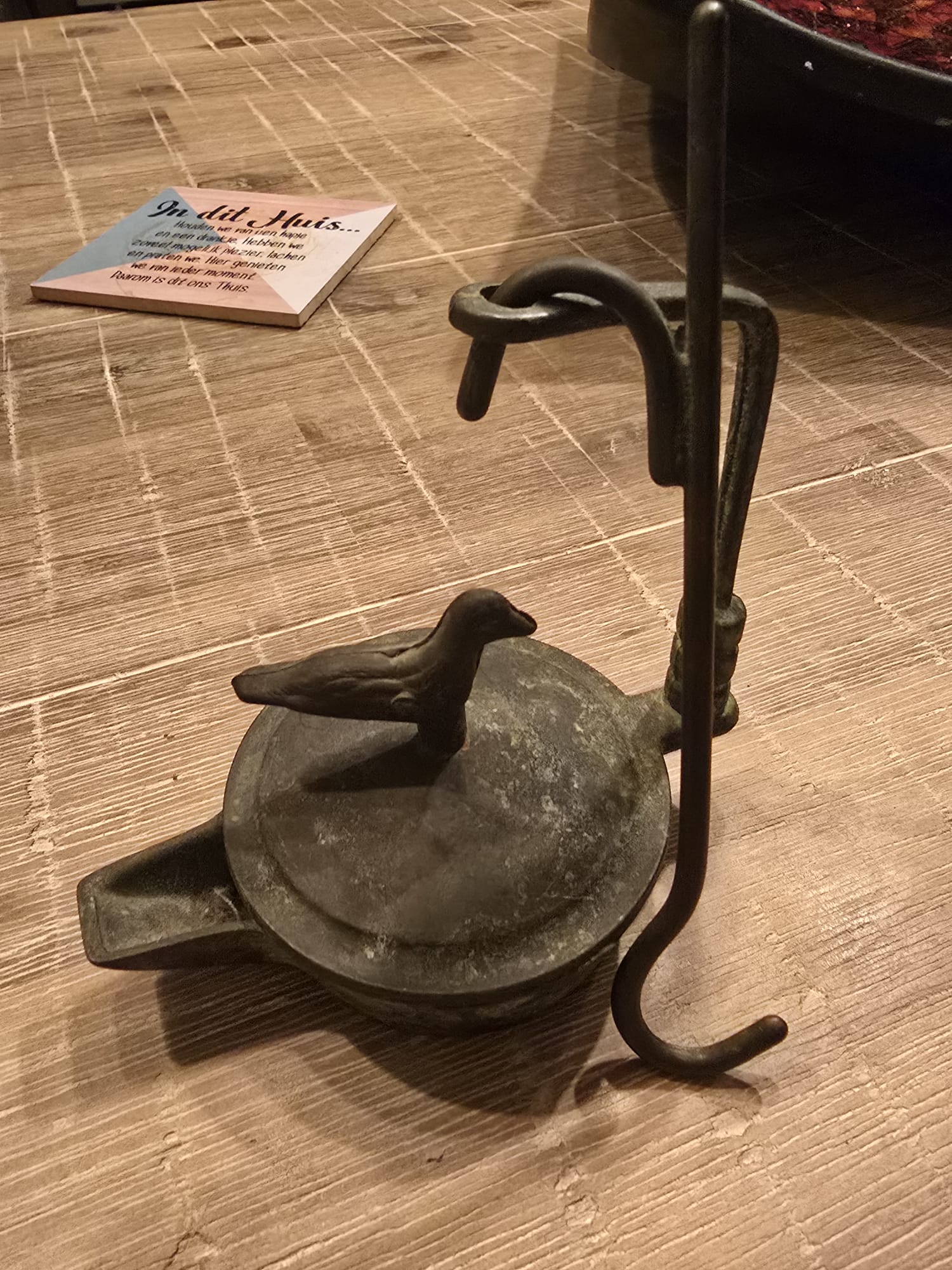
Antique-Style Cast Iron Oil Lamp on Stand
QUICK FACTS
Categories
Era
Early 20th Century to Contemporary
Origin
🌍 International
Rarity
Ordinary (3/10)
Discovered
Jan 17, 2026
1 months ago
DESCRIPTION
This appears to be a decorative oil lamp crafted from cast iron, featuring a covered reservoir with a spout for a wick and a decorative bird finial. It is presented on a freestanding iron stand with a hooked arm, likely designed to hold or suspend the lamp. The overall design evokes an antique aesthetic, though without specific maker's marks, its exact age is difficult to pinpoint from visuals alone.
CULTURAL ECHOES
Where This Object Echoes
Oil lamps, often made from bronze or terracotta with simple reservoirs and spouts, were ubiquitous across the Roman world.
The resurgence of decorative metalwork and the rise of cast iron production led to ornate and utilitarian oil lamps becoming common household items.
While this lamp isn't specifically Arts and Crafts, the emphasis on robust materials and functional, unadorned forms resonated with the movement's aesthetic.
Ritual & Ceremonial Use
- •Daily illumination in homes before electricity
- •Symbolic use in religious ceremonies or rites, representing light and knowledge
- •Decoration and atmosphere setting in domestic spaces
Meaning Through Time
Primarily a functional object for light, often with religious or symbolic undertones.
Evolved into decorative objects, reflecting advancements in design and materials, and serving both utility and aesthetic roles in the home.
Largely replaced by electric lighting, becoming purely ornamental, novelty items, or museum pieces, valued for historical or decorative appeal.
HISTORICAL STORY
DID YOU KNOW?
Before the invention of the electric light bulb, oil lamps were a staple in almost every home, providing light for reading, working, and social gatherings.
The use of animal motifs, such as the bird on this lamp, was a common artistic device in decorative arts throughout history, often symbolizing nature, freedom, or good fortune.
MATERIAL & CONDITION
Surface
The cast iron displays a dark, matte finish with considerable surface dust and some areas showing a slightly lighter, almost powdery residue, indicative of age or environmental exposure. The casting appears somewhat rudimentary, showing texture consistent with sand-casting methods, and there are no fine details on the bird finial, suggesting a utilitarian or mass-produced decorative intent.
Weight & Feel
Given the material, this lamp and stand would feel substantial and heavy for their size, characteristic of cast iron objects.
Condition
The lamp appears to be in good, aged condition with no obvious breaks or repairs. The surface shows a consistent patina and dust, which is to be expected for an older or antique-style iron object used for decorative purposes.
RARITY ANALYSIS
Standard antiques commonly found at estate sales and flea markets. Plentiful supply meets modest demand.
Typical Characteristics
- Moderate production runs
- Common at estate sales
- Entry-level collectibles
EXPERT ANALYSIS
Decorative Arts Specialist
I have moderate confidence in identifying this as a cast iron oil lamp and stand, with its design suggesting an antique-style piece. The lack of specific marks, however, prevents a more precise dating or maker attribution.
KEY EVIDENCE
- 1Cast iron construction with visible texture from casting process.
- 2Dark, matte surface with accumulated dust and patina consistent with age or antique styling.
- 3Functional design of an oil lamp with a covered reservoir and wick spout.
- 4Integrated stand and decorative bird finial.
- 5Lack of discernible maker's marks or specific design registrations.
UNCERTAINTIES
- •Absence of manufacturer's marks or hallmarks makes precise dating and origin difficult.
- •The overall design is classic and has been replicated decoratively for many decades, blurring the line between true antique and vintage reproduction.
- •Surface appearance is general for aged cast iron and doesn't offer unique identifiers without further examination.
WHAT WOULD IMPROVE CERTAINTY
- →Examine the underside of the lamp and the base of the stand for any impressed marks, stamps, or labels.
- →Inspect the seams and construction for signs of specific manufacturing techniques that could narrow down its age.
- →A gentle cleaning can sometimes reveal hidden details or marks beneath the dust and grime.
- →Assess the functionality of the lamp - is it designed to hold oil and a wick, or is it purely decorative?
ESTIMATED VALUE
Updated: Feb 26, 2026
- Market comparables from auctions & retail
- Condition, completeness & craftsmanship
- Current collector demand & trends
- Low = quick sale, high = patient seller
For informational purposes only, not a formal appraisal.
ABOUT DECORATIVE OBJECTS
Ceramics, silver, porcelain, glassware, and decorative arts.
Browse all Decorative ObjectsSHARE THIS CURIOSITY
Have your own curiosities to discover?
Scan Your Curiosity
COMMENTS
No comments yet. Be the first to share your thoughts!
Sign in to leave a comment