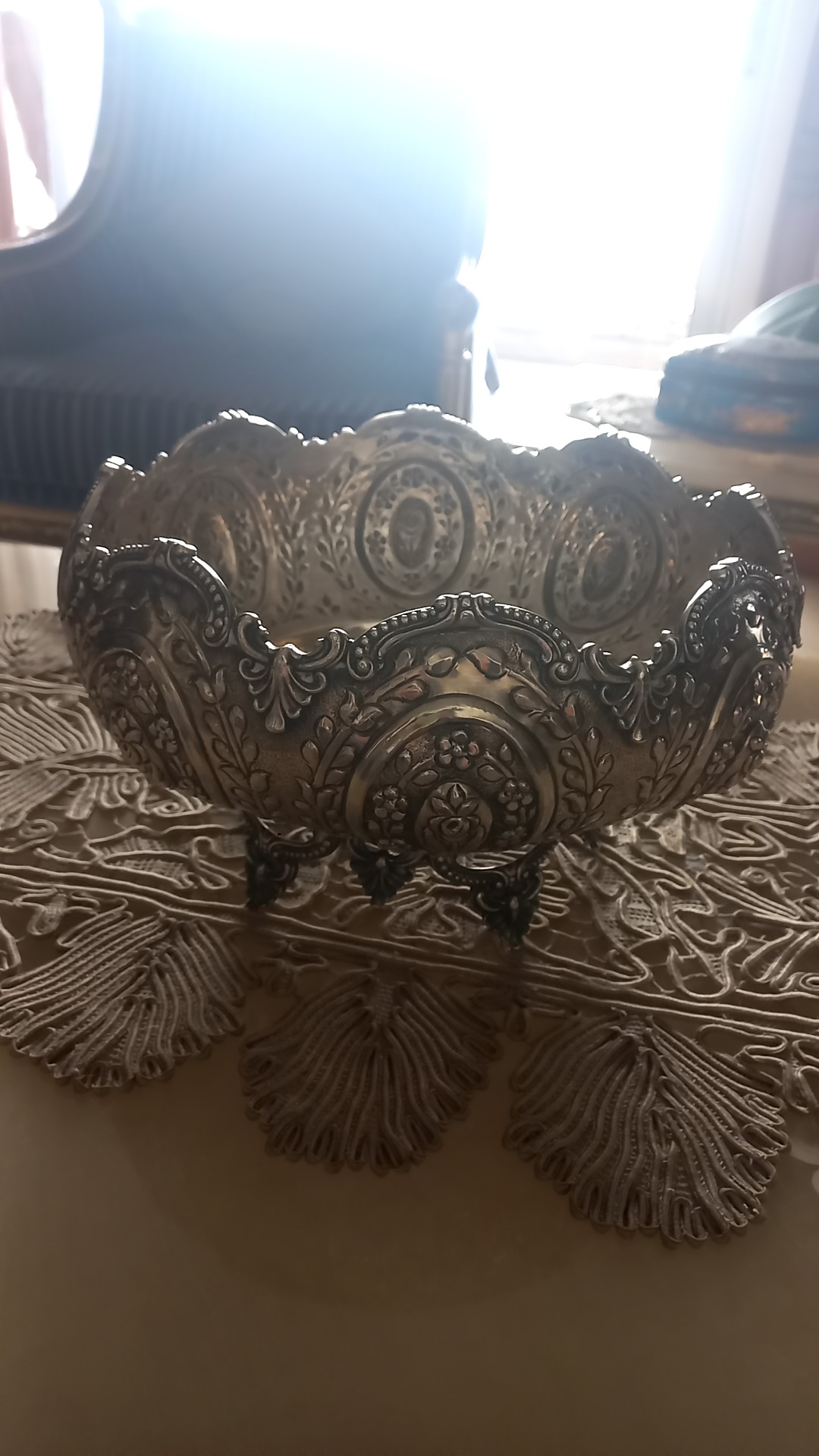
Ottoman Style Embossed Metal Footed Bowl
QUICK FACTS
Categories
Era
Early to mid-20th Century
Origin
🇹🇷 Turkey
Rarity
Average (4/10)
Discovered
Feb 28, 2026
1 day ago
DESCRIPTION
This appears to be a footed decorative bowl crafted from metal, intricately embossed with an array of floral and foliate motifs. The overall design, with its scalloped rim and paneling, suggests an influence from Ottoman or Turkish metalwork traditions, often characterized by rich surface decoration.
CULTURAL ECHOES
Where This Object Echoes
The elaborate floral and calligraphic motifs are characteristic of traditional Ottoman metalwork, which flourished from the 14th to the early 20th centuries.
Many ornamental styles, including specific floral patterns like arabesques and 'hatayi' (a composite floral motif), influenced Ottoman design through Persian artistic traditions.
Ritual & Ceremonial Use
- •Serving sweets or dried fruits during hospitality rituals, especially during feasts like Eid.
- •Display as a decorative centerpiece during social gatherings, signifying the host's aesthetic taste and wealth.
Meaning Through Time
Primarily functional, serving as prestigious tableware or ritualistic objects, often conveying status.
Mainly decorative, collected for ethnic charm, historical appeal, or as conversation pieces. Sometimes repurposed for diverse storage or display needs.
HISTORICAL STORY
DID YOU KNOW?
Ottoman metalworking often incorporated specific floral patterns, with tulips, carnations, and roses being particularly popular, sometimes carrying symbolic meanings within Persian and Turkish poetry.
Many such decorative metal items were created not just from solid silver but also from copper or brass, which were then silver-plated, a common practice to achieve a lustrous appearance more affordably.
MATERIAL & CONDITION
Surface
The surface exhibits extensive embossing, creating a high-relief texture that captures light and shadow. The metal appears to be silver-toned, possibly silver plate or a base metal alloy, and shows a degree of polish. The intricate details of the floral and scrolling patterns are well-defined across the bowl's exterior and interior sections.
Weight & Feel
Given its size and material, the bowl likely has a moderate weight, feeling robust and substantial in hand, consistent with a decorative metal piece designed for display rather than light utility.
Condition
Visually, the bowl appears to be in very good condition, with no obvious major dents or extensive tarnishing. The intricate details of the embossing seem well-preserved. Without closer inspection, it is difficult to confirm the 'mint' condition as indicated, but the surface exhibits a clean and shiny appearance.
RARITY ANALYSIS
Typical antique shop fare. Requires some searching but regularly available. This is where most genuine antiques fall.
Typical Characteristics
- Standard antique shop items
- Regularly available
- Moderate collector interest
EXPERT ANALYSIS
Cabinet of Curiosities Generalist
Confidence is moderate to high based on the clear visual evidence for the stylistic attribution (Ottoman/Turkish decorative metalwork) and material impression. The user's input regarding Turkish origin strongly aligns with the visual motifs. However, the lack of specific markings and inability to confirm material from photos prevents a higher confidence level.
KEY EVIDENCE
- 1Intricate floral and foliate embossing typical of Ottoman or Turkish decorative arts.
- 2Scalloped rim and paneled construction suggest a traditional metalwork technique.
- 3Footed design common for serving bowls or decorative vessels.
- 4Silver-toned metal appearance suggests silver plating or an alloy aiming for that aesthetic.
UNCERTAINTIES
- •The exact metal composition (e.g., solid silver vs. silver-plated) cannot be determined from images alone.
- •Lack of visible hallmarks or maker's marks makes it difficult to pinpoint precise age or manufacturer.
- •The overhead lighting in the primary image obscures some details and makes precise condition assessment challenging.
WHAT WOULD IMPROVE CERTAINTY
- →Examine the underside for any hallmarks, maker's marks, or labels that could indicate origin, material, or maker.
- →Take closer, evenly lit photographs of any markings and intricate details.
- →Measure the bowl's dimensions (diameter, height) to better assess its scale.
- →Perform a non-invasive metal test (like a strong magnet test) to differentiate between base metals and silver.
ESTIMATED VALUE
Updated: Feb 28, 2026
- Market comparables from auctions & retail
- Condition, completeness & craftsmanship
- Current collector demand & trends
- Low = quick sale, high = patient seller
For informational purposes only, not a formal appraisal.
CONTEXT ANALYSIS
How your provided context compares with Curiosa.com scanner findings.
What Aligned
- User indicated 'Origin/Language: Turkey', which aligns with the distinct Ottoman-style decorative motifs observed on the bowl.
- User stated 'Condition: Mint', and visual inspection indeed shows a clean, polished, and well-preserved surface with no immediately apparent damage.
ABOUT DECORATIVE OBJECTS
Ceramics, silver, porcelain, glassware, and decorative arts.
Browse all Decorative ObjectsSHARE THIS CURIOSITY
Have your own curiosities to discover?
Scan Your Curiosity
COMMENTS
No comments yet. Be the first to share your thoughts!
Sign in to leave a comment