Small Wooden Box with Felt Lining
QUICK FACTS
Categories
Era
Early to Mid 20th Century
Origin
🇳🇱 Netherlands
Rarity
Ordinary (3/10)
Discovered
Jan 14, 2026
1 months ago
DESCRIPTION
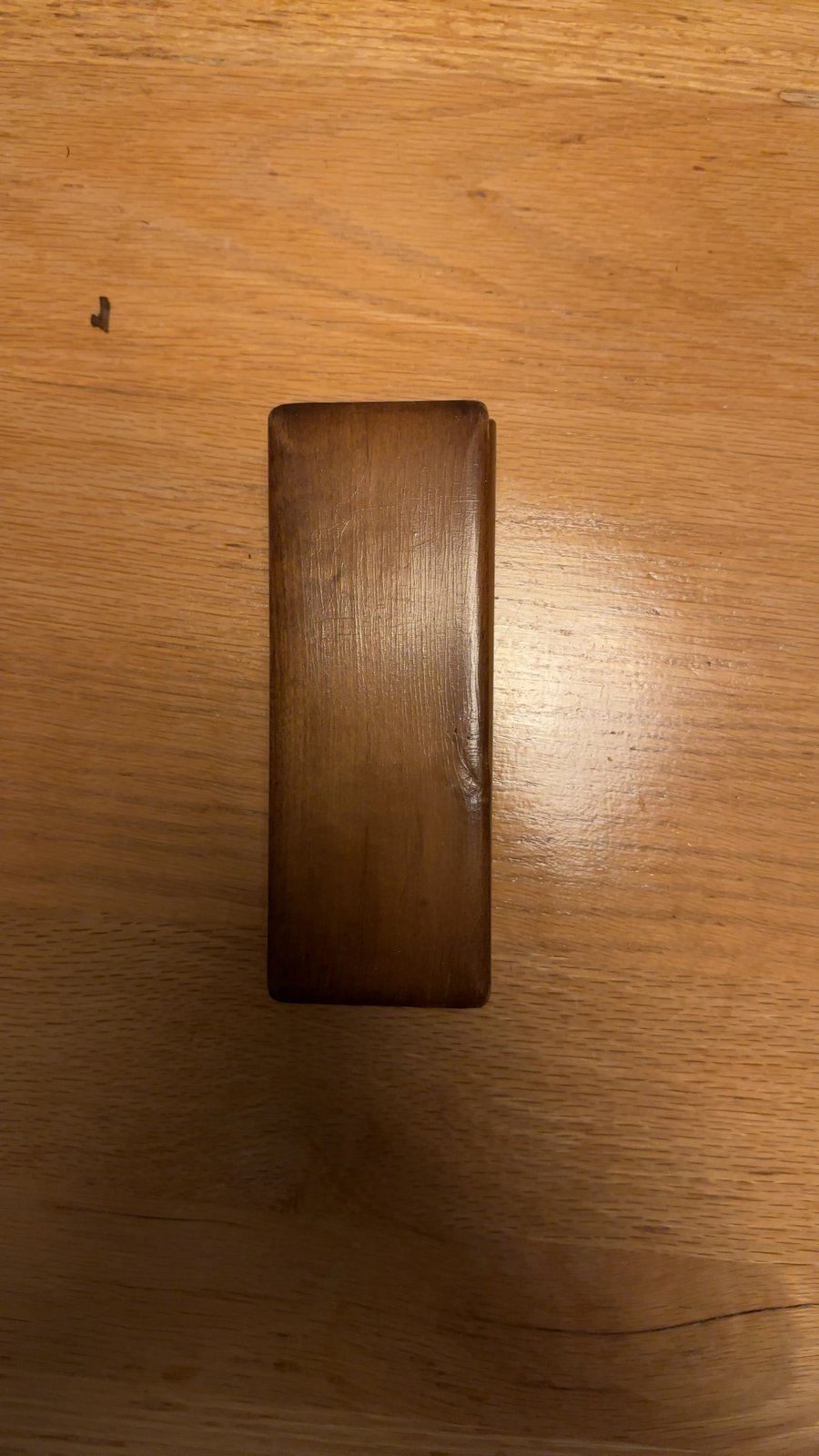
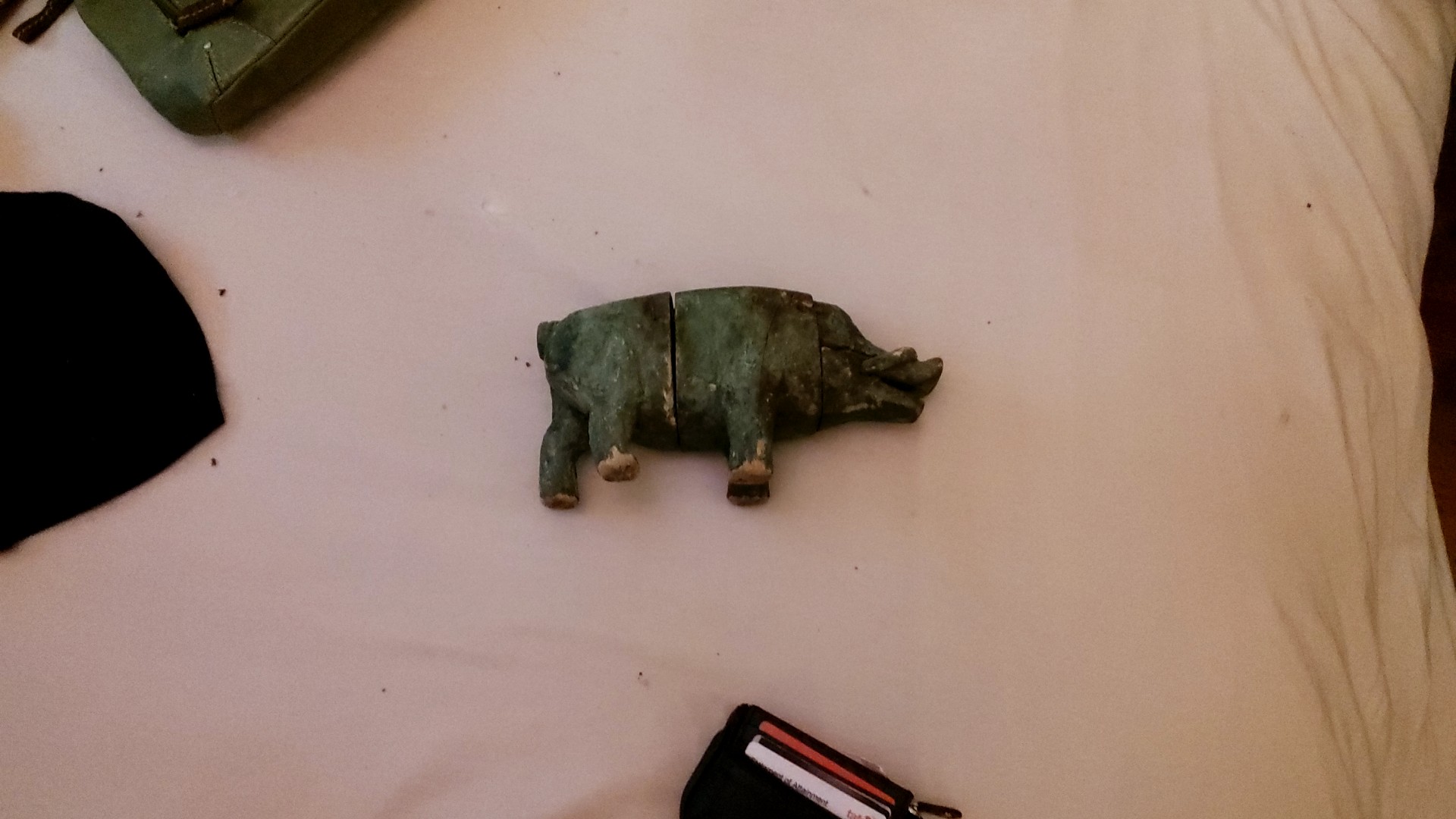
This appears to be a small rectangular box, likely crafted from a hardwood such as teak or rosewood, given the visible grain and color. The box is designed with a sliding lid, a common construction for small storage or presentation cases. The interior of the base is lined with a vibrant green felt, suggesting it was intended to house a delicate item, possibly jewelry, a small collectible, or perhaps a set of dominoes or mahjong tiles.
CULTURAL ECHOES
Where This Object Echoes
Small wooden boxes for storing incense, seals, or gaming pieces are common, often featuring simple, elegant joinery and fine wood.
Hand-carved or simply constructed wooden boxes for small personal items or games were popular home crafts or artisan products.
Ritual & Ceremonial Use
- •The ritual of storing and protecting valued small objects, from jewelry to gaming tokens.
- •The presentation of small gifts in an aesthetically pleasing container.
Meaning Through Time
Primarily a functional container for specific items (e.g., card cases, cigarette cases, desk accessories).
Often repurposed as decorative catch-alls or appreciated for their vintage aesthetic and craftsmanship, even without their original intended contents.
HISTORICAL STORY
DID YOU KNOW?
Small wooden boxes were historically used to store anything from spices and medicines to personal keepsakes, with each culture developing unique clasp and hinge mechanisms, or in this case, a simple sliding lid.
The use of felt lining, especially in colors like green or red, was popular from the Victorian era onwards to protect delicate contents from scratches and provide a pleasing aesthetic contrast to the wood.
MATERIAL & CONDITION
Surface
The wooden surface exhibits a polished, rather than raw, finish, showing a subtle sheen. The grain appears smooth but visible, with no decorative carvings or inlay work. The interior felt, a bright green, shows some compaction and minor dirt from use or age.
Weight & Feel
Given its size and solid wood construction, this box would likely feel surprisingly dense and substantial in hand, rather than hollow or flimsy. It would carry a modest but noticeable weight.
Condition
The wood shows typical signs of age and handling, including minor scratches and scuffs consistent with a utilitarian object of its type. There is a small area of damage to one of the feet on the underside of the base, where a piece of the wood has broken off.
RARITY ANALYSIS
Standard antiques commonly found at estate sales and flea markets. Plentiful supply meets modest demand.
Typical Characteristics
- Moderate production runs
- Common at estate sales
- Entry-level collectibles
EXPERT ANALYSIS
Decorative Arts Specialist
Confidence is good for the object type and general era based on construction and material appearance. However, the lack of any identifying marks or clearer images of the wood grain limits definitive statements on origin or precise dating.
KEY EVIDENCE
- 1Rectangular shape with a sliding lid.
- 2Apparent hardwood construction with a visible grain and stained finish.
- 3Interior lined with green felt.
- 4Simple, unadorned design.
- 5Damage to one of the small feet on the base.
UNCERTAINTIES
- •Lack of identifying marks or labels makes precise attribution impossible.
- •The specific wood type is hard to confirm without a closer inspection of the grain and possibly an expert opinion.
WHAT WOULD IMPROVE CERTAINTY
- →Provide a close-up photo of the wood grain to help identify the specific type of wood.
- →Check for any faint markings or stamps on the underside or inside the lid that might indicate a maker or origin.
- →Measure the precise dimensions (length, width, height) of the box.
ESTIMATED VALUE
Updated: Feb 26, 2026
- Market comparables from auctions & retail
- Condition, completeness & craftsmanship
- Current collector demand & trends
- Low = quick sale, high = patient seller
For informational purposes only, not a formal appraisal.
ABOUT DECORATIVE OBJECTS
Ceramics, silver, porcelain, glassware, and decorative arts.
Browse all Decorative ObjectsSHARE THIS CURIOSITY
Have your own curiosities to discover?
Scan Your Curiosity
COMMENTS
No comments yet. Be the first to share your thoughts!
Sign in to leave a comment