Mid-Century Modern Faceted Glass Tealight Holder
QUICK FACTS
Categories
Era
1960s-1970s
Origin
🌍 International
Rarity
Average (4/10)
Discovered
Jan 14, 2026
1 months ago
DESCRIPTION
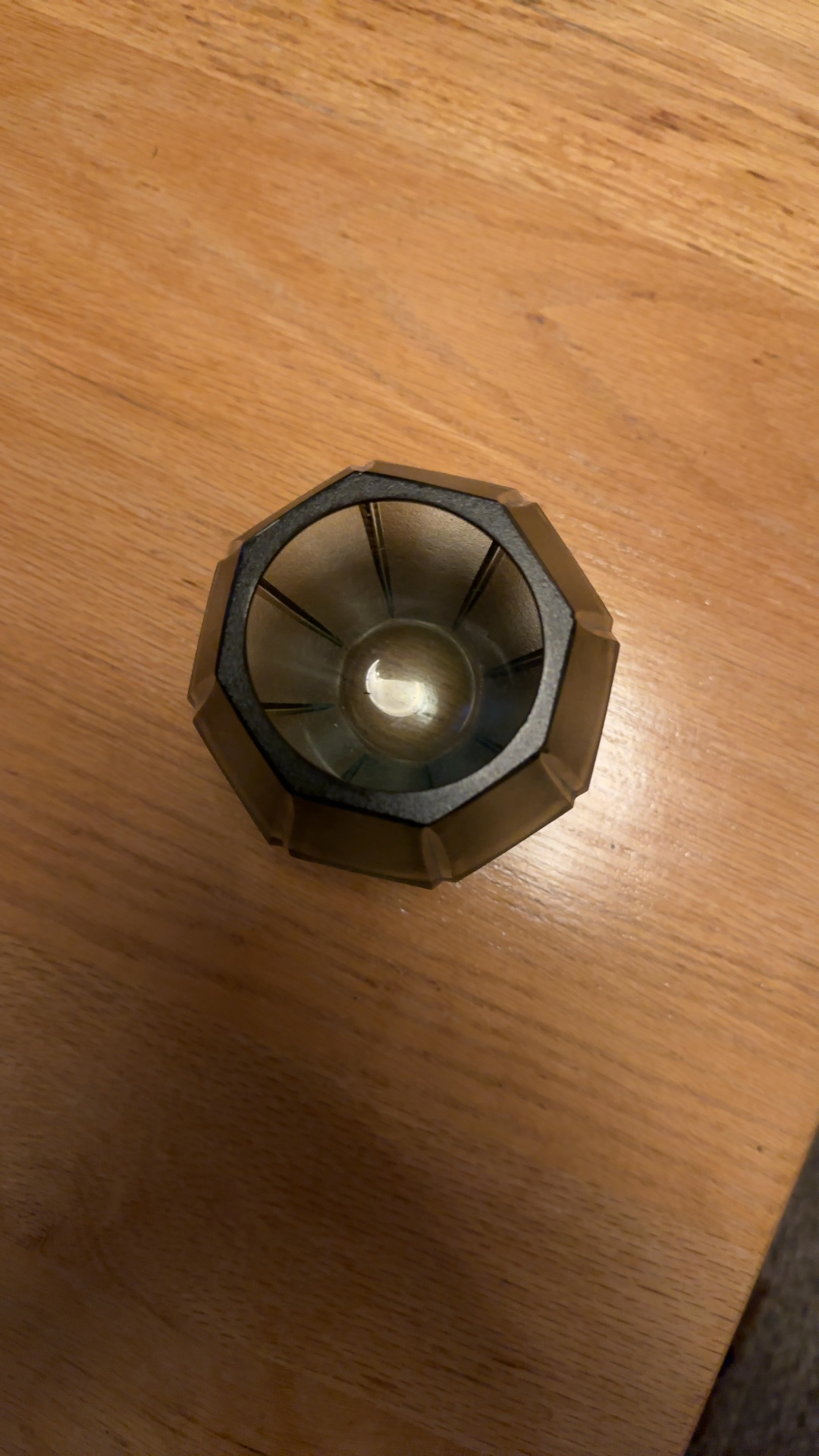
This appears to be a faceted glass tealight holder or small vase, likely from the mid-20th century, exhibiting characteristics of Scandinavian or Italian modern design. The geometric, polygonal form and frosted finish suggest an aesthetic popular in the 1960s or 70s. The heavy-walled construction and molded facets are typical of art glass from this period, which often emphasized form and texture over elaborate applied decoration.
CULTURAL ECHOES
Where This Object Echoes
Characterized by functional design, minimalist aesthetics, and the innovative use of glass as a sculptural material, often featuring thick-walled and textured pieces.
Geometric forms and a fascination with facets and crystalline structures were prevalent, reflecting optimism for the future and technological advancements.
Ritual & Ceremonial Use
- •The ritual of 'hygge' in Scandinavian cultures, where small, atmospheric lighting objects like tealight holders contribute to a cozy and calm home environment.
- •Gift-giving, as small glass objects were popular presents, symbolizing warmth and hospitality.
Meaning Through Time
Decorative glass often aimed for opulence and intricate detail, mimicking precious stones or elaborate cutting techniques.
The focus shifted to the intrinsic qualities of glass itself – its weight, texture, and ability to interact with light in abstract ways, reflecting a more democratic and functional design philosophy.
HISTORICAL STORY
DID YOU KNOW?
Many mid-century faceted glass designs were inspired by natural crystal formations, reflecting a fascination with geology and organic geometry.
The heavy, thick-walled glass often used in these pieces provided both durability and a striking optical effect when light passed through it.
MATERIAL & CONDITION
Surface
The surface is characterized by prominent angular facets, all appearing to be either frosted or acid-etched, giving a matte finish rather than a polished sheen. This texture diffuses light, contrasting with the clear, polished interior visible at the base.
Weight & Feel
Based on its thick walls and solid appearance, this object would feel substantial and dense in hand, likely weighing between 0.5 to 1 kilogram for its size.
Condition
Visually, the piece appears to be in good condition with no obvious chips, cracks, or significant abrasions. The frosted finish seems consistent across the facets, suggesting original condition without recent re-etching or repair.
RARITY ANALYSIS
Typical antique shop fare. Requires some searching but regularly available. This is where most genuine antiques fall.
Typical Characteristics
- Standard antique shop items
- Regularly available
- Moderate collector interest
EXPERT ANALYSIS
Decorative Arts Specialist
Confidence is good in the object type and general era based on visual style and material cues, but the lack of any discernible marks prevents a specific maker or origin attribution.
KEY EVIDENCE
- 1Thick-walled, molded glass construction.
- 2Geometric, polygonal faceted design.
- 3Frosted exterior finish, clear interior.
- 4No visible maker's marks or signatures.
- 5Form factor appears to be a small vessel, likely for a votive or tealight.
UNCERTAINTIES
- •Lack of identifying maker's marks makes specific attribution impossible.
- •The frosted finish could be a later alteration, though it appears original.
WHAT WOULD IMPROVE CERTAINTY
- →Examine the base closely under magnification for any faint molded marks, numbers, or etched signatures.
- →If possible, place a tealight inside to observe how the light interacts with the frosted facets.
- →Perform a UV light test to check for any invisible repairs or fills in the glass.
ESTIMATED VALUE
Updated: Feb 26, 2026
- Market comparables from auctions & retail
- Condition, completeness & craftsmanship
- Current collector demand & trends
- Low = quick sale, high = patient seller
For informational purposes only, not a formal appraisal.
ABOUT DECORATIVE OBJECTS
Ceramics, silver, porcelain, glassware, and decorative arts.
Browse all Decorative ObjectsSHARE THIS CURIOSITY
Have your own curiosities to discover?
Scan Your Curiosity
COMMENTS
No comments yet. Be the first to share your thoughts!
Sign in to leave a comment