Delft-style Polychrome Hexagonal Vase in Imari Palette
QUICK FACTS
Categories
Era
Mid-20th Century
Origin
🇳🇱 Netherlands
Brand
De Porceleyne Fles (Royal Delft)
Rarity
Average (4/10)
Discovered
Jan 14, 2026
1 months ago
DESCRIPTION
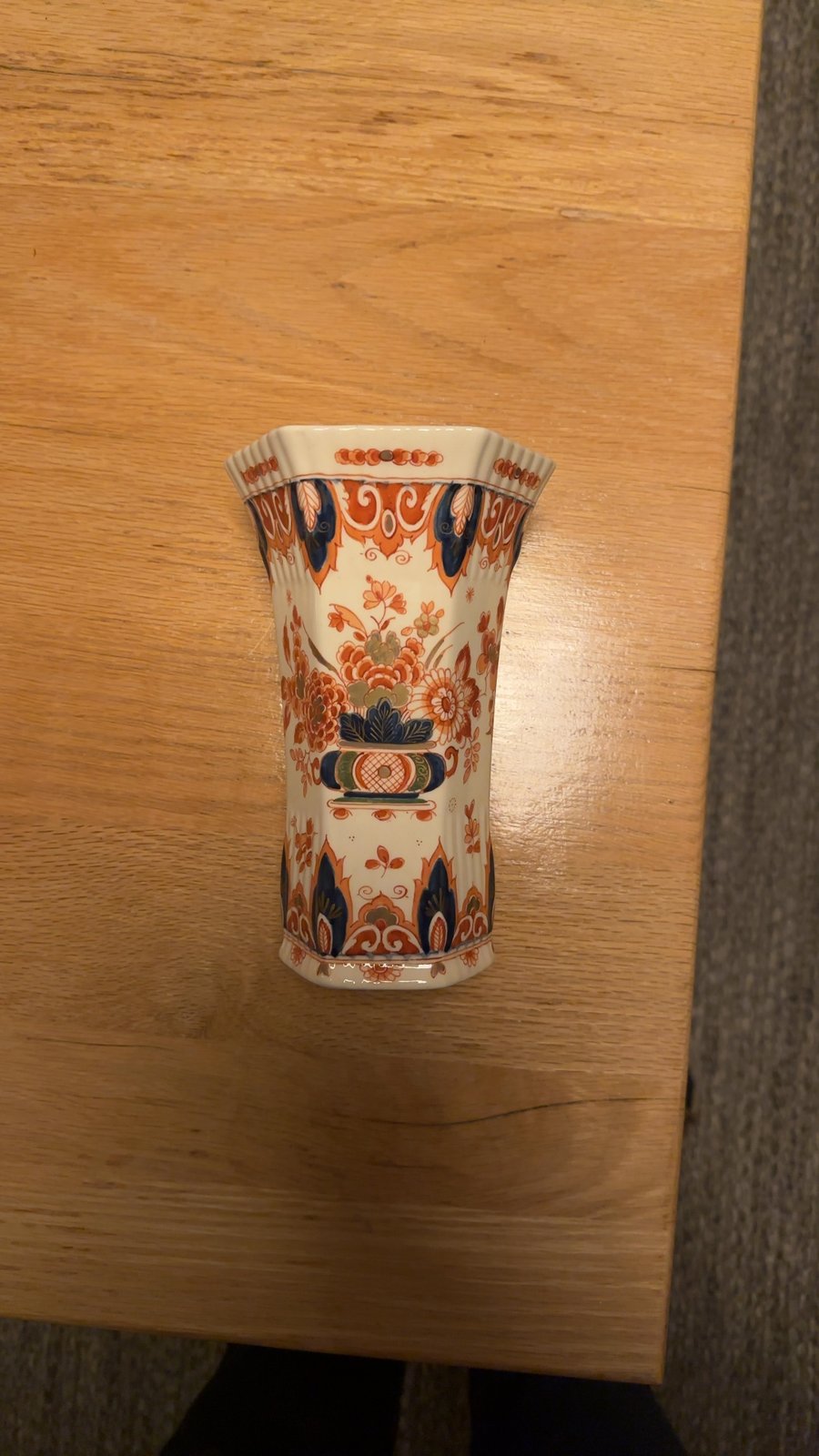
This is a hexagonal vase, likely earthenware or porcelain, decorated in a polychrome palette often associated with the Imari style (red, blue, and gold/orange). The decoration features flora and scrolls, typical of ceramic pieces that draw inspiration from East Asian design traditions, adapted by European manufactures. The form is columnar with a flared, wavy mouth. The base shows what appears to be a hand-painted mark, which would be crucial for precise identification.
CULTURAL ECHOES
Where This Object Echoes
The red, blue, and gold palette and detailed floral motifs directly derive from the iconic Imari porcelain of Japan, which was highly sought after in Europe.
While famous for blue and white, Delft factories actively produced polychrome wares, interpreting Asian designs or creating their own, often on tin-glazed earthenware.
Ritual & Ceremonial Use
- •Domestic display and decoration: Such vases were primarily intended for decorative purposes, holding cut flowers or serving as standalone ornamental pieces in affluent European homes.
- •Gift-giving: Fine ceramics, especially those with exotic influences, were often exchanged as tokens of appreciation or status.
Meaning Through Time
Asian-inspired ceramics like Imari were symbols of exoticism, wealth, and global trade prowess in Europe, appealing to the elite.
As production became more industrialized and decorative arts movements emerged, these styles became more broadly accessible, signifying cultural refinement and appreciation for artistic craftsmanship.
HISTORICAL STORY
DID YOU KNOW?
While 'Delft Blue' is widely recognized, polychrome Delftware, inspired by Imari porcelain, was also a significant part of Dutch ceramic production, offering a vibrant alternative to the iconic blue and white.
The hexagonal shape of vases like this one was a popular form in both Asian and European ceramics, allowing for a multifaceted presentation of painted designs and architectural elegance.
MATERIAL & CONDITION
Surface
The vase exhibits a smooth, glossy glaze surface, with polychrome underglaze or overglaze decoration. The colors appear vibrant, particularly the deep cobalt blue and rust-red, with complementary orange/gold tones enhancing the floral motifs, typical of an Imari-inspired palette. There is a slight relief to the paint application, suggesting a hand-decorated finish.
Weight & Feel
I would expect this piece to have a moderate weight for its size, indicative of either earthenware or a relatively thick-bodied porcelain. It would feel sturdy in hand.
Condition
Visually, the vase appears to be in very good condition, with no obvious chips, cracks, or significant glaze loss. The colors remain bright and the surface lustrous. Without closer inspection, particularly of the footrim and neck, any minor fleabites or crazing would not be detectable.
RARITY ANALYSIS
Typical antique shop fare. Requires some searching but regularly available. This is where most genuine antiques fall.
Typical Characteristics
- Standard antique shop items
- Regularly available
- Moderate collector interest
EXPERT ANALYSIS
Decorative Arts Specialist
High confidence is assigned due to the recognizable style of decoration and the strong visual resemblance of the base mark to a known manufacturer (Royal Delft). Further verification of the mark's details would solidify this. The general quality and form are also consistent with this attribution.
KEY EVIDENCE
- 1Hexagonal form and fluted mouth are consistent with traditional Delftware and European ceramic design.
- 2The polychrome decoration in red, blue, and orange is characteristic of the Imari palette, widely adopted by European factories.
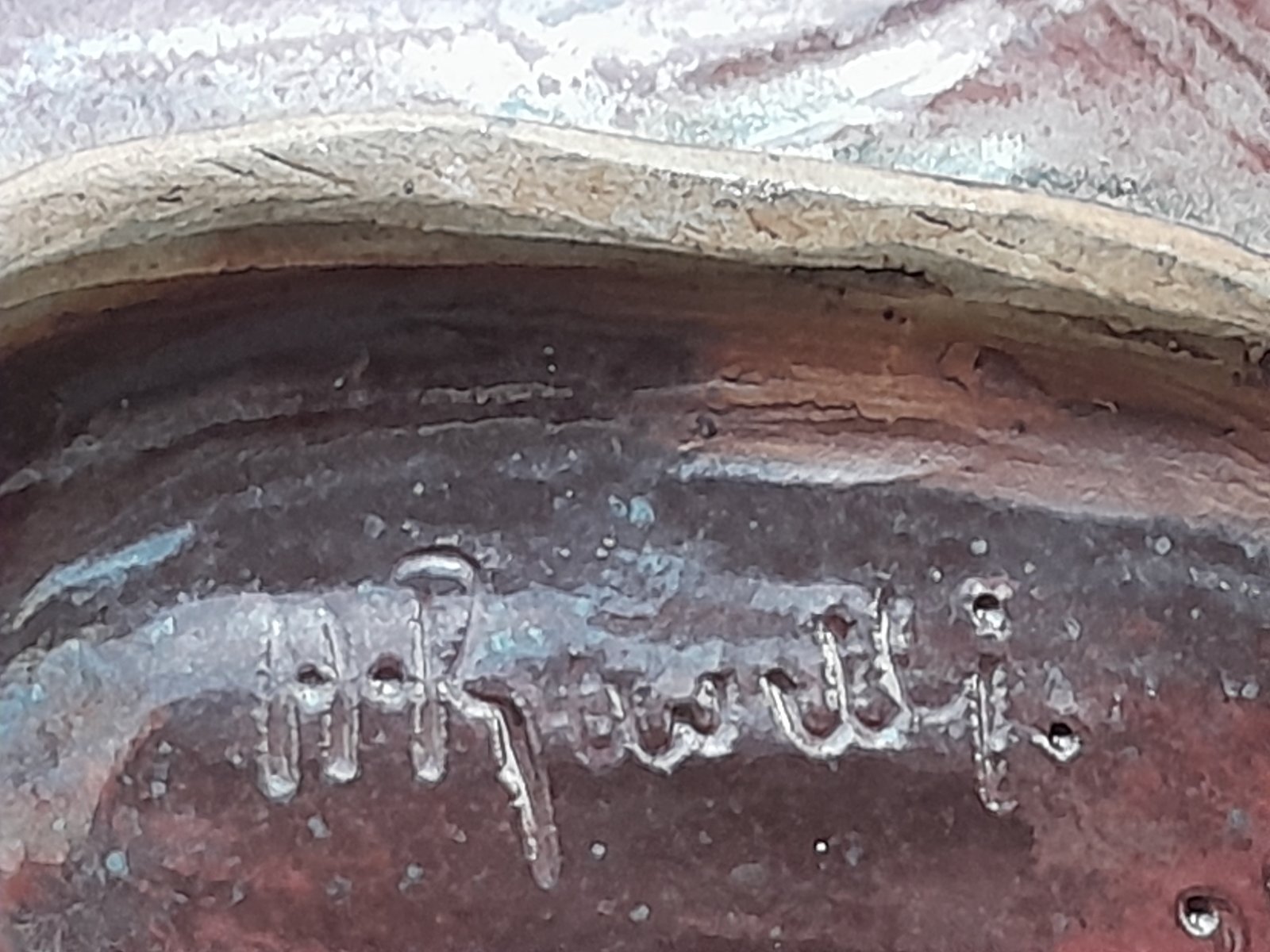
- 3The mark on the base, though partially obscured by shadow, strongly resembles the 'De Porceleyne Fles' (Royal Delft) mark, specifically a variant of the jar mark or initials 'DP' combined with 'Delft'.
- 4The hand-painted nature of the mark and decoration suggests traditional ceramic manufacturing techniques.
UNCERTAINTIES
- •The exact date code, if present, is not readable in the provided image of the base.
- •Clarity of the mark is suboptimal due to shadow and shallow focus.
WHAT WOULD IMPROVE CERTAINTY
- →A clearer, well-lit, and sharply focused image of the base mark is crucial for definitive dating and attribution.
- →Examine the interior of the vase and the footrim for any signs of crazing, chips, or manufacturing imperfections indicative of age or firing process.
- →A 'tap test' could help identify any hidden cracks or repairs.
- →A UV light examination could reveal professional restoration or repairs that are not visible to the naked eye.
ESTIMATED VALUE
Updated: Feb 26, 2026
- Market comparables from auctions & retail
- Condition, completeness & craftsmanship
- Current collector demand & trends
- Low = quick sale, high = patient seller
For informational purposes only, not a formal appraisal.
ABOUT DECORATIVE OBJECTS
Ceramics, silver, porcelain, glassware, and decorative arts.
Browse all Decorative ObjectsSHARE THIS CURIOSITY
Have your own curiosities to discover?
Scan Your Curiosity
COMMENTS
No comments yet. Be the first to share your thoughts!
Sign in to leave a comment