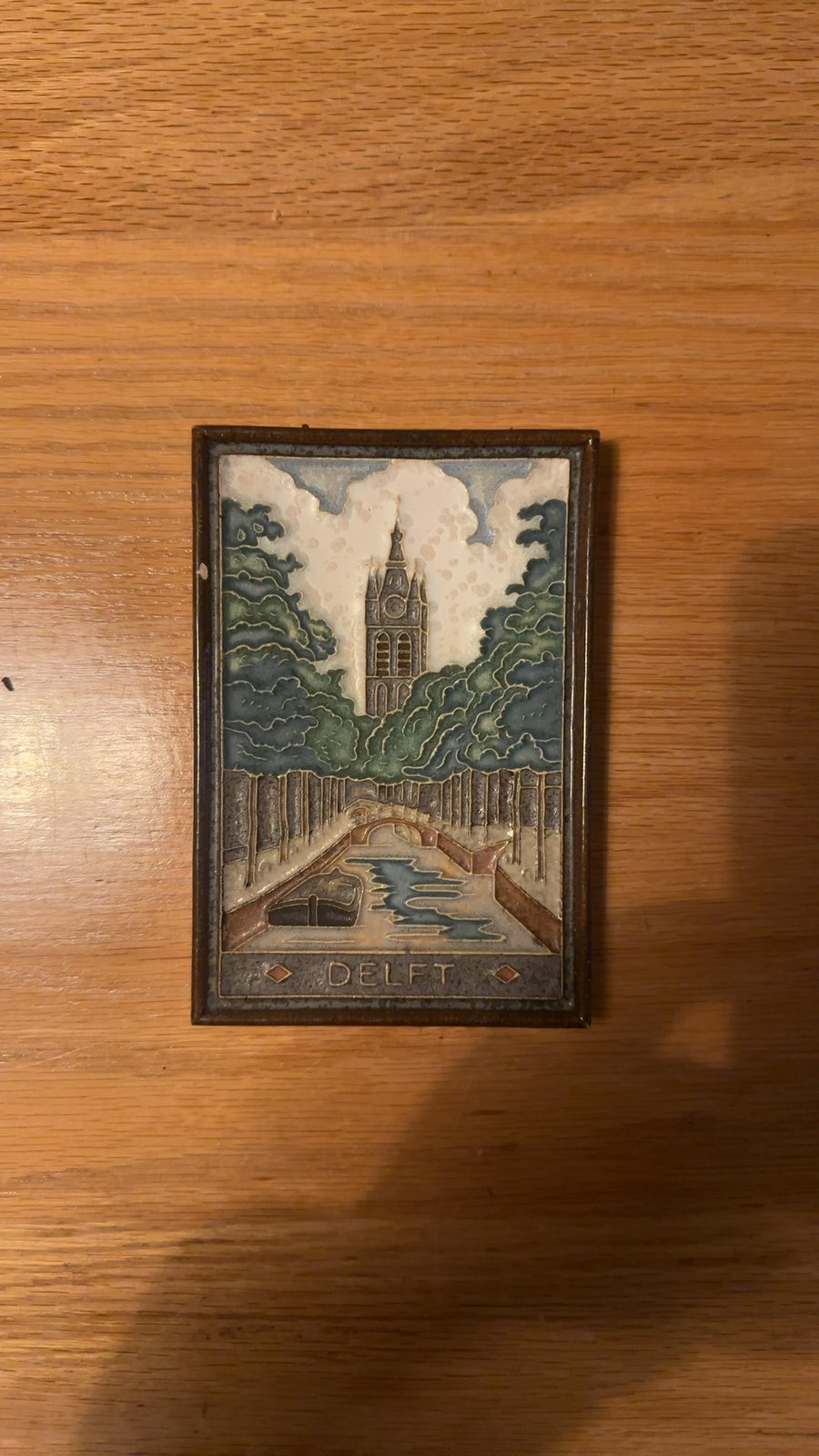
Delft Architectural Relief Tile, Possibly De Porceleyne Fles
QUICK FACTS
Categories
Era
Early to Mid 20th Century (1900-1950)
Origin
🇳🇱 Netherlands
Rarity
Average (4/10)
Discovered
Jan 10, 2026
1 months ago
DESCRIPTION
This appears to be a small, rectangular ceramic relief tile depicting an architectural scene, likely a landmark from Delft, given the prominent 'DELFT' inscription at the bottom. The tile features a raised, sculptural design with a hand-painted or glazed finish in shades of blue, green, and brown, characteristic of specific regional ceramic traditions. The reverse shows an unglazed, bisque-like surface with some handwritten or impressed marks, and a simple wire hanger for display.
CULTURAL ECHOES
Where This Object Echoes
The tradition of creating decorative items depicting local landmarks as keepsakes for tourists, a practice seen across European cities.
The emphasis on hand-crafted relief work and naturalistic motifs, often seen in tiles and decorative ceramics of this era.
Ritual & Ceremonial Use
- •Souvenir collecting and gifting, where decorative objects serve as a tangible memory of a place.
Meaning Through Time
These tiles were valued as artistic souvenirs, showcasing local craftsmanship and pride in civic architecture.
Today, such tiles are appreciated as collectible vintage decorative arts, often integrated into modern interior design for their historical charm.
HISTORICAL STORY
DID YOU KNOW?
While 'Delftware' traditionally refers to blue and white tin-glazed pottery, many Delft factories also produced relief tiles, often for architectural friezes or decorative panels, using a broader range of colors.
The depicted building is likely the Nieuwe Kerk (New Church) in Delft, a prominent landmark whose tower is a common motif in Delft souvenirs and art.
MATERIAL & CONDITION
Surface
The front surface exhibits a textured, relief-molded ceramic, with areas of glossy colored glaze. The glazes show some variation in application, with slight pooling in recessed areas, indicating hand-finishing. The reverse is unglazed, revealing the coarse ceramic body, consistent with a bisque firing or a surface not intended for decorative exposure.
Weight & Feel
Given its size and ceramic composition, it likely feels moderately heavy and solid for its dimensions, indicating a substantial earthenware or stoneware body.
Condition
The tile appears to be in relatively good condition, with minor wear to the edges and perhaps some surface grime consistent with age and display. Any specific chips or cracks are not clearly discernible from the provided images, but the hanging wire shows appropriate age.
RARITY ANALYSIS
Typical antique shop fare. Requires some searching but regularly available. This is where most genuine antiques fall.
Typical Characteristics
- Standard antique shop items
- Regularly available
- Moderate collector interest
EXPERT ANALYSIS
Decorative Arts Specialist
The visual evidence strongly points to a Delft ceramic relief tile, with the inscription and style aligning with historical production. Confidence for exact maker and date is slightly tempered by the unclear reverse mark.
KEY EVIDENCE
- 1Relief molded ceramic construction with colored glazes.
- 2Prominent 'DELFT' inscription, indicating origin and subject matter.
- 3Unglazed bisque reverse typical of functional decorative tiles.
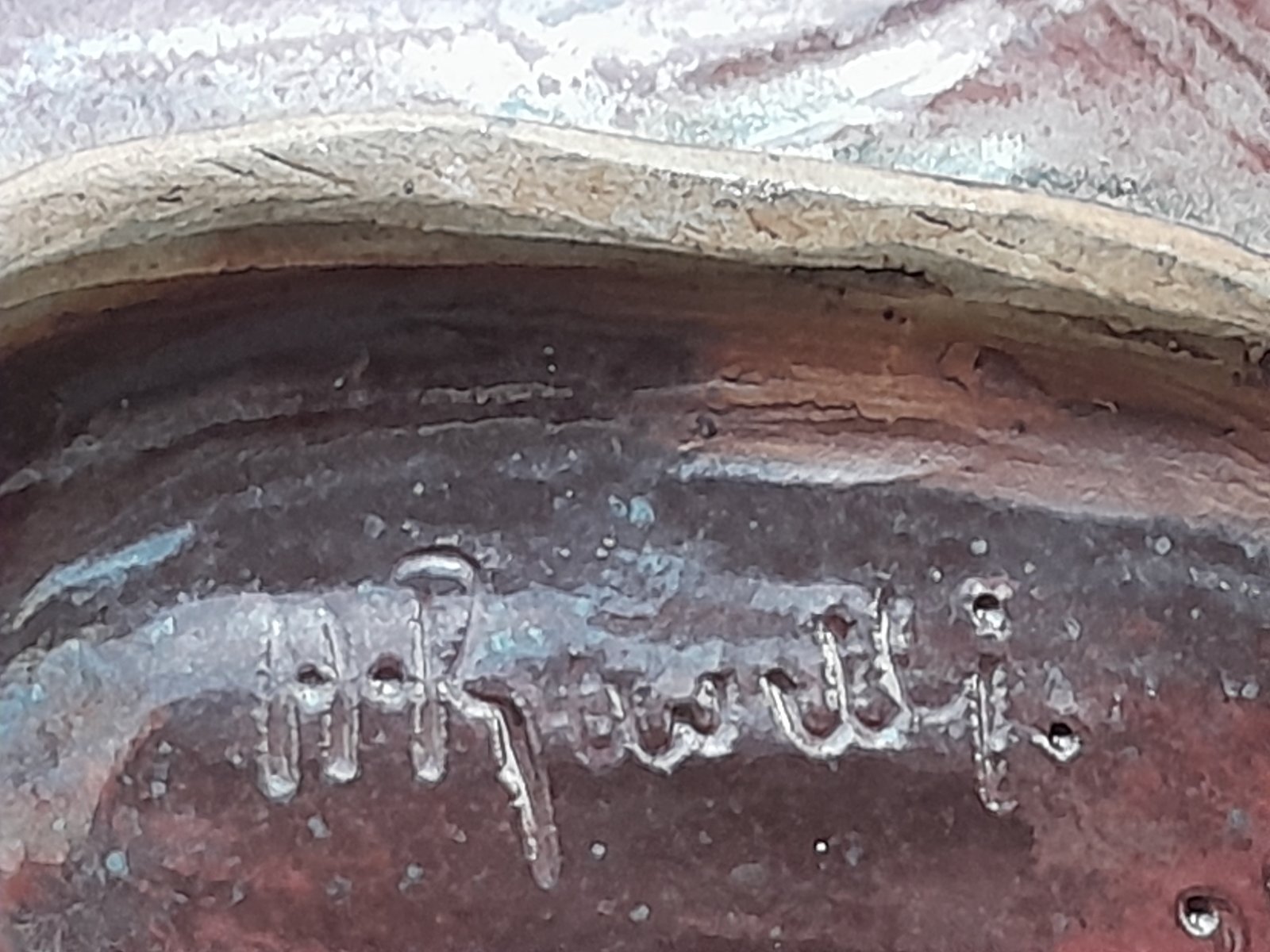
- 4Handwritten marks on the reverse, suggesting a maker or production code (requires clearer view).
- 5Simple wire hanger, consistent with a utilitarian mounting for a decorative wall tile.
UNCERTAINTIES
- •The handwritten mark on the reverse is indistinct, making a definitive maker attribution difficult without a clearer image.
- •Lack of a formal impressed or painted factory mark common to larger manufacturers.
WHAT WOULD IMPROVE CERTAINTY
- →A high-resolution close-up image of the handwritten or impressed mark on the reverse to identify the maker.
- →A photograph of the tile's edges and corners to assess any chips or repairs.
- →A measurement of the tile's exact dimensions.
ESTIMATED VALUE
Updated: Feb 26, 2026
- Market comparables from auctions & retail
- Condition, completeness & craftsmanship
- Current collector demand & trends
- Low = quick sale, high = patient seller
For informational purposes only, not a formal appraisal.
ABOUT DECORATIVE OBJECTS
Ceramics, silver, porcelain, glassware, and decorative arts.
Browse all Decorative ObjectsSHARE THIS CURIOSITY
Have your own curiosities to discover?
Scan Your Curiosity
COMMENTS
No comments yet. Be the first to share your thoughts!
Sign in to leave a comment