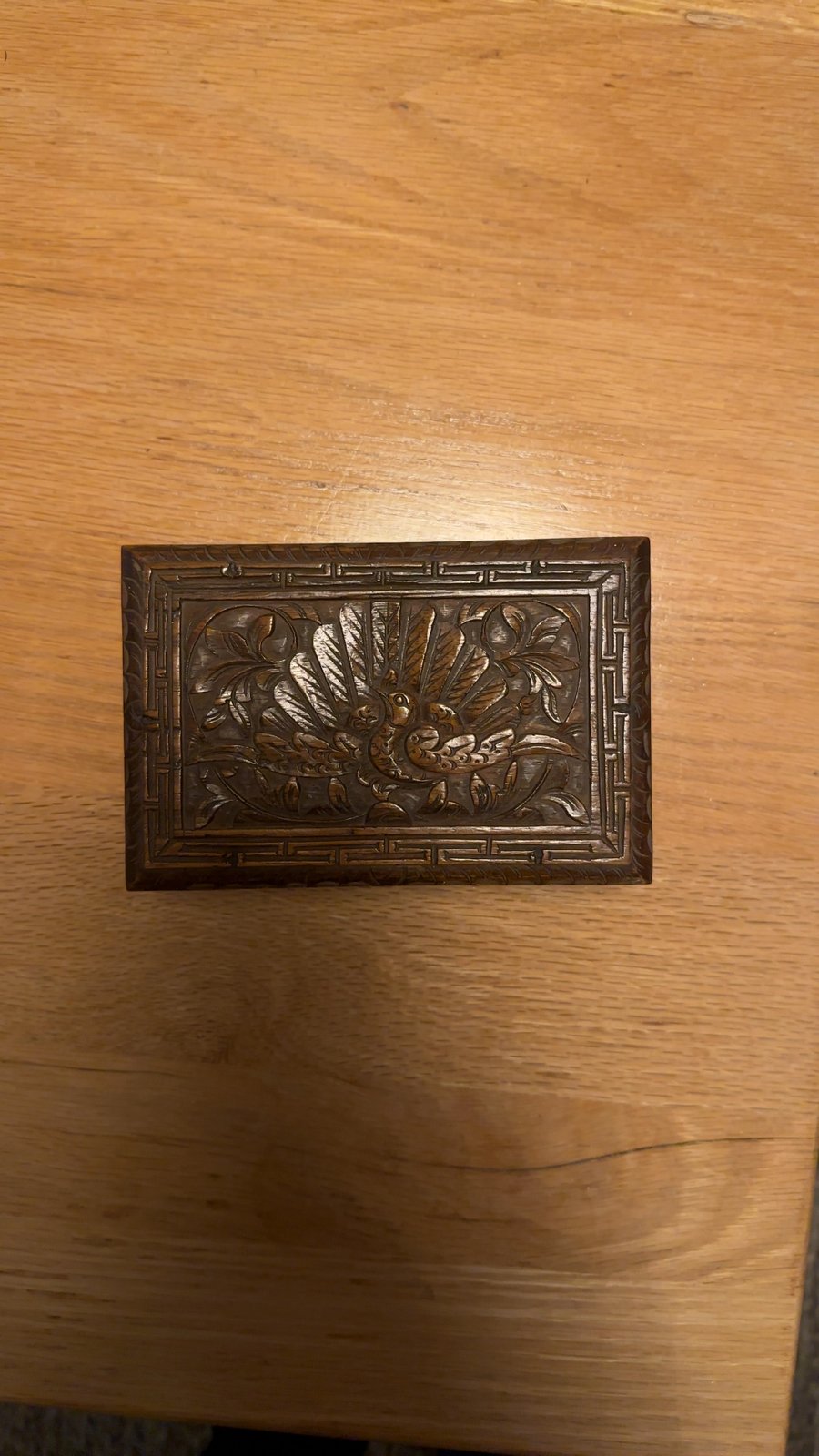
Hand-Carved Wooden Box with Pheasant Motif
QUICK FACTS
Categories
Era
Late 19th to Early 20th Century
Origin
null
Rarity
Average (4/10)
Discovered
Jan 14, 2026
1 months ago
DESCRIPTION
This appears to be a small, rectangular wooden box, likely crafted from a dark hardwood, possibly walnut or teak, given the grain visible. The lid is adorned with a deeply carved relief depicting what seems to be a pheasant or similar bird with an elaborate tail, surrounded by scrolling foliage. The sides also feature carved decorative borders. The hinge mechanism looks simple, suggesting traditional construction.
CULTURAL ECHOES
Where This Object Echoes
The emphasis on naturalistic motifs, handcrafted quality, and robust forms aligns with the ideals of the Arts and Crafts movement, which championed traditional craftsmanship against industrial mass production.
Fine detailed wooden carving, particularly featuring birds and botanical elements, has a long and rich tradition in various Asian cultures, often involving specific types of hardwoods and intricate joinery.
Ritual & Ceremonial Use
- •Serving as a personal treasure box for jewelry, letters, or mementos.
- •Used as an exquisite presentation piece for small gifts, elevating their perceived value.
- •Adorning a domestic space, reflecting the owner's appreciation for decorative arts and craftsmanship.
Meaning Through Time
During this period, such boxes often symbolized exoticism, craftsmanship, and the burgeoning interest in natural history and global aesthetics.
As mass production became more prevalent, these hand-carved boxes transitioned from common household objects to cherished heirlooms or decorative curiosities.
HISTORICAL STORY
DID YOU KNOW?
Many small wooden boxes like this were not only used for personal treasures but also served as presentation boxes for gifts such as jewelry, snuff, or small keepsakes.
The carving style, often involving deep relief and natural motifs, is a hallmark of the Arts and Crafts movement's emphasis on traditional craftsmanship and rejection of industrial uniformity.
MATERIAL & CONDITION
Surface
The wooden surface exhibits a deep, rich brown patina, consistent with age and handling. The carving is in high relief, providing a tactile texture to the lid and sides. There are visible signs of wear, particularly on the raised carved elements, contributing to its aged character.
Weight & Feel
Given its size and the apparent density of the hardwood, this box would likely feel moderately weighty for its compact dimensions, suggesting a solid construction typical of such carved pieces.
Condition
The box appears to be in relatively good, stable condition. There's expected wear to the high points of the carving and corners consistent with age and use. No obvious major cracks or repairs are immediately discernible from the images, though closer inspection would be required.
RARITY ANALYSIS
Typical antique shop fare. Requires some searching but regularly available. This is where most genuine antiques fall.
Typical Characteristics
- Standard antique shop items
- Regularly available
- Moderate collector interest
EXPERT ANALYSIS
Decorative Arts Specialist
Confidence is good regarding the object being a hand-carved wooden box from the late 19th to early 20th century, based on the carving style and visible patina. However, the lack of identifying marks or clear views of joinery limits a more precise attribution of origin or maker.
KEY EVIDENCE
- 1Deep relief wood carving on lid and sides, depicting a pheasant and foliage.
- 2Dark wood with visible grain, suggesting a hardwood likely walnut or teak.
- 3Patina and wear patterns consistent with age and handling.
- 4Simple, traditional hinge mechanism visible when open.
UNCERTAINTIES
- •Absence of maker's marks, stamps, or signatures to aid in definitive attribution.
- •The interior is plain, offering limited clues about original purpose or finish.
- •Exact wood type and joinery details are not visible, which would help with dating and origin.
WHAT WOULD IMPROVE CERTAINTY
- →Examine the interior of the box for any hidden marks, labels, or construction details.
- →Take detailed photos of the box's underside and corners to assess joinery (e.g., dovetails, butt joints).
- →Use a magnifying glass to inspect the carving details for tool marks, which can indicate hand-carving versus machine routing.
- →Perform a 'tap test' on the wood to check for consistent sound, potentially indicating hidden cracks or repairs.
ESTIMATED VALUE
Updated: Feb 26, 2026
- Market comparables from auctions & retail
- Condition, completeness & craftsmanship
- Current collector demand & trends
- Low = quick sale, high = patient seller
For informational purposes only, not a formal appraisal.
ABOUT DECORATIVE OBJECTS
Ceramics, silver, porcelain, glassware, and decorative arts.
Browse all Decorative ObjectsSHARE THIS CURIOSITY
Have your own curiosities to discover?
Scan Your Curiosity
COMMENTS
No comments yet. Be the first to share your thoughts!
Sign in to leave a comment