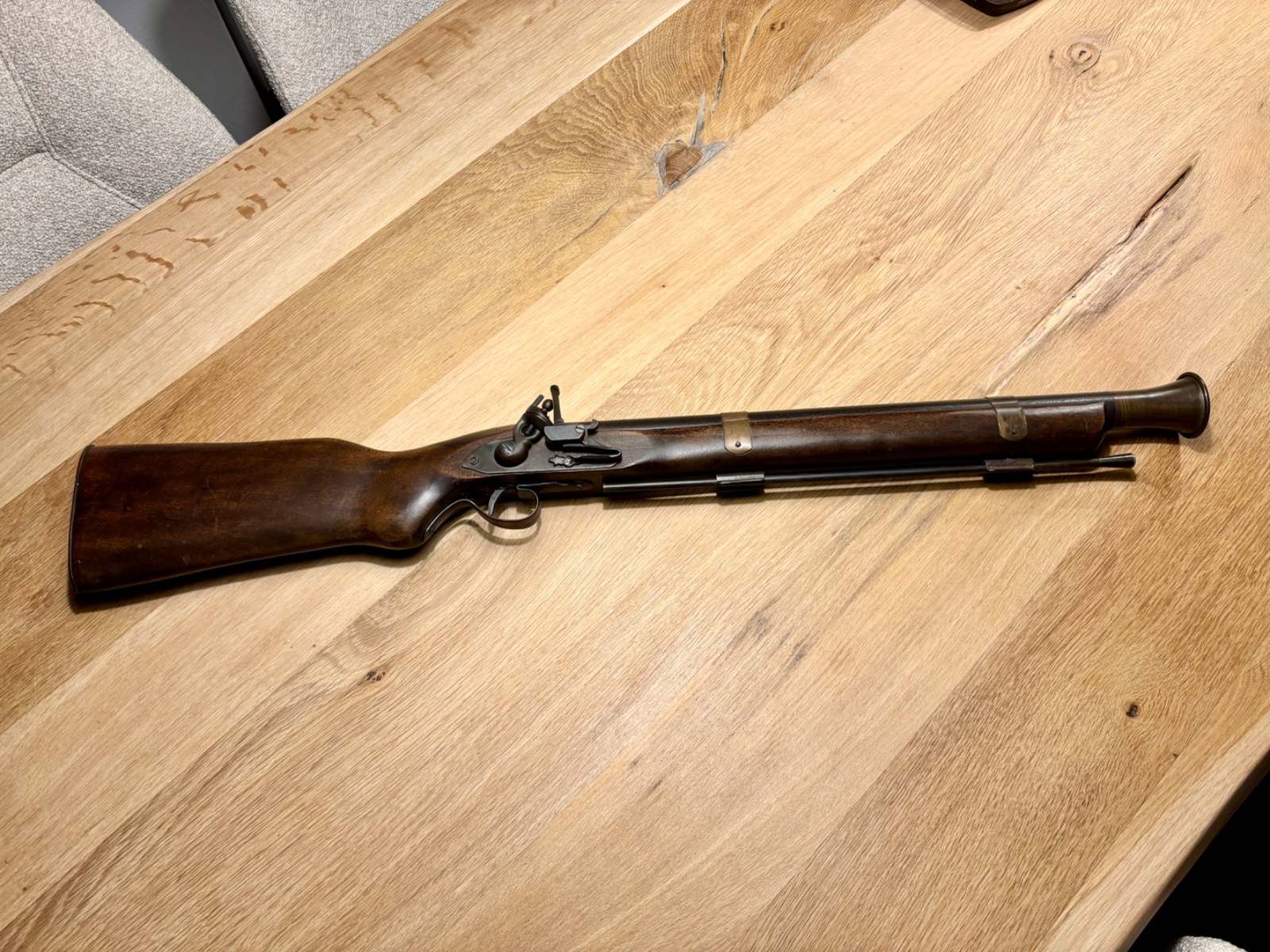
Ottoman Percussion Blunderbuss Pistol ("Trombône")
QUICK FACTS
Categories
Era
c. 1850-1870
Origin
🇹🇷 Turkey
Rarity
Uncommon (5/10)
Discovered
Feb 28, 2026
1 day ago
DESCRIPTION
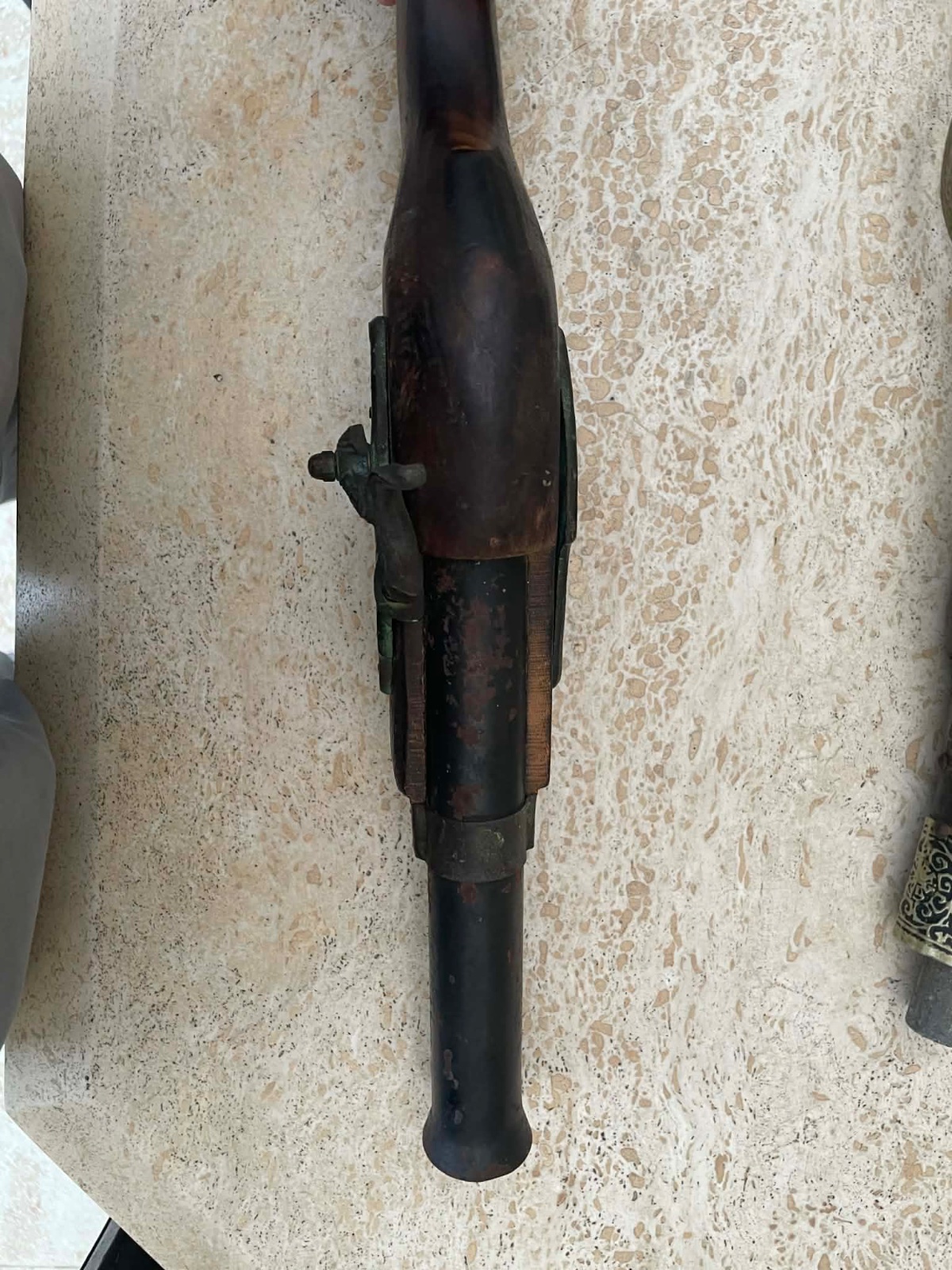
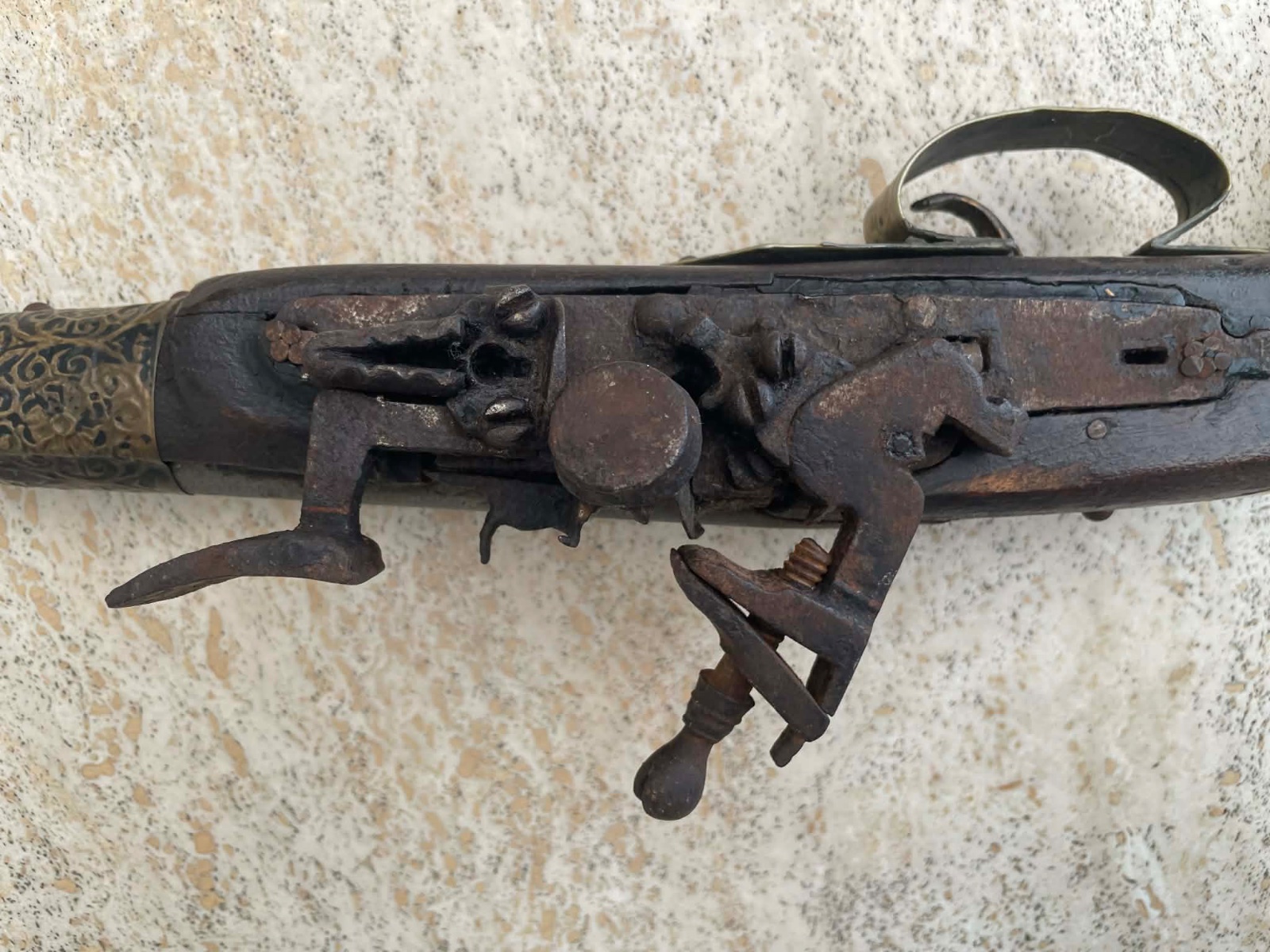
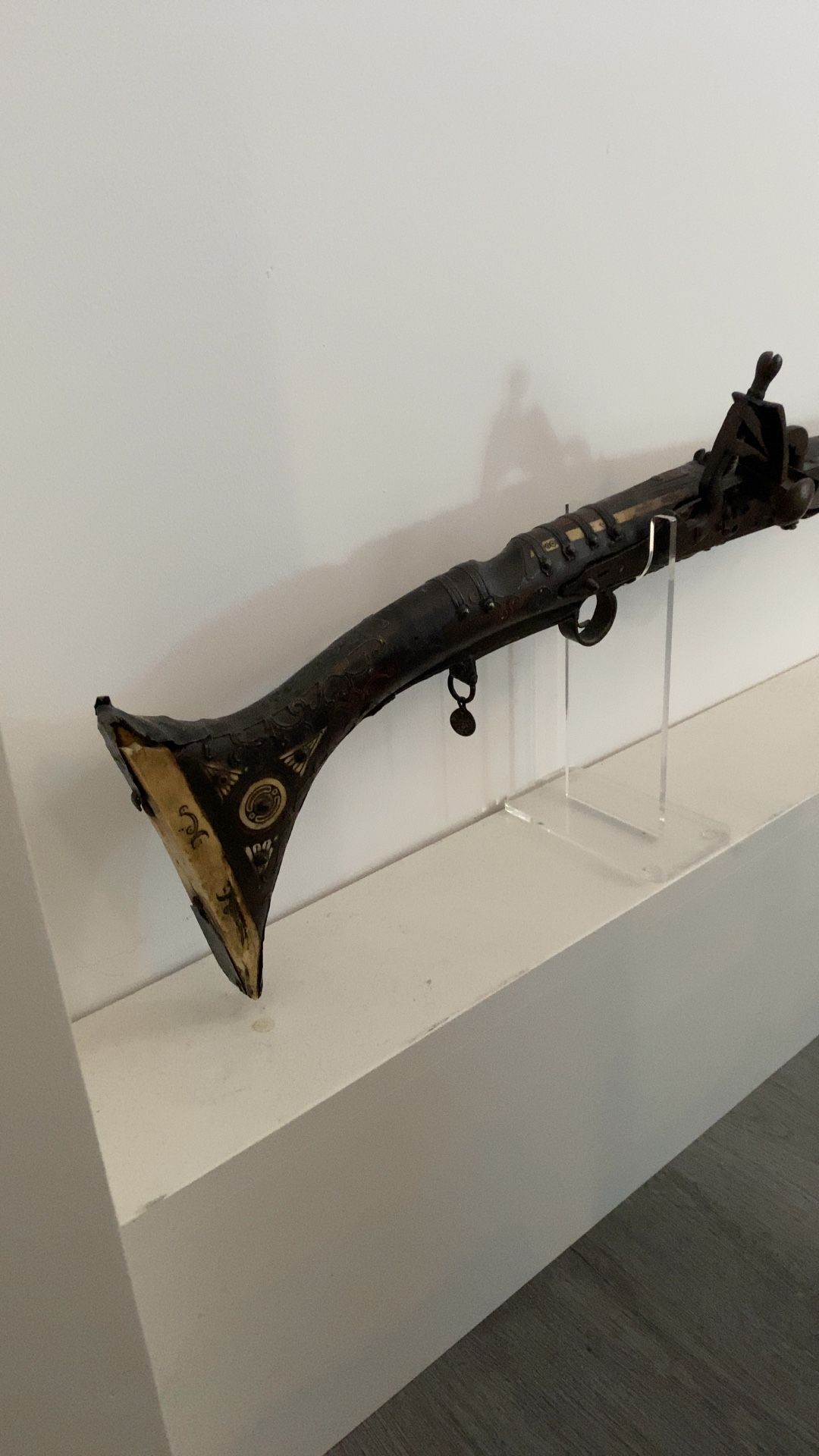
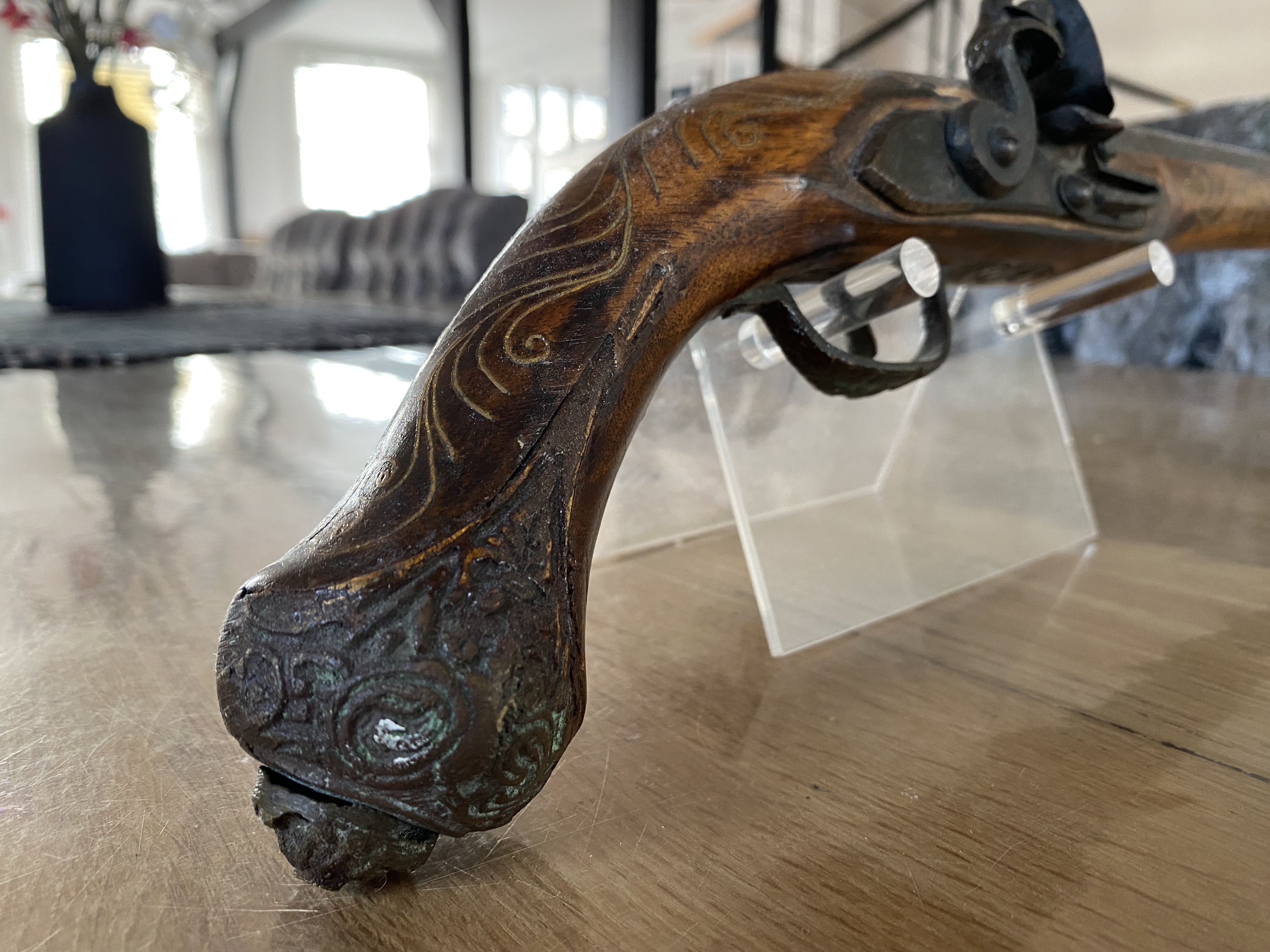
This is a characteristic Ottoman or Balkan percussion blunderbuss pistol, often called a "trombône," dating to the mid-19th century. My analysis focuses on the lock and furniture. The lock plate, side plate, and trigger guard are cast brass or bronze, exhibiting deep, foliate engraving typical of the region. The presence of a percussion lock, rather than an earlier flintlock, securely places its manufacture between roughly 1840 and 1870. The flared muzzle and short barrel were designed for defensive use at close range, making it a formidable weapon for personal or property protection. The weapon appears complete, including its ramrod, though its mechanical condition is suspect.
CULTURAL ECHOES
Where This Object Echoes
A similar functional class of firearm, these short and powerful weapons were kept by guards on stagecoaches for defense against highwaymen, serving an almost identical role to the Ottoman blunderbuss.
While using an earlier ignition system, these Japanese firearms show a similar cultural tradition of applying ornate decoration to personal weapons, viewing them not just as tools but as status objects with artistic merit.
Ritual & Ceremonial Use
- •Caravan Guarding
- •Home and Property Defense
Meaning Through Time
A practical, effective, and fearsome tool for self-preservation in a civilian context.
Became an obsolete curiosity, often acquired by Western travelers or soldiers as a souvenir of the 'Orient'.
A collector's item and decorative artifact, valued for its ethnographic history, craftsmanship, and aesthetic as a 'wall-hanger'.
HISTORICAL STORY
DID YOU KNOW?
The term 'blunderbuss' is a corruption of the Dutch 'donderbus,' meaning 'thunder box' or 'thunder pipe,' a fitting name for its loud report and intimidating appearance.
Unlike rifles, blunderbusses were often loaded with multiple small projectiles like lead shot, pebbles, or scrap metal, creating a shotgun-like effect that was devastating at close range.
MATERIAL & CONDITION
Surface
The hardwood stock possesses a deep, dark brown patina from age and handling. The iron barrel is covered in a stable, dark, matte patina. The cast brass/bronze furniture is heavily encrusted with green verdigris, especially in the recesses of the foliate engraving, attesting to its age and exposure to moisture over time.
Weight & Feel
Appears substantial and decidely front-heavy due to the thick iron barrel. I would estimate a weight of 4-6 pounds (approx. 2-3 kg), giving it a dense and solid feel in hand.
Condition
The piece appears structurally complete but is in relic or "attic" condition as per the user's note. The heavy verdigris on the brass requires careful conservation, not aggressive cleaning. The action is likely seized, and the firearm should be considered non-functional and unsafe to fire.
RARITY ANALYSIS
Genuine antiques with fewer examples on the market. Named makers, documented provenance, or early production examples.
Typical Characteristics
- Limited production
- Named makers
- Growing collector demand
EXPERT ANALYSIS
Militaria Historian
Confidence is high because the firearm's form, percussion lock mechanism, and decorative style are all highly characteristic of a mid-19th century Ottoman/Balkan blunderbuss. The signs of aging appear authentic and consistent with the period specified by the user.
KEY EVIDENCE
- 1The presence of a percussion lock system places the firearm's manufacture firmly in the mid-19th century (c. 1840-1870).
- 2The flared 'blunderbuss' muzzle is characteristic of close-quarters defensive weapons of the era.
- 3The style of the stock and the foliate engraving on the brass furniture are typical of Ottoman or Balkan craftsmanship.
- 4The heavy, stable patina on the iron and the deep green verdigris on the brass are strong indicators of genuine age.
- 5The firearm's compact size aligns with its use as a personal defense weapon for travelers or home protection.
UNCERTAINTIES
- •The absence of visible maker's or proof marks makes specific attribution to a workshop impossible.
- •The mechanical condition is unknown and should be assumed non-functional.
WHAT WOULD IMPROVE CERTAINTY
- →Do not attempt to clean the verdigris; this can severely damage the value. Consult a professional arms conservator.
- →Carefully check the barrel (often on the top or bottom flat) and lock plate for any faint stamps or marks under good lighting and magnification.
- →Never attempt to load or fire this weapon. It is an antique display piece only.
- →Confirm local and national laws regarding the ownership and display of antique firearms, as regulations vary.
ESTIMATED VALUE
Updated: Feb 28, 2026
- Market comparables from auctions & retail
- Condition, completeness & craftsmanship
- Current collector demand & trends
- Low = quick sale, high = patient seller
For informational purposes only, not a formal appraisal.
CONTEXT ANALYSIS
How your provided context compares with Curiosa.com scanner findings.
What Aligned
- The user's identification as an 'Ottoman' 'short, blunderbuss-type firearm' from '1850-1870' is strongly supported by the object's form, percussion lock mechanism, and decorative style.
- The description of its use for 'home protection, caravan security, and shipboard defense' is an accurate functional assessment for this type of weapon.
- The user's assessment that it 'Needs restoration' aligns with the visible heavy verdigris and overall aged condition.
ABOUT MILITARIA
Military uniforms, weapons, medals, equipment, and war memorabilia.
Browse all MilitariaSHARE THIS CURIOSITY
Have your own curiosities to discover?
Scan Your Curiosity
COMMENTS
No comments yet. Be the first to share your thoughts!
Sign in to leave a comment