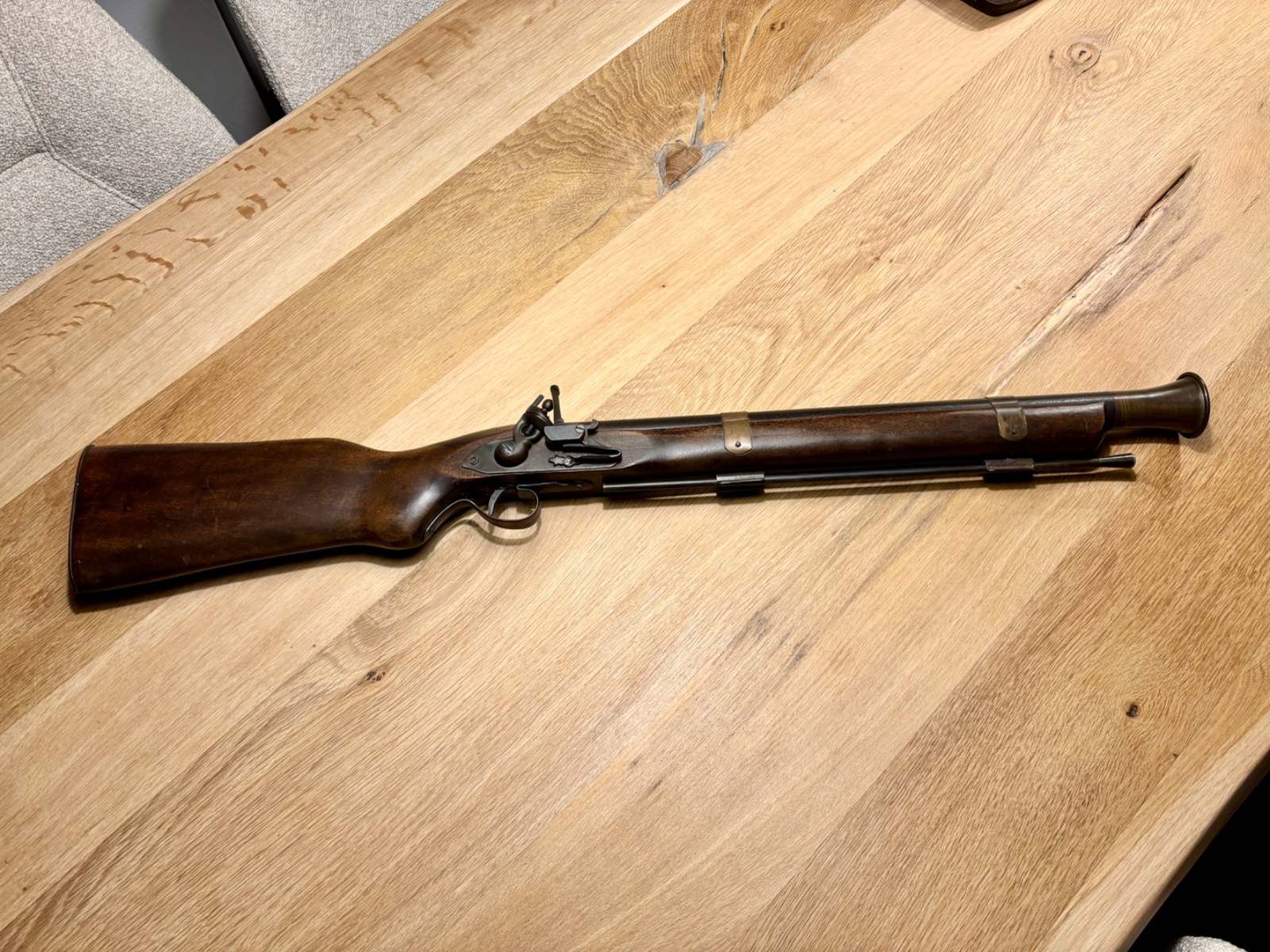
Ottoman Balkan "Rat-Tail" Flintlock Pistol
QUICK FACTS
Categories
Era
c. 1780-1850
Origin
🌍 International
Rarity
Uncommon (5/10)
Discovered
Feb 28, 2026
1 day ago
DESCRIPTION
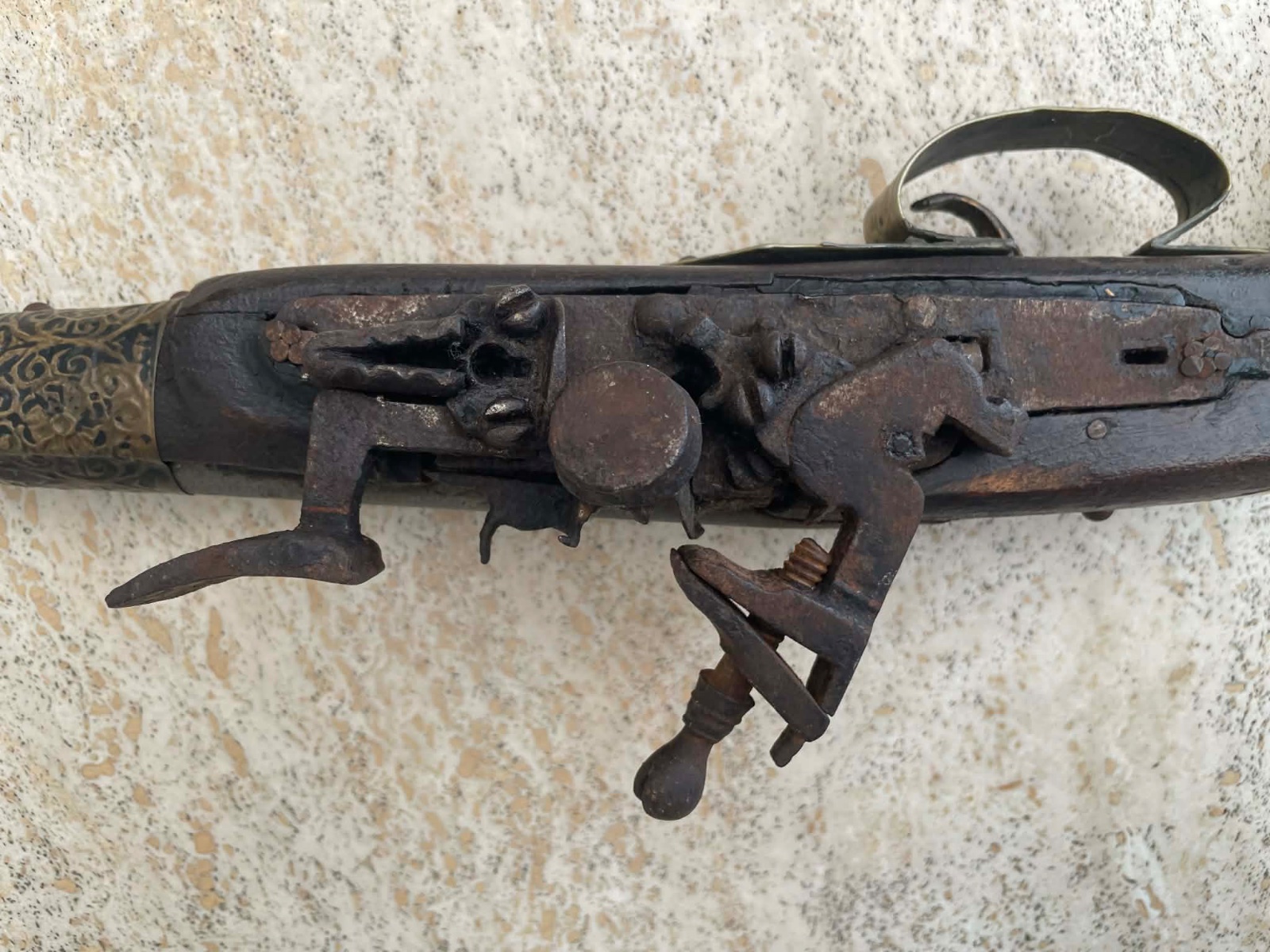
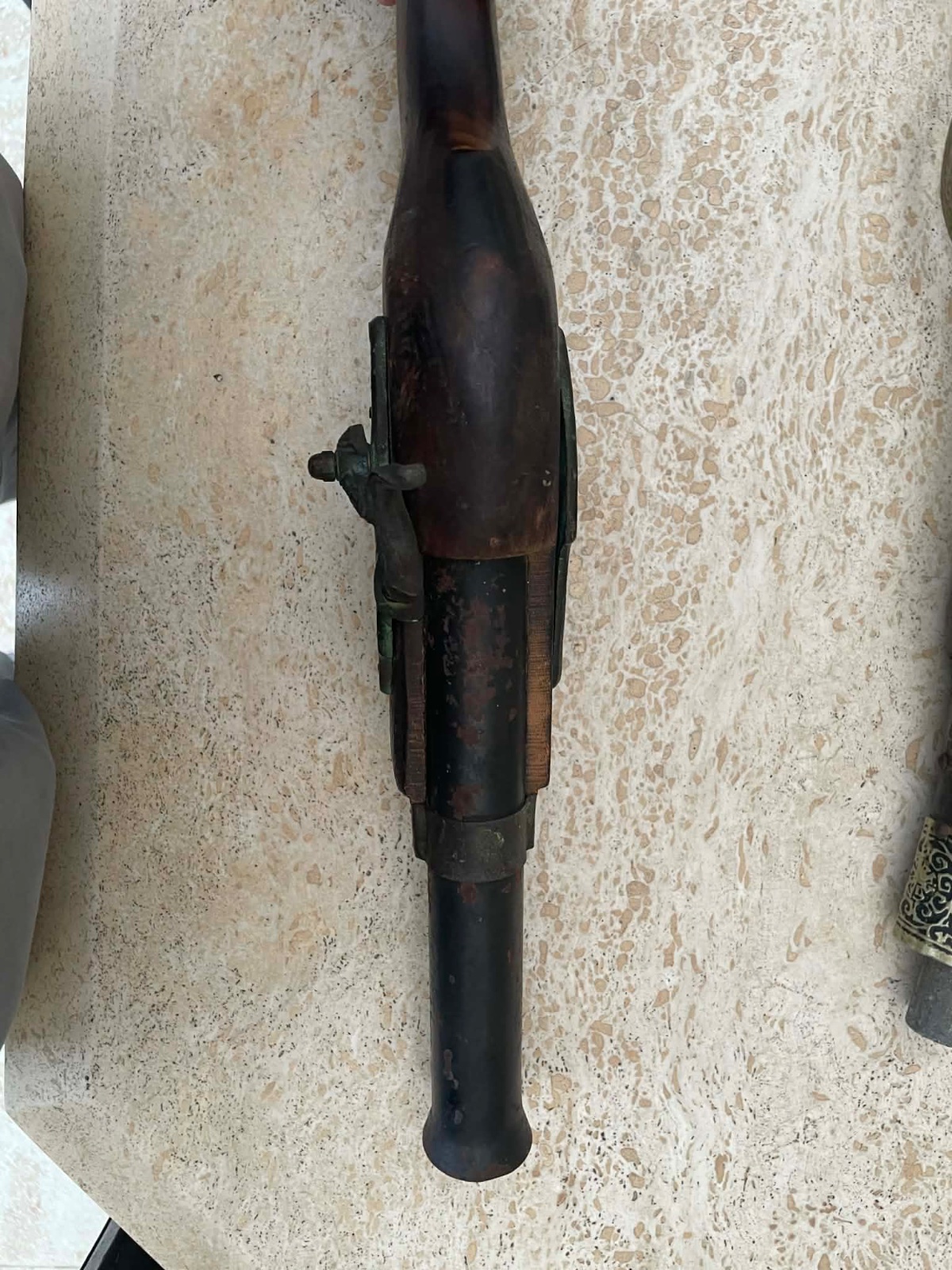
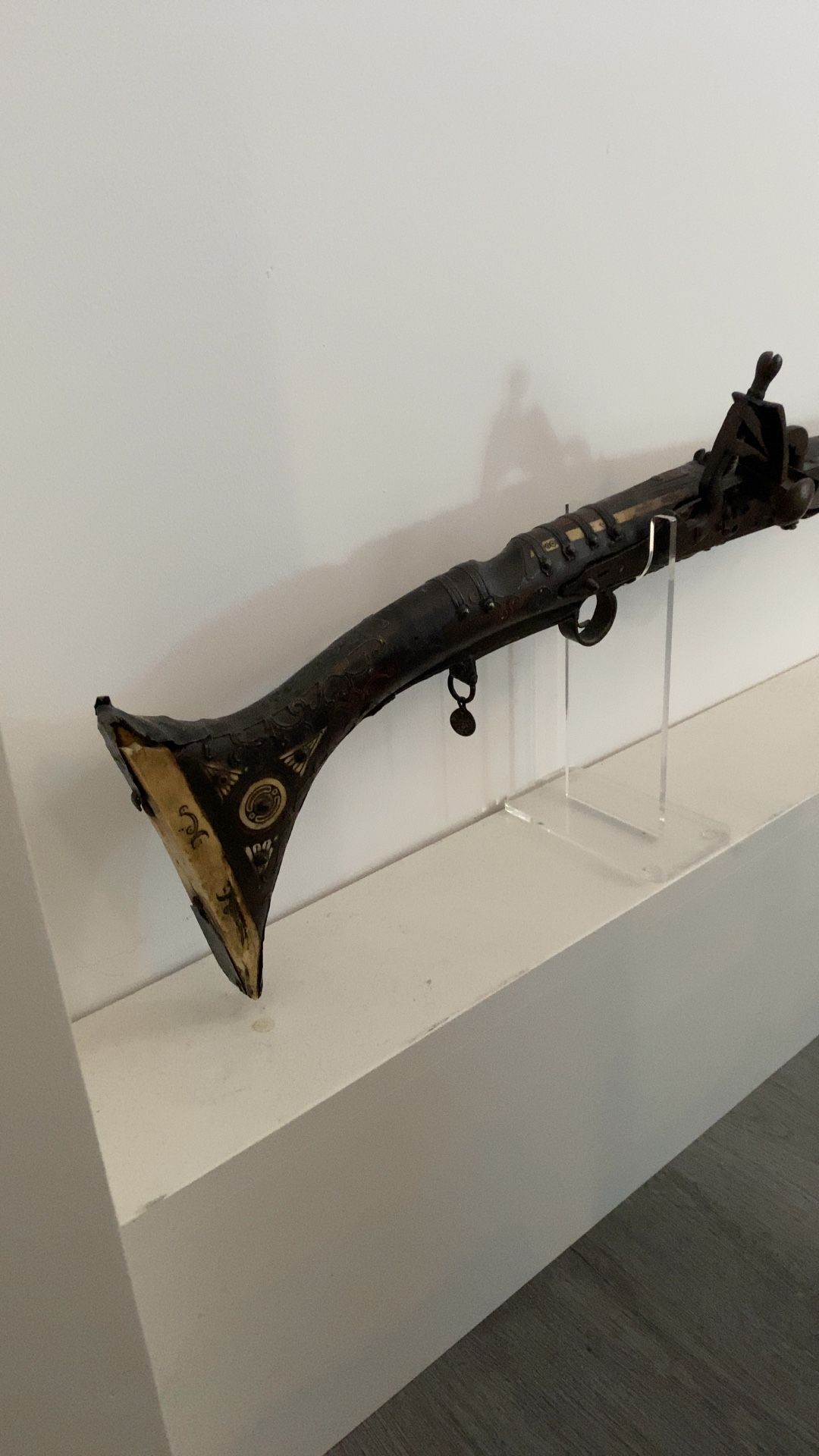
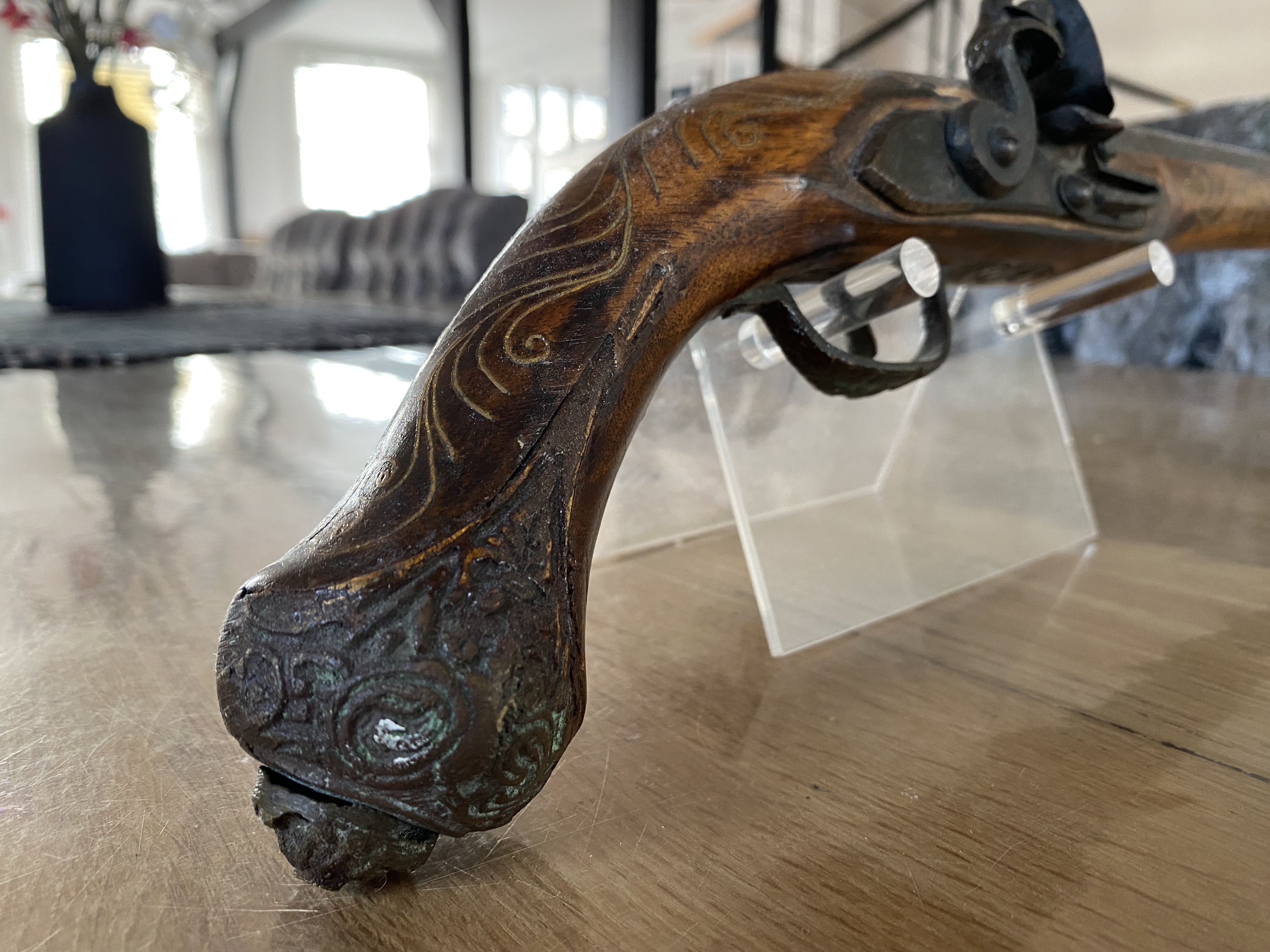
This is an Ottoman-era flintlock pistol of the type commonly called "Balkan" or "rat-tail" by collectors. The form, with its slender stock, cast brass furniture, and distinctive spherical pommel, is characteristic of artisanal workshops in Albania, Epirus, and the surrounding regions. My focus is immediately drawn to the lock mechanism, which is in a state of extreme corrosion; the hammer, frizzen, and pan are frozen into a single mass of iron oxide. This contrasts with the relatively good preservation of the stock's decoration—circular bone or ivory inlays known as 'oculi'—and the engraved brass trigger guard. This is a non-functional, decorative relic that speaks to its history more through its decay than its original function.
CULTURAL ECHOES
Where This Object Echoes
The firearms of the Kabyle people in North Africa share a similar aesthetic of long, slender stocks and ornate decoration, reflecting a shared Mediterranean gunsmithing tradition.
Gunsmiths in Brescia were famous for their ornate, high-art firearms with intricate steel chiseling and inlays, representing a parallel European tradition of the firearm as a status object.
Ritual & Ceremonial Use
- •Carrying such a pistol tucked into a sash was a rite of passage and a symbol of manhood and honor.
- •These weapons were often fired into the air during weddings and other celebrations, a practice that continues in some regions with modern firearms.
Meaning Through Time
A vital tool for self-defense and a primary indicator of a man's social standing and wealth.
Became an 'exotic' artifact or souvenir, often brought back to Western Europe by travelers on the 'Grand Tour' or soldiers.
A specific category of antique arms collecting, valued as a historical document and a piece of decorative folk art.
HISTORICAL STORY
DID YOU KNOW?
Such pistols are often called 'rat-tail' pistols by collectors due to their long, slender stocks that terminate in a distinct pommel.
These were considered a core part of a man's traditional formal attire in many Balkan regions, as essential as a fine coat or boots.
MATERIAL & CONDITION
Surface
A study in contrasting decay: the ferrous lock mechanism exhibits deep, laminar rust and heavy pitting. Conversely, the walnut stock retains a dark, hand-worn patina, while the brass furniture shows deep tarnish with residual hand-chased engraving. The bone or ivory inlays are yellowed with age, showing a fine grain or crazing.
Weight & Feel
Though long, it would feel relatively light and lively in the hand, with a distinct balance point towards the rear due to the solid brass pommel. It's built for flourish, not for a soldier's steady aim.
Condition
Relic condition. The entire lock mechanism is non-functional, seized solid with advanced corrosion, and the frizzen spring assembly is broken. The stock is in fair condition with good decorative appeal, showing numerous dings and scratches from its service life. This is a decorative, historical artifact, not a functional firearm.
RARITY ANALYSIS
Genuine antiques with fewer examples on the market. Named makers, documented provenance, or early production examples.
Typical Characteristics
- Limited production
- Named makers
- Growing collector demand
EXPERT ANALYSIS
Militaria Historian
High confidence in the general type, origin, and period due to the highly characteristic and well-documented form, materials, and decorative motifs which align perfectly with known examples of Ottoman Balkan firearms and the provided user context.
KEY EVIDENCE
- 1The highly distinctive 'rat-tail' stock and spherical 'apple' pommel are diagnostic for the Balkan region.
- 2Presence of 'oculi' (eye) motifs in bone/ivory is a classic decorative feature of Albanian/Epirote work.
- 3The lock is a period-correct Mediterranean-style flintlock (or miquelet variant).
- 4Artisanal, non-standardized construction confirms it is a personal, non-military piece.
- 5The pattern of extreme corrosion on the steel lock versus the better-preserved wood/brass is a common and authentic aging pattern.
UNCERTAINTIES
- •The inlay material has not been confirmed as bone or ivory; if ivory, its sale and transport could be subject to legal restrictions (e.g., CITES).
- •The complete seizure of the lock prevents any inspection of internal components or potential maker marks hidden within.
WHAT WOULD IMPROVE CERTAINTY
- →Consult a professional firearms conservator to stabilize the rust on the lock and prevent further flaking or loss.
- →Seek non-destructive expert opinion to determine if the inlays are bone or antique ivory.
- →Photograph any visible markings on the barrel (often hidden under the wood), as these can sometimes indicate origin.
- →Compare the decorative patterns to documented examples in museum collections (like The Met or the Wallace Collection) to potentially narrow the regional origin.
ESTIMATED VALUE
Updated: Feb 28, 2026
- Market comparables from auctions & retail
- Condition, completeness & craftsmanship
- Current collector demand & trends
- Low = quick sale, high = patient seller
For informational purposes only, not a formal appraisal.
CONTEXT ANALYSIS
How your provided context compares with Curiosa.com scanner findings.
What Aligned
- User assertion of an Ottoman/Balkan flintlock from 1780-1850 is strongly supported by the pistol's characteristic 'rat-tail' form, spherical pommel, and 'oculi' inlay style.
- The identification of the origin as Albania, Northern Greece, or Western Turkey is correct, as this is the primary region for this type of firearm.
- User's description of the inlaid decoration, non-military nature, and specific features like the pommel cap are all accurate and align with visual evidence.
What Conflicted
- The user's description of 'age-appropriate wear' significantly understates the condition of the lock mechanism, which is catastrophically corroded and seized, placing the item in a 'relic' grade rather than simply 'worn'.
ABOUT MILITARIA
Military uniforms, weapons, medals, equipment, and war memorabilia.
Browse all MilitariaSHARE THIS CURIOSITY
Have your own curiosities to discover?
Scan Your Curiosity
COMMENTS
No comments yet. Be the first to share your thoughts!
Sign in to leave a comment