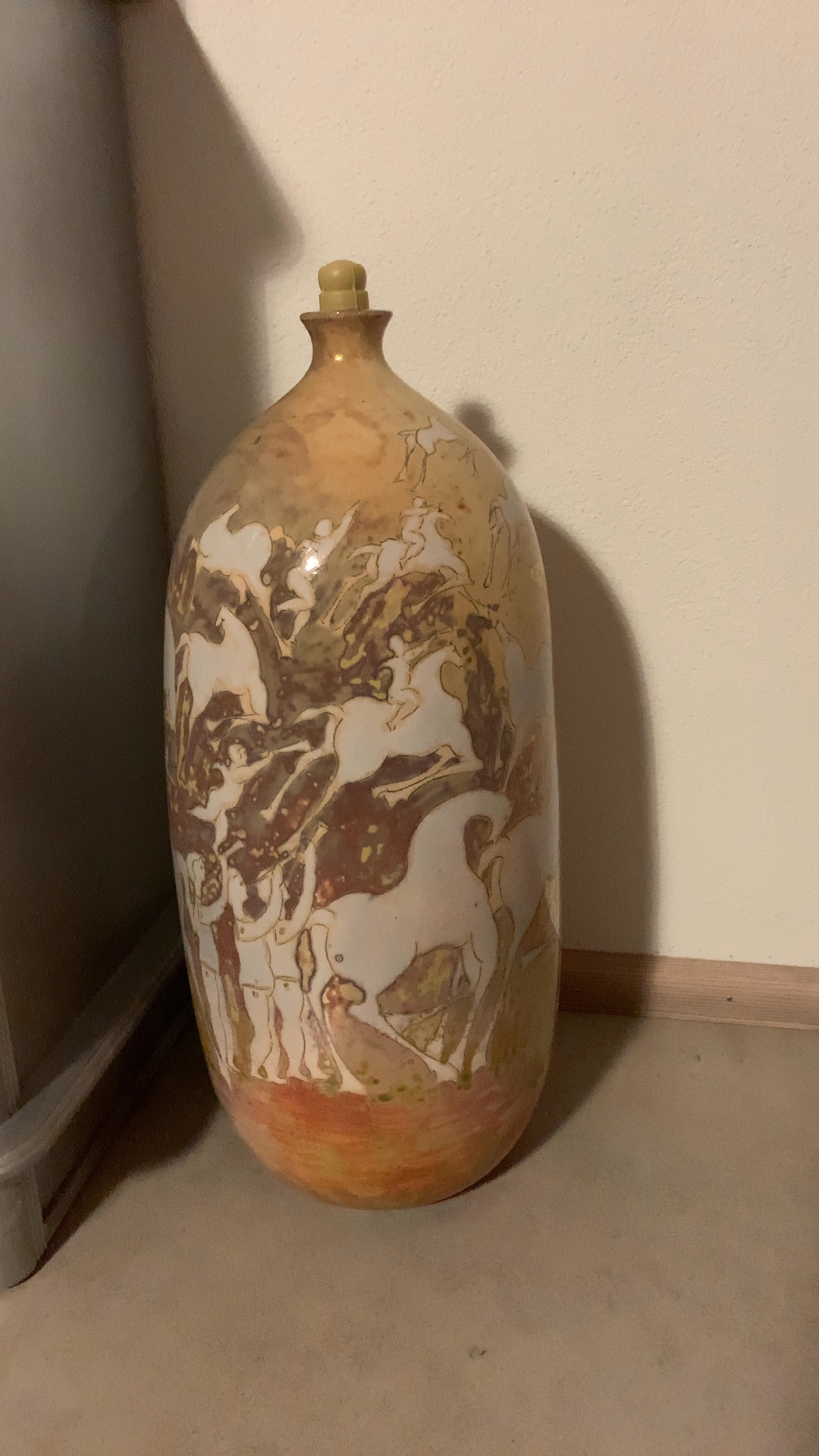
Mid-Century Modern Ceramic Bottle Vase with Figural and Equine Decoration
QUICK FACTS
Categories
Era
Mid-20th Century (1950s-1970s)
Origin
🌍 International
Rarity
Average (4/10)
Discovered
Feb 23, 2026
5 days ago
DESCRIPTION
This appears to be a large ceramic or stoneware bottle vase, notable for its distinct elongated form and narrow neck, topped with what looks like a stopper. The surface is adorned with a complex, somewhat abstract design featuring figures and horses, executed in a sgraffito-like technique where the lighter, outlined motifs stand out against a mottled, earthy-toned ground of browns, ochres, and muted greens. The design covers a significant portion of the body, transitioning to a warm, peachy-orange hue towards the base. The overall aesthetic suggests a mid-20th-century influence, drawing on ancient or tribal art motifs but reinterpreted with a modern sensibility.
CULTURAL ECHOES
Where This Object Echoes
The outlined figural and animal motifs, particularly the horses, recall the silhouette and narrative styles found on ancient Greek vases, though reinterpreted with a distinct modern aesthetic.
The earthy palette, abstract human figures, and overall graphic quality of the decoration bear stylistic similarities to certain forms of pre-colonial African pottery and textile designs, which heavily influenced mid-century artists.
The hand-painted or incised decoration, organic form, and use of textured glazes are consistent with artistic pottery produced within the prominent mid-century modern ceramic movements in Italy and France.
Ritual & Ceremonial Use
- •The ritual of domestic display, where such a vase serves as a focal point or conversation piece in a modernist interior, reflecting the homeowner's appreciation for artistic and handcrafted objects.
- •Gift-giving, as art pottery entered the realm of desirable domestic gifts during the mid-20th century.
Meaning Through Time
Vases often served functional purposes for storage or libations, with decorations narrating myths or historical events.
The bottle vase transitioned from primarily functional to a sculptural art object during this period, emphasizing form, texture, and abstract or stylized decoration over utility.
These pieces are now appreciated for their aesthetic representation of the Mid-Century Modern design movement, valued by collectors of vintage art pottery and interior design enthusiasts.
HISTORICAL STORY
DID YOU KNOW?
Bottle vases, despite their narrow openings, were rarely used for cut flowers. Their primary purpose was aesthetic, serving as sculptural objects in their own right, reflecting a growing appreciation for form over function in mid-century design.
The sgraffito technique, where a layer of slip or underglaze is scratched away to reveal a contrasting color beneath, dates back to ancient times but experienced a revival in modern ceramics, allowing for textured and graphic decorative effects like those seen on this piece.
MATERIAL & CONDITION
Surface
The surface exhibits a glossy, somewhat textured glaze, particularly where the multi-colored mottled background interacts with the outlined figures. The lighter areas of the figures and horses appear to be a slip or underglaze that has been incised or otherwise contrasted against the more heavily worked ground-color glaze. There's an intentional unevenness in the glaze application, contributing to its organic, hand-crafted feel.
Weight & Feel
Given its size and substantial ceramic form, I would expect this vase to have a considerable, solid weight, reflecting the density of the ceramic body, possibly stoneware, and supporting its stable, sculptural presence.
Condition
Visually, the vase appears to be in good condition, with no immediate signs of chips, cracks, or significant losses to the glaze. The lustrous quality of the finish seems well-preserved. Minor surface wear or slight crazing, consistent with age and typical for ceramics of this period, might be present upon closer inspection.
RARITY ANALYSIS
Typical antique shop fare. Requires some searching but regularly available. This is where most genuine antiques fall.
Typical Characteristics
- Standard antique shop items
- Regularly available
- Moderate collector interest
EXPERT ANALYSIS
Decorative Arts Specialist
The visual cues, particularly the form, decorative style, and glaze, strongly align with known ceramic styles from the mid-20th century. However, the lack of a visible maker's mark prevents a more precise attribution, hence the slightly reduced confidence.
KEY EVIDENCE
- 1Elongated bottle form and narrow neck are characteristic of mid-century artistic ceramics.
- 2The specific style of figural and equine decoration, featuring outlines against a mottled background, aligns with graphic trends of the 1950s-1970s.
- 3The earthy, textured glazes and muted color palette are typical of handcrafted art pottery from that era.
- 4The overall design blends ancient / tribal motifs with a modern artistic sensibility.
UNCERTAINTIES
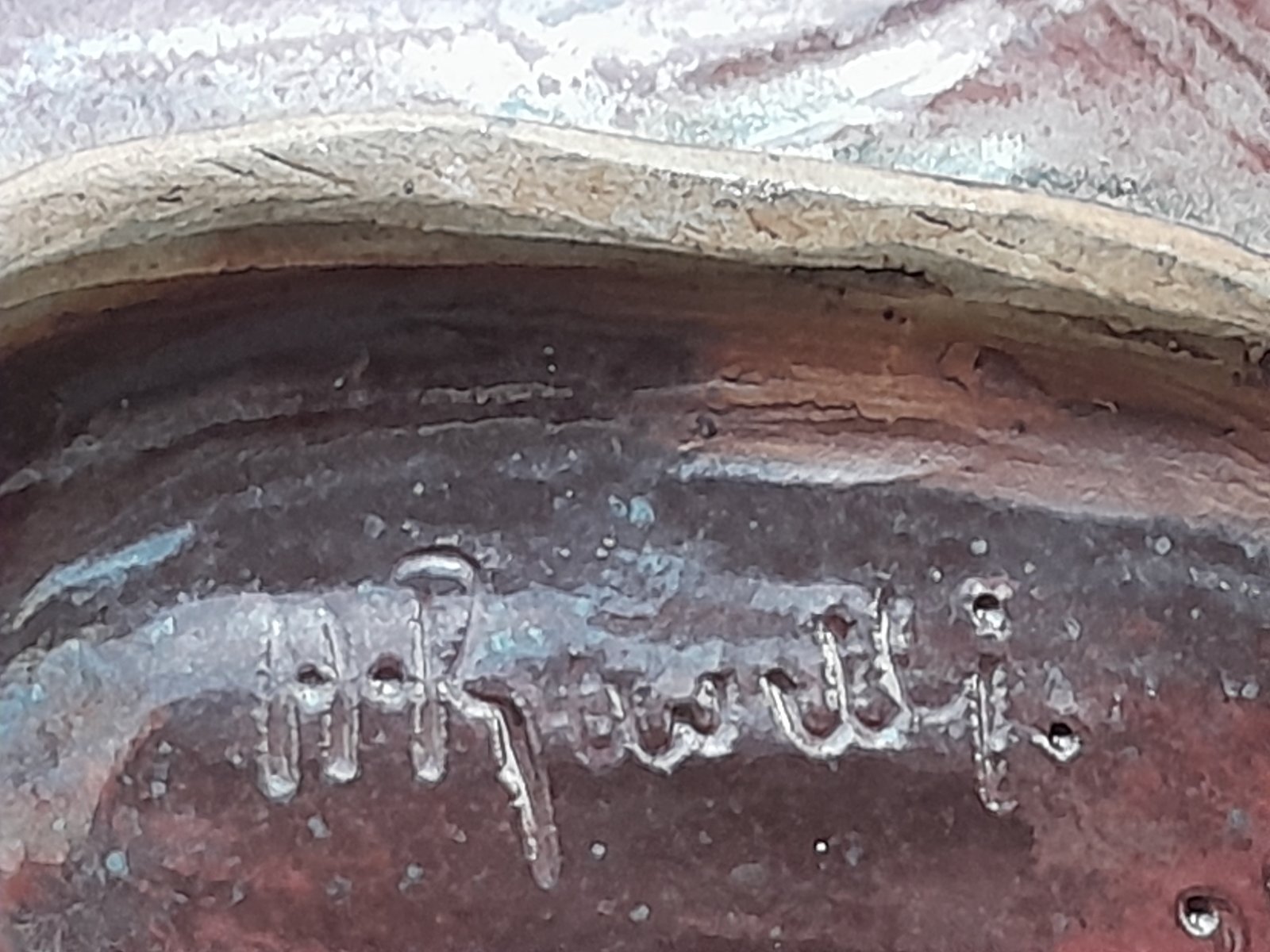
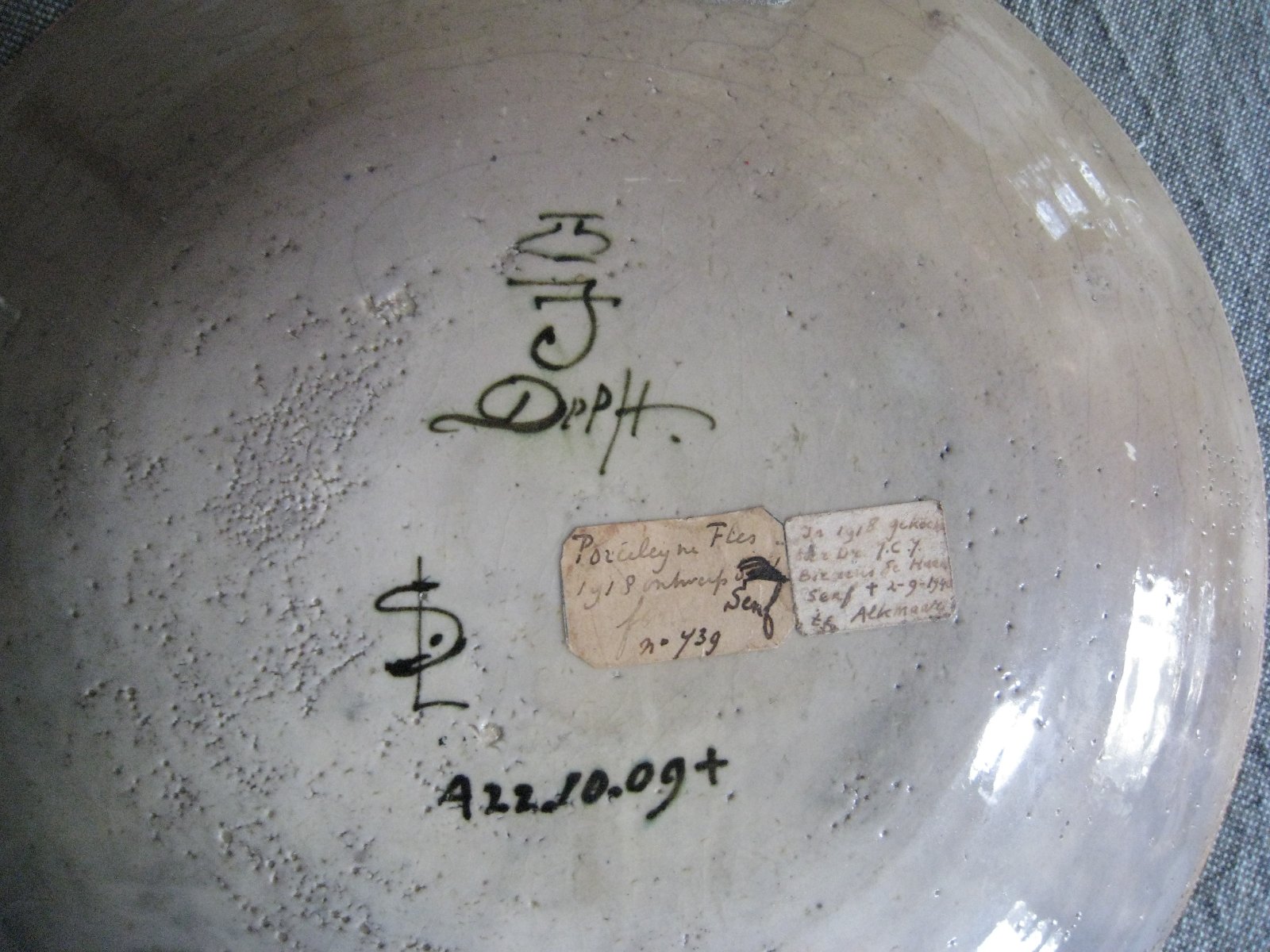
- •No visible maker's mark or signature from the provided images, which is common for artist-made pieces but hinders specific attribution.
- •The material cannot be definitively identified as stoneware or a finer ceramic body without handling the piece.
WHAT WOULD IMPROVE CERTAINTY
- →Examine the base of the vase for any impressed or painted marks, numbers, or signatures.
- →Perform a quick tap test to gauge the ceramic body's density and indicate potential cracks.
- →Examine the surface under UV light to check for any invisible repairs or restoration.
- →Measure the piece to accurately determine its scale.
ESTIMATED VALUE
Updated: Feb 27, 2026
- Market comparables from auctions & retail
- Condition, completeness & craftsmanship
- Current collector demand & trends
- Low = quick sale, high = patient seller
For informational purposes only, not a formal appraisal.
ABOUT DECORATIVE OBJECTS
Ceramics, silver, porcelain, glassware, and decorative arts.
Browse all Decorative ObjectsSHARE THIS CURIOSITY
Have your own curiosities to discover?
Scan Your Curiosity
COMMENTS
No comments yet. Be the first to share your thoughts!
Sign in to leave a comment