Atlas of Finland
DESCRIPTION
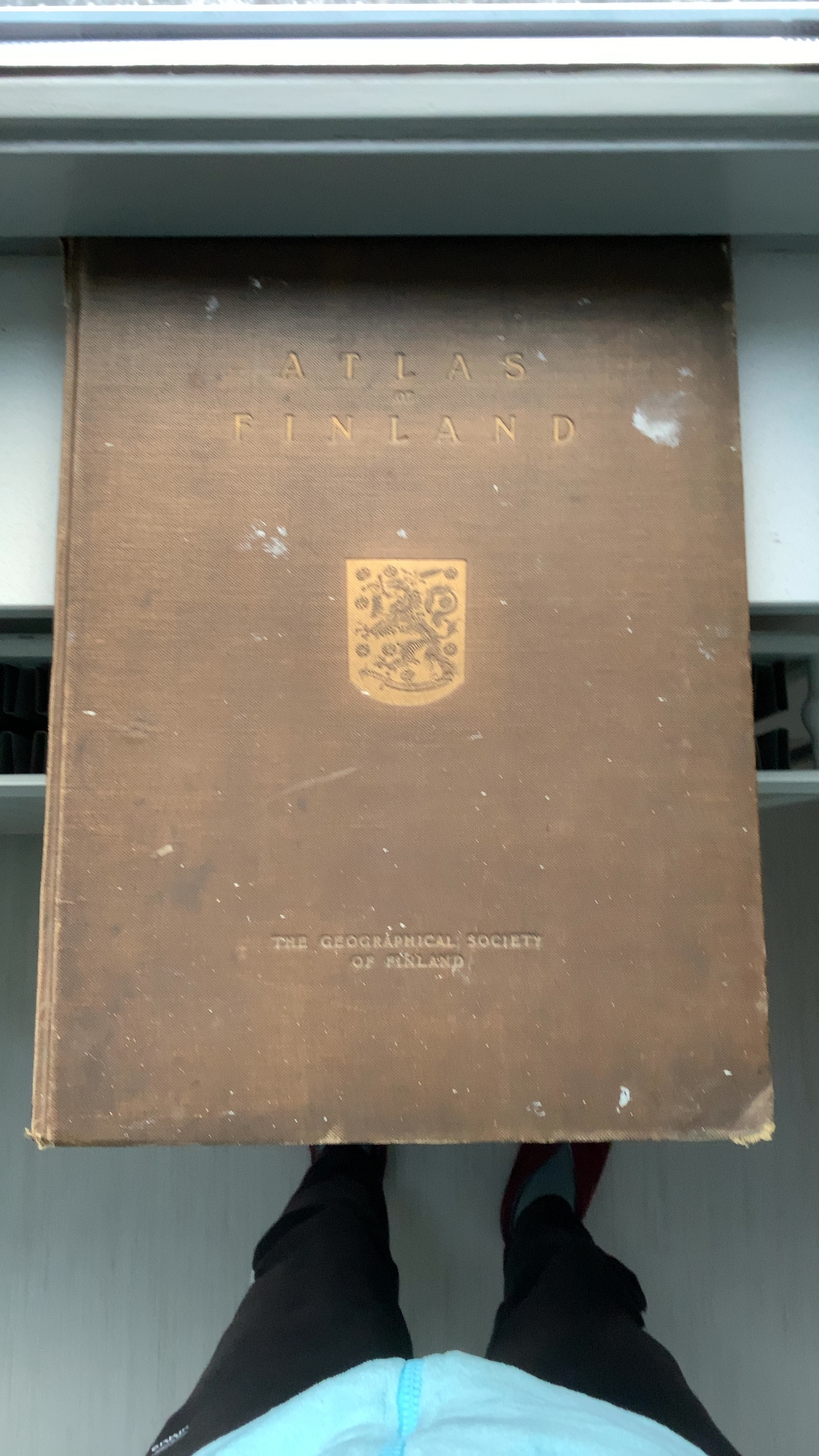
This appears to be a large-format atlas titled "Atlas of Finland," published by "The Geographical Society of Finland." The cover is a sturdy, bound board, suggesting it is a significant cartographic work. Atlases of this period are often compiled with meticulous detail, providing a snapshot of geographical, demographic, and economic conditions of a nation at a specific time.
CULTURAL ECHOES
Where This Object Echoes
The tradition of creating comprehensive national atlases flourished globally in the 19th and 20th centuries, often serving as benchmarks for geographical research and national identity.
While not directly an art piece, the clear, functional presentation often found in Northern European academic publications can echo a broader regional aesthetic of practicality and clarity.
Ritual & Ceremonial Use
- •Academic study and research, particularly in geography, geopolitics, and environmental sciences.
- •The ritualized act of marking national and territorial boundaries, and assessing natural resources.
Meaning Through Time
A symbol of national identity and scientific advancement for a newly independent nation like Finland.
An important historical document, reflecting past geographical knowledge and statistical data, increasingly valued for its historical rather than practical cartographic content.
HISTORICAL STORY
DID YOU KNOW?
Finland has a rich history of cartography, with its 'Atlas of Finland' series being one of the world's oldest and most respected national atlases, first published in parts starting in 1899.
Early national atlases were often monumental works, showcasing not only geographical features but also extensive statistical data on population, economy, and natural resources, reflecting a nation's self-perception and development.
MATERIAL & CONDITION
Surface
The surface is a brown cloth binding over boards, exhibiting a textured weave. The title and publisher's information, along with the Finnish lion rampant crest, appear to be debossed or gilt-stamped, although the gilding now shows significant wear. There are visible scuffs, smudges, and what appears to be plaster or paint residue, indicating extensive use and possibly storage in a less-than-ideal environment.
Weight & Feel
Given its size and substantial binding typical for a folio atlas, this would be a heavy and imposing volume, likely weighing several kilograms.
Condition
The binding shows considerable wear, with scuffing, staining, and some loss of surface material, particularly visible on the front cover. The edges and corners appear bumped and abraded. Without viewing the spine or interior, one can only surmise that the internal pages may suffer from foxing or some degree of damp staining, common in atlases of this age with compromised external condition.
RARITY ANALYSIS
Genuine antiques with fewer examples on the market. Named makers, documented provenance, or early production examples.
Typical Characteristics
- Limited production
- Named makers
- Growing collector demand
EXPERT ANALYSIS
Rare Book Dealer & Bibliographer
Confidence is good as the cover clearly identifies the object as an 'Atlas of Finland' by a specific geographical society. However, without access to internal pages, specific edition, printing, and exact date remain unconfirmed, which influences the precision of the valuation.
KEY EVIDENCE
- 1Folio-sized, cloth-bound volume.
- 2Cover text clearly states 'Atlas of Finland'.
- 3Publisher identified as 'The Geographical Society of Finland'.
- 4Presence of the Finnish lion rampant crest suggests an official or national publication.
UNCERTAINTIES
- •Lack of visible publication date or edition information without opening the book.
- •No visible spine information, which could contain further bibliographic details.
- •The condition of the cover suggests potential internal damage not visible here.
WHAT WOULD IMPROVE CERTAINTY
- →Photograph the title page, copyright page, and verso of the title page to ascertain author, full title, publisher, place, year, and edition/printing points.
- →Capture images of the spine, both front and back boards, and page edges to assess overall binding integrity and condition more thoroughly.
- →Check for any internal inscriptions, bookplates, or stamps that might indicate provenance.
- →Note the paper quality and look for any signs of foxing, toning, or damp stain on the interior pages.
ESTIMATED VALUE
Updated: Feb 27, 2026
- Market comparables from auctions & retail
- Condition, completeness & craftsmanship
- Current collector demand & trends
- Low = quick sale, high = patient seller
For informational purposes only, not a formal appraisal.
SHARE THIS CURIOSITY
Have your own curiosities to discover?
Scan Your Curiosity
COMMENTS
No comments yet. Be the first to share your thoughts!
Sign in to leave a comment