Chinese Export Porcelain Miniature Vase
QUICK FACTS
Categories
Era
Early 20th Century
Origin
🇨🇳 China
Rarity
Ordinary (3/10)
Discovered
Jan 17, 2026
1 months ago
DESCRIPTION
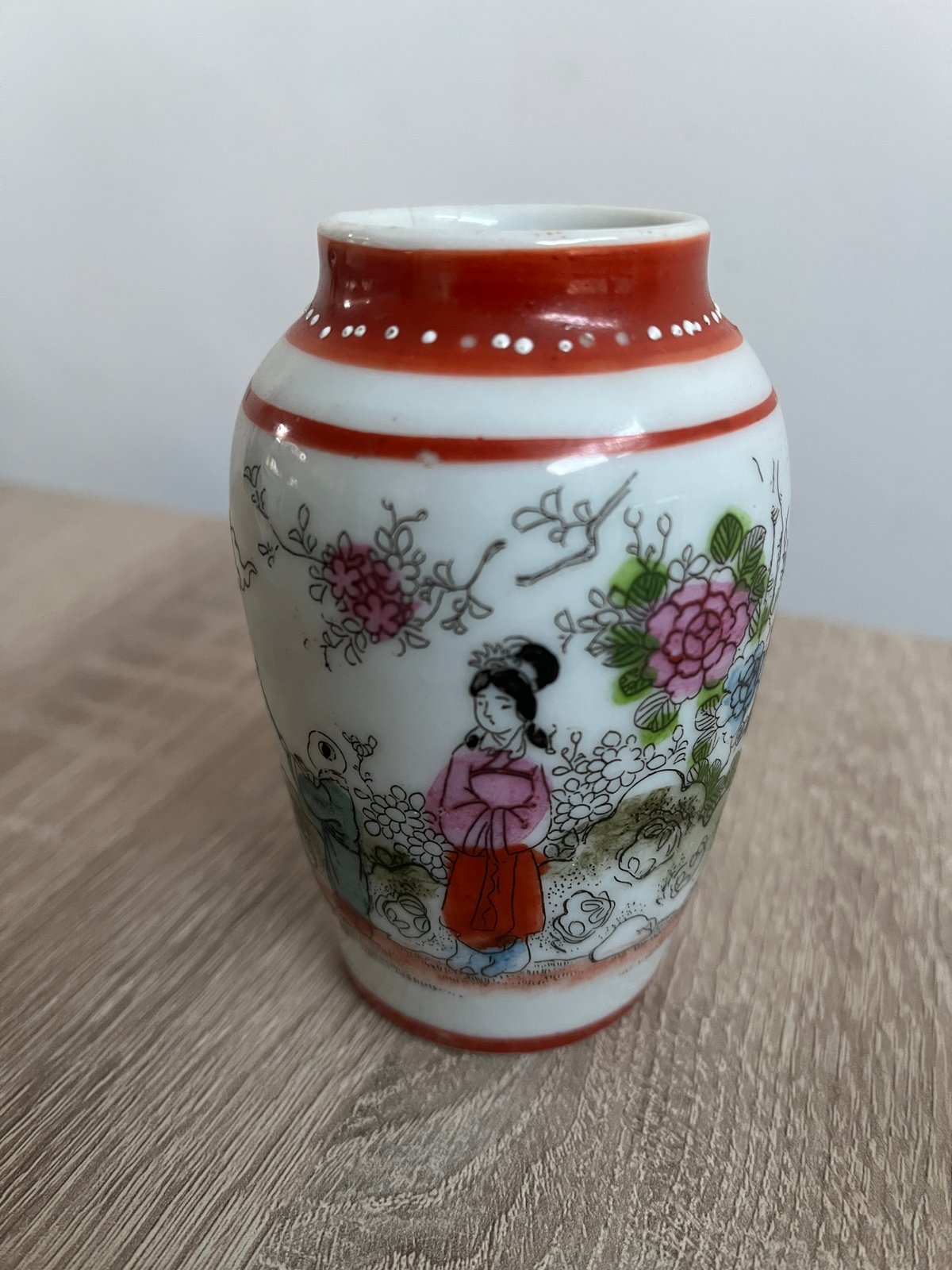
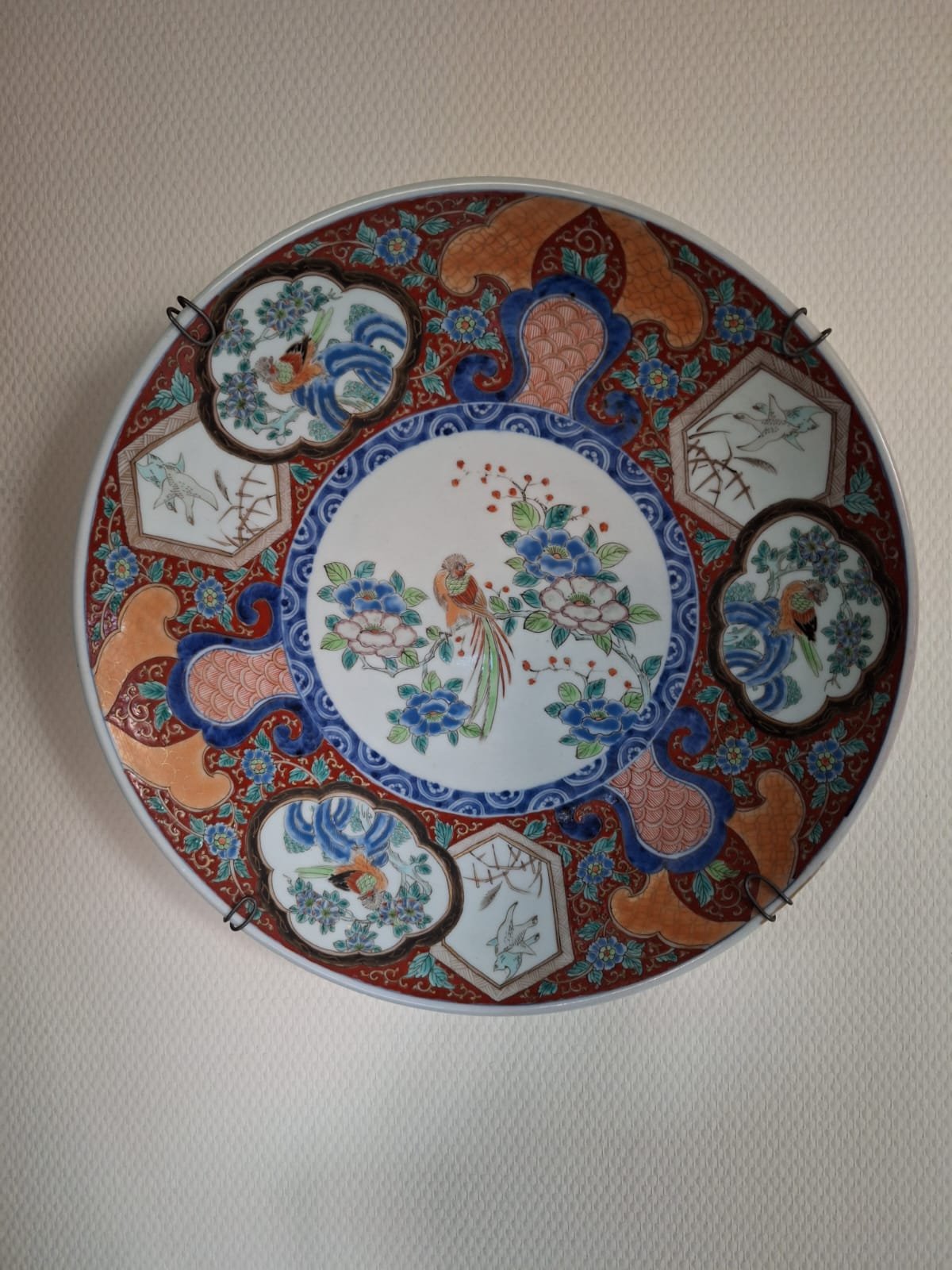
This is a small ceramic vase, likely porcelain, featuring hand-painted decorations in a polychrome palette. The design depicts traditional Asian figures and floral motifs, characteristic of Chinese export wares intended for a Western market. The form is a classic squat baluster shape, often referred to as a ginger jar or miniature vase, and it measures approximately 3-4 inches in height.
CULTURAL ECHOES
Where This Object Echoes
The extensive production of ceramics specifically for Western markets, adapting traditional designs to cater to European and American tastes.
A European art style influenced by Chinese design, which often incorporated similar figure and landscape motifs on decorative objects.
Ritual & Ceremonial Use
- •Display in a cabinet of curiosities or on a mantelpiece, serving as a decorative 'exotic' element in Western homes.
- •Gift-giving, particularly as souvenirs or tokens acquired on travels to China.
Meaning Through Time
Primarily viewed as an exotic decorative object or souvenir in Western households, representing a romanticized 'Orient'.
Appreciated for its historical significance as an example of global trade and cultural exchange, as well as its artistic merit as a hand-decorated ceramic.
HISTORICAL STORY
DID YOU KNOW?
Despite their often simple appearance, export porcelains like this were crucial in shaping Western perceptions of 'Oriental' art and design for centuries.
The figures depicted on such vases often tell moral stories or represent auspicious wishes, though the specific narrative can be lost when produced for a non-native audience.
MATERIAL & CONDITION
Surface
The vase is made of a fine, white ceramic body, likely porcelain, with a glossy, somewhat irregularly applied glaze. Polychrome enamels are used for the decoration, showing slight variations in thickness and occasional drips, indicative of hand-painting. The red rim has raised white enamel dots, a common decorative flourish.
Weight & Feel
Given its small size and fine ceramic composition, this vase would feel comparatively lightweight yet solid in the hand, belying its delicate appearance.
Condition
There are minor chips to the rim, particularly visible in the second image. The glazes show some wear consistent with age and handling. There's also some minor crazing visible under closer inspection, which is typical for pottery of this age.
RARITY ANALYSIS
Standard antiques commonly found at estate sales and flea markets. Plentiful supply meets modest demand.
Typical Characteristics
- Moderate production runs
- Common at estate sales
- Entry-level collectibles
EXPERT ANALYSIS
Decorative Arts Specialist
The visual evidence strongly points to a Chinese export porcelain miniature vase from the early 20th century based on its form, decorative style, and visible wear. The lack of a clear mark prevents a more precise attribution.
KEY EVIDENCE
- 1Small, baluster form miniature vase.
- 2Hand-painted polychrome enamel decoration of figures and flowers.
- 3Red band with raised white enamel dots.
- 4Stylistic typical of Chinese export wares.
- 5Visible chips on the rim suggest age and handling.
UNCERTAINTIES
- •Lack of clear base mark prevents specific factory attribution.
WHAT WOULD IMPROVE CERTAINTY
- →Examine the base for any marks, even faint or illegible, under magnification.
- →Conduct a UV light test to check for hidden repairs or extensive restoration, particularly around the rim.
- →Photograph the interior and base to assess the ceramic body and any manufacturing quirks.
ESTIMATED VALUE
Updated: Feb 26, 2026
- Market comparables from auctions & retail
- Condition, completeness & craftsmanship
- Current collector demand & trends
- Low = quick sale, high = patient seller
For informational purposes only, not a formal appraisal.
SHARE THIS CURIOSITY
Have your own curiosities to discover?
Scan Your Curiosity
COMMENTS
No comments yet. Be the first to share your thoughts!
Sign in to leave a comment