Pair of Southeast Asian Carved Wood Architectural Elements
QUICK FACTS
Categories
Era
Early 20th Century
Origin
🌍 International
Artist/Maker
onbekend
Rarity
Uncommon (5/10)
Discovered
Jan 26, 2026
1 months ago
DESCRIPTION
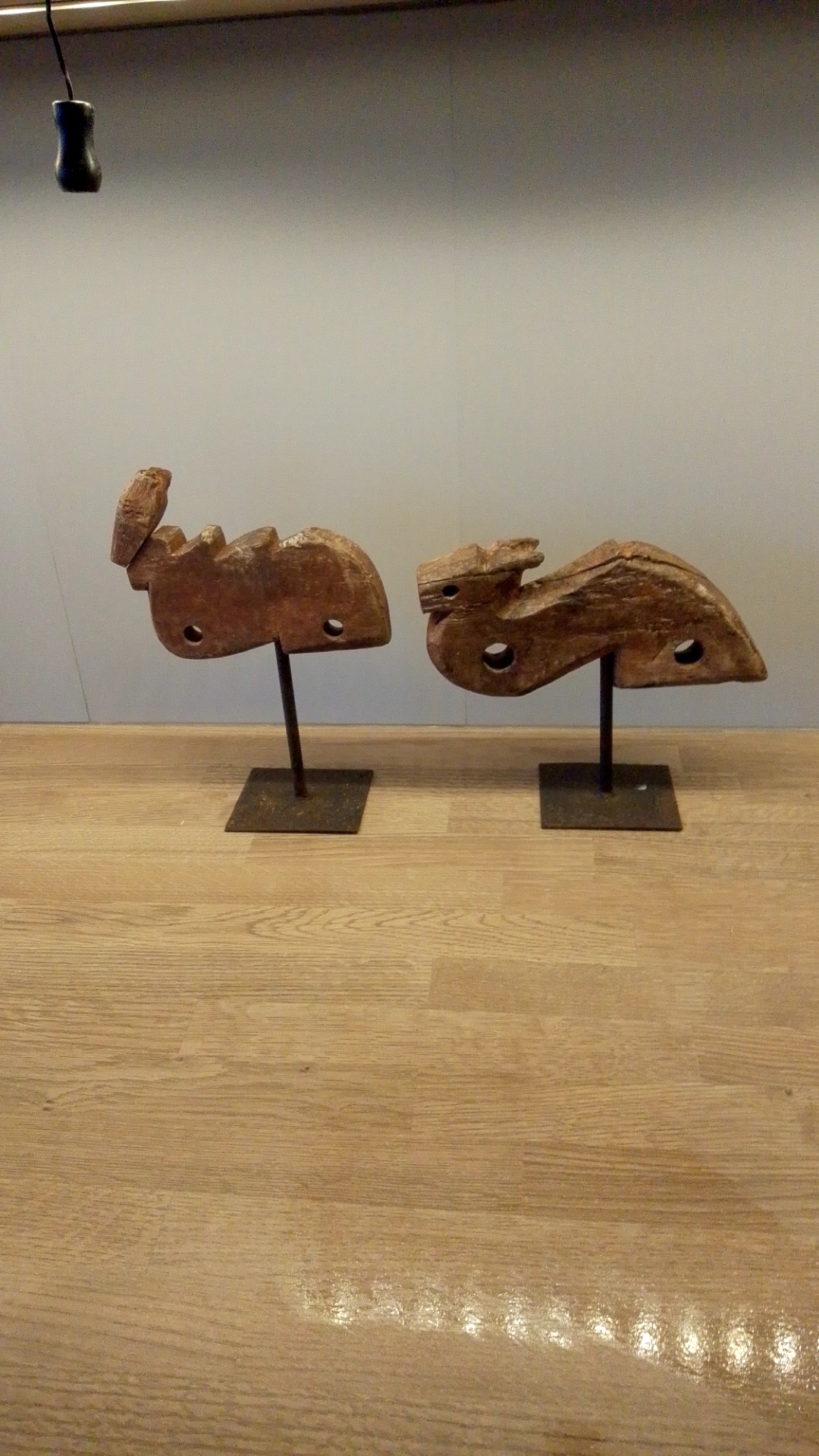
These appear to be a pair of carved wooden architectural elements, likely originating from Southeast Asia, possibly as part of a roof structure or facade. Their stylized, zoomorphic forms, characterized by flowing lines and carved indentations, suggest a traditional aesthetic often seen in regional temples or communal buildings. The wood exhibits significant age, characterized by cracking, weathering, and a warm, aged patina.
CULTURAL ECHOES
Where This Object Echoes
Stylized animal or mythical creature forms commonly found as architectural adornments in temples and traditional houses, believed to offer protection or symbolize status.
Ritual & Ceremonial Use
- •Incorporation into new building construction ceremonies, where newly carved elements might be blessed or ritually installed to ensure prosperity and ward off evil.
- •Symbolic use in domestic settings, where these forms might represent a connection to ancestral traditions or spiritual guardians.
Meaning Through Time
Integral structural and symbolic components, deeply embedded in local spiritual and cultural beliefs, often with specific protective or auspicious meanings.
Transitioned from functional architectural parts to decorative art objects, valued for their aesthetic appeal, patina, and exoticism in Western markets, often without full understanding of their original context.
HISTORICAL STORY
DID YOU KNOW?
In many Southeast Asian cultures, traditional buildings were constructed without nails, relying instead on interlocking joinery techniques, and carved elements often served as key structural connections.
The 'ears' or protruding elements on some ethnic architectural carvings are sometimes interpreted as symbolic representations of protective spirits or deities.
MATERIAL & CONDITION
Surface
The wooden surface is weathered and shows a deep, aged patination consistent with exposure to elements or a long period of preservation. There are visible stress cracks and areas where the grain is highly pronounced, suggesting a hard tropical wood. The carving style is robust, with smoothed but not polished contours.
Weight & Feel
Based on the apparent density of the wood and the size, these would feel moderately heavy, certainly substantial enough to have served a structural or prominent decorative role.
Condition
The elements exhibit significant natural wear, including deep cracks and minor losses to the wood, consistent with prolonged exposure to a tropical climate or age. The iron stands show heavy rust, indicating a similar age or at least long-term storage in less than pristine conditions. Overall, they are in 'good' antique condition, retaining their structural integrity despite the surface imperfections.
RARITY ANALYSIS
Genuine antiques with fewer examples on the market. Named makers, documented provenance, or early production examples.
Typical Characteristics
- Limited production
- Named makers
- Growing collector demand
EXPERT ANALYSIS
Asian Art Specialist
The visual characteristics strongly point to Southeast Asian architectural wood carving, with clear signs of natural aging. However, the lack of specific identifying marks or detailed context limits a more precise attribution.
KEY EVIDENCE
- 1The overall form and carving style are highly evocative of traditional Southeast Asian architectural elements.
- 2The deep, natural cracks and weathering of the wood suggest genuine age, rather than artificial distressing.
- 3The simple, robust carving technique is characteristic of functional-decorative elements.
- 4The integration of the elements into modern metal stands indicates their re-contextualization as decorative art objects.
UNCERTAINTIES
- •Without closer inspection or known provenance, precise geographic origin within Southeast Asia is difficult.
- •The exact function of these pieces within a larger architectural scheme is not immediately obvious from the images alone.
WHAT WOULD IMPROVE CERTAINTY
- →High-resolution images of the wood grain and any possibly visible tool marks (e.g., adze marks) to help determine carving technique and age.
- →Examination of the reverse or hidden surfaces for any traces of original attachment points or further carving details.
- →Specific measurements to better gauge the scale and potential original use of these elements.
- →Analysis of the wood type, which could help narrow down the region of origin.
ESTIMATED VALUE
Updated: Feb 27, 2026
- Market comparables from auctions & retail
- Condition, completeness & craftsmanship
- Current collector demand & trends
- Low = quick sale, high = patient seller
For informational purposes only, not a formal appraisal.
SHARE THIS CURIOSITY
Have your own curiosities to discover?
Scan Your Curiosity
COMMENTS
No comments yet. Be the first to share your thoughts!
Sign in to leave a comment