Mid-Century Modern Cantilever Armchair
QUICK FACTS
Categories
Era
1970s-1980s
Origin
🌍 International
Rarity
Ordinary (3/10)
Discovered
Feb 22, 2026
1 weeks ago
DESCRIPTION
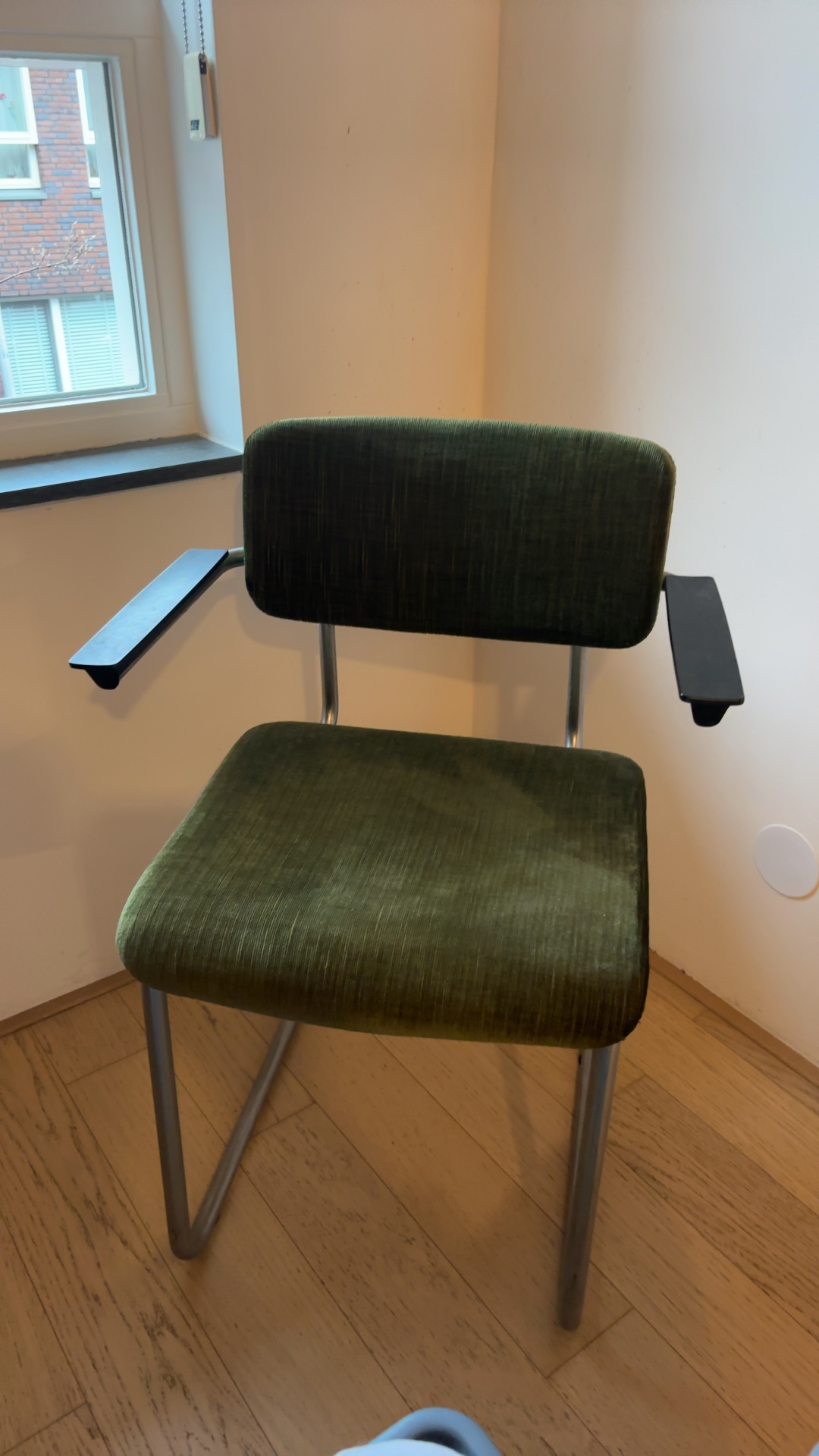
This appears to be a Mid-Century Modern cantilever armchair, likely from the 1970s or 1980s. The design features a tubular metal frame forming a continuous 's-bend' that supports the seat and back, a hallmark of cantilever furniture. The upholstery is a ribbed, olive-green fabric, possibly corduroy or a similar blend, suggesting a comfortable yet functional aesthetic typical of the era. The squared-off seat and backrest cushions are well-padded, and the black armrests provide a contrast to the metal frame.
CULTURAL ECHOES
Where This Object Echoes
The emphasis on functional design and innovative use of industrial materials like tubular steel, as seen in the early cantilever chairs by Mart Stam and Marcel Breuer.
The chair's clean lines, functional form, and material choices (tubular metal, textured upholstery) align with the accessible design principles popular from the mid-20th century onwards.
Ritual & Ceremonial Use
- •Often used in home office settings, dining areas, or as occasional seating where a blend of contemporary style and comfort was desired.
- •Symbolized modernity and a departure from more traditional, heavier furniture forms in post-war homes.
Meaning Through Time
Cantilever chairs represented a radical innovation in furniture structure, challenging traditional four-legged designs and embodying modernist ideals.
By the 1970s-80s, the cantilever design became more democratized and commonly used in mass-produced office and domestic furniture, signifying contemporary yet comfortable living.
HISTORICAL STORY
DID YOU KNOW?
The cantilever design, where the seat appears to float as it's not supported by rear legs, was a revolutionary concept in furniture, first introduced in the 1920s.
Many early cantilever chairs were inspired by bicycle handlebars and frames, utilizing the strength and flexibility of tubular steel.
MATERIAL & CONDITION
Surface
The metal frame exhibits a smooth, possibly chrome or brushed silver finish, showing some minor wear consistent with age, particularly on the contact points. The olive-green fabric has a distinct horizontal ribbing, typical of corduroy or similar chenille-type textiles, and appears to be somewhat matted from use but generally intact.
Weight & Feel
Given the metal frame, the chair would likely feel moderately heavy, offering stable seating without being overly cumbersome. The padded cushions add to its perceived solidness.
Condition
The upholstery shows signs of use, with some flattening and potential discoloration on the seat and backrest, but no obvious tears or significant stains are visible. The metal frame appears structurally sound, though minor surface scratches or scuffs are likely. The armrests seem in good condition.
RARITY ANALYSIS
Standard antiques commonly found at estate sales and flea markets. Plentiful supply meets modest demand.
Typical Characteristics
- Moderate production runs
- Common at estate sales
- Entry-level collectibles
EXPERT ANALYSIS
Furniture Historian & Restoration Specialist
The visible design elements, materials, and apparent construction align strongly with Mid-Century Modern cantilever chairs, allowing for confident identification of the type and likely era. Without manufacturer marks, specific attribution is not possible, but the general style is clear.
KEY EVIDENCE
- 1Tubular metal cantilever frame construction directly supports the seat and back.
- 2Upholstered seat and backrest in a ribbed, olive-green fabric consistent with 1970s-80s trends.
- 3Square-profile padded cushions for comfort, a common feature in office and functional seating of the period.
- 4Simple, black, flat armrests attached to the frame, maintaining the minimalist aesthetic.
WHAT WOULD IMPROVE CERTAINTY
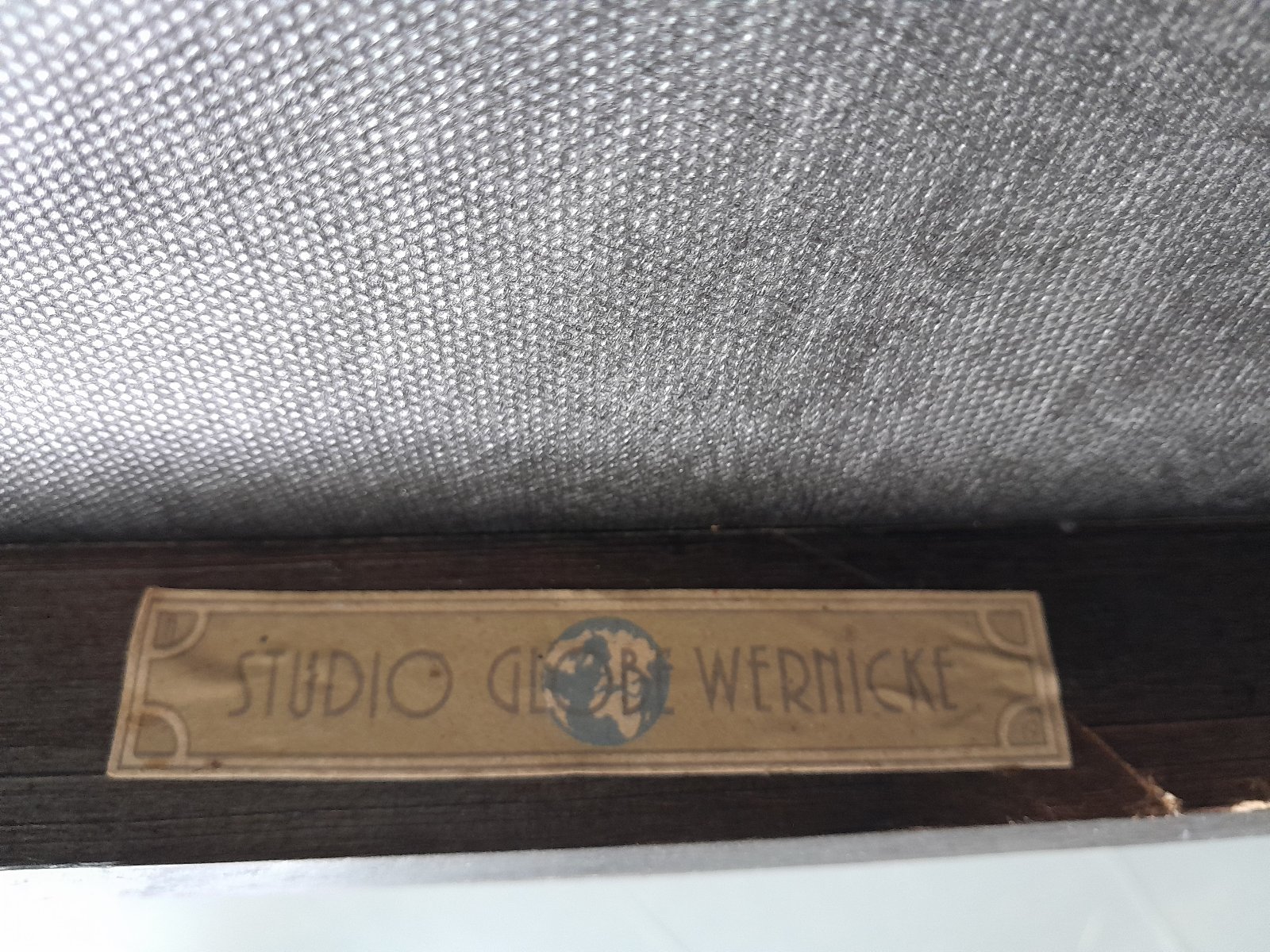
- →Examine the underside of the chair for any manufacturer labels, stamps, or origin marks.
- →Inspect the joinery of the frame for welding quality or specific connection methods.
- →Obtain close-up images of any hardware (e.g., screws holding armrests) for potential maker's marks or period-appropriate fasteners.
- →Assess the condition and type of foam used in the cushions, if possible without damage, to help refine dating.
ESTIMATED VALUE
Updated: Feb 27, 2026
- Market comparables from auctions & retail
- Condition, completeness & craftsmanship
- Current collector demand & trends
- Low = quick sale, high = patient seller
For informational purposes only, not a formal appraisal.
ABOUT INTERIOR
Furniture, lamps, lighting, chandeliers, decorative objects for the home.
Browse all InteriorSHARE THIS CURIOSITY
Have your own curiosities to discover?
Scan Your Curiosity
COMMENTS
No comments yet. Be the first to share your thoughts!
Sign in to leave a comment