Ceramic and Cast Metal Wall Sconce Lamp
QUICK FACTS
Categories
Era
Mid to Late 20th Century (1950s-1970s)
Origin
🌍 International
Rarity
Average (4/10)
Discovered
Jan 20, 2026
1 months ago
DESCRIPTION
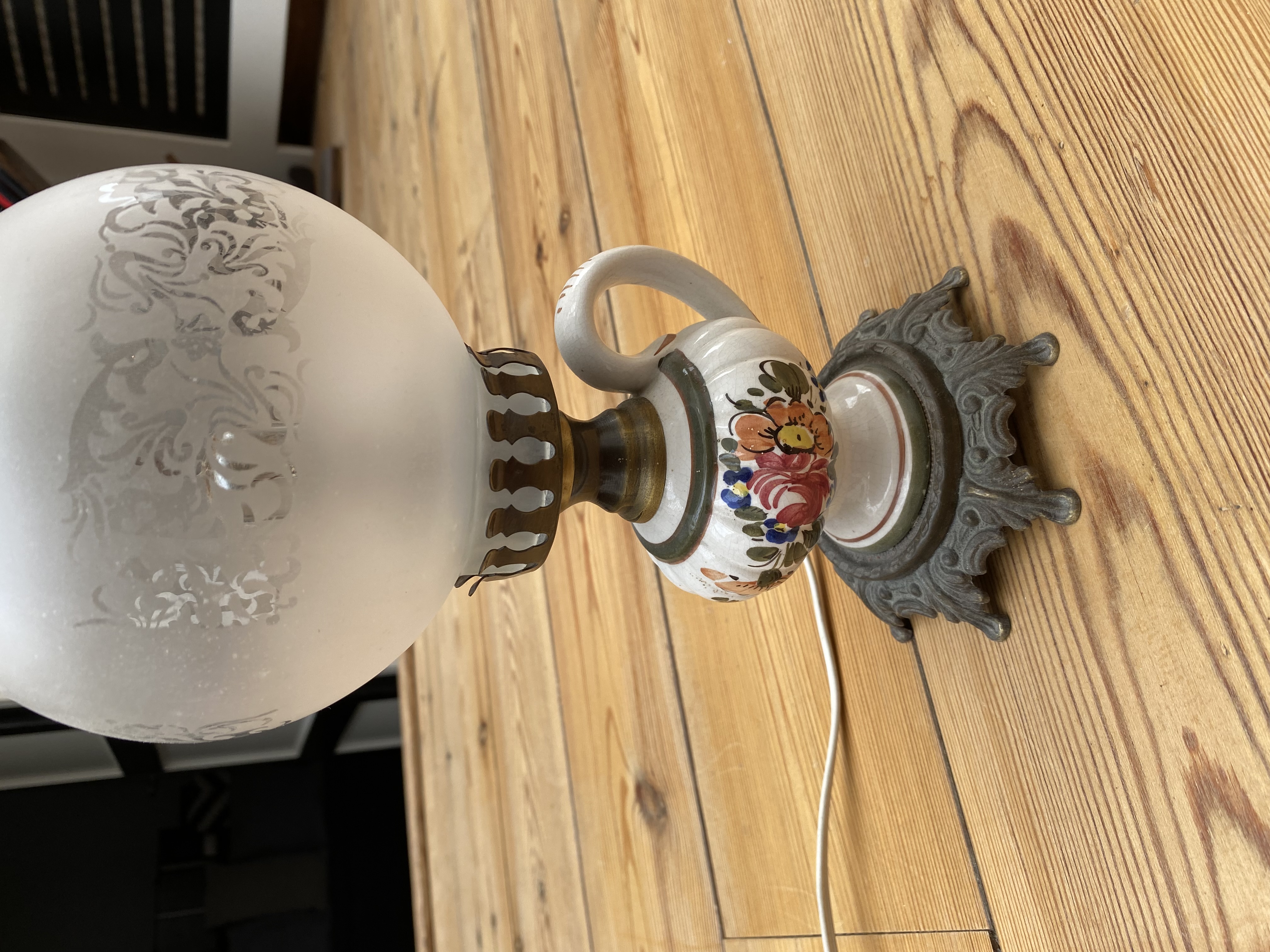
This appears to be a decorative wall sconce lamp featuring a ceramic body, likely earthenware given the opaque glaze and hand-painted floral motifs, contrasted with a decorative cast metal backplate and brass hardware. The shade is a frosted glass sphere, etched or frosted with a floral pattern, designed to diffuse light. The overall aesthetic suggests a European influence, leaning towards a rustic or folk art style common in the mid-20th century.
CULTURAL ECHOES
Where This Object Echoes
The hand-painted floral motifs on the ceramic body are reminiscent of traditional folk art from various European regions, often seen on pottery, textiles, and domestic items.
The blend of painted ceramic, aged metal, and frosted glass aligns with mid-late 20th-century interior design trends that valued distressed finishes and artisanal aesthetics.
Ritual & Ceremonial Use
- •Home decoration and ambient lighting: These lamps served a practical purpose of providing light while also contributing significantly to the decorative scheme of a room, often placed in hallways, living rooms, or bedrooms to create a welcoming atmosphere.
- •Gift-giving: Decorative household items like this would have been common housewarming or wedding gifts, embodying domesticity and a certain level of artistic taste.
Meaning Through Time
During its production, such a lamp would have been seen as a stylish, perhaps slightly traditional, piece reflecting a desire for charming, artisan-inspired decor amidst increasing mass production.
Today, it would often be considered vintage or retro, fitting into eclectic or 'grandmillennial' decor styles, appreciating its provincial charm and handcrafted aesthetic.
HISTORICAL STORY
DID YOU KNOW?
Wall sconces were originally designed to hold torches and candles, serving as one of the earliest forms of artificial interior lighting.
The use of mixed materials like ceramic, metal, and glass in lighting fixtures became popular in the early to mid-20th century, allowing for a blend of artistic expression and manufacturing processes.
MATERIAL & CONDITION
Surface
The ceramic body features an opaque, possibly tin-glazed earthenware paste, decorated with brush-applied floral designs. The cast metal backplate has a dark, possibly bronzed or painted finish, with visible texture from the casting process. The frosted glass shade exhibits an etched or transfer-applied pattern, providing a soft, diffused light quality.
Weight & Feel
I'd anticipate this piece to be of moderate weight, primarily from the robust cast metal backplate and the ceramic body. The glass shade would add a noticeable, but not excessive, top-heavy feel.
Condition
Visually, the ceramic appears largely intact with no obvious cracks or major chips. The hand-painted decoration shows some wear and possible minor abrasions consistent with age and handling. The metal elements show expected patina and minor surface wear, and the electrical cord and switch appear functional but would warrant an electrician's inspection for safety.
RARITY ANALYSIS
Typical antique shop fare. Requires some searching but regularly available. This is where most genuine antiques fall.
Typical Characteristics
- Standard antique shop items
- Regularly available
- Moderate collector interest
EXPERT ANALYSIS
Decorative Arts Specialist
Confidence is good as the general object type, materials, and stylistic period are clearly evident from the images. However, the absence of any identifying marks prevents a more precise attribution or dating, leading to a moderate confidence level for specific details.
KEY EVIDENCE
- 1Visible hand-painted floral decoration on ceramic, suggesting earthenware or similar body with a distinct glaze.
- 2Cast metal backplate with a decorative, starburst-like design, indicating a manufactured component.
- 3Frosted glass globe shade with etched or frosted floral patterns, a common design element for diffused lighting.
- 4Standard electrical wiring with an inline switch, pointing to a post-electrification era.
- 5The overall stylistic blending of materials and decorative motifs aligns with mid-20th century folk-inspired decorative arts.
UNCERTAINTIES
- •Lack of any visible maker's marks or factory stamps on the ceramic, metal, or glass components.
- •Uncertainty regarding the exact ceramic body and glaze type without physical examination (e.g., stoneware, earthenware, majolica-style).
- •The electrical components (cord, switch) should be inspected by a qualified electrician for modern safety standards.
WHAT WOULD IMPROVE CERTAINTY
- →Examine the ceramic base and internal hardware for any maker's marks, date codes, or labels, especially on the underside or hidden areas.
- →Photograph the electrical plug for potential origin or standard markings.
- →A UV light inspection of the ceramic would help detect any hidden repairs or restorations to the body or painted surface.
- →Measure the overall dimensions (height, width from wall) for better cataloging and comparison.
- →Carefully remove the shade and inspect the socket for any manufacturer details.
ESTIMATED VALUE
Updated: Feb 26, 2026
- Market comparables from auctions & retail
- Condition, completeness & craftsmanship
- Current collector demand & trends
- Low = quick sale, high = patient seller
For informational purposes only, not a formal appraisal.
ABOUT INTERIOR
Furniture, lamps, lighting, chandeliers, decorative objects for the home.
Browse all InteriorSHARE THIS CURIOSITY
Have your own curiosities to discover?
Scan Your Curiosity
COMMENTS
No comments yet. Be the first to share your thoughts!
Sign in to leave a comment