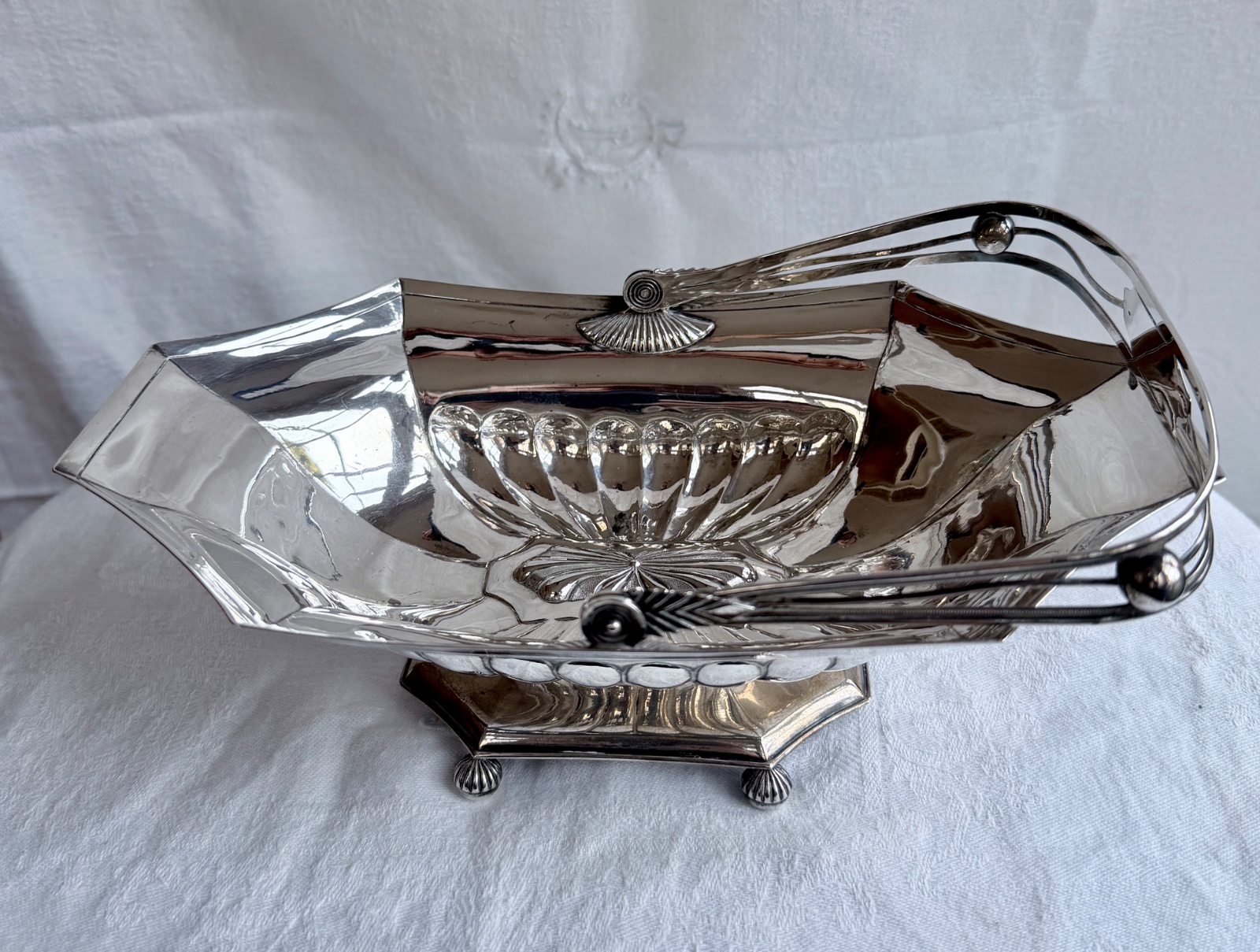
Edwardian Silver Plated Swing-Handle Fruit Basket with Gadroon and Shell Motifs
QUICK FACTS
Categories
Era
1900-1920
Origin
🇬🇧 United Kingdom
Rarity
Average (4/10)
Discovered
Feb 13, 2026
2 weeks ago
DESCRIPTION
This appears to be an attractive Edwardian-era silver-plated swing-handle fruit basket, likely used for serving bread, fruit, or confectionery on a dining table. The form is octagonal with a footed base, and the handle swings up from either side, meeting in the middle. The decoration includes gadrooning and shell motifs, typical of the late Victorian and Edwardian periods, demonstrating a blend of rococo revival and classical design elements. The central embossed pattern suggests a repoussé or stamped decoration, often found in mass-produced plated ware of the time. The overall polished presentation speaks to its original purpose as a display and serving piece.
CULTURAL ECHOES
Where This Object Echoes
The widespread use of silver-plated hollowware for entertaining and domestic display, reflecting social aspirations and new manufacturing capabilities.
The incorporation of naturalistic shell forms and gadrooning, echoing 18th-century European decorative arts but reinterpreted for a new industrial age.
Ritual & Ceremonial Use
- •Formal dining and tea services, where such baskets would present fruits, bread, or sweets.
- •Gift-giving for weddings or special occasions, as plated ware often symbolized a well-appointed home.
Meaning Through Time
Symbolized rising middle-class prosperity and the accessibility of luxury goods through electroplating technology.
Became considered 'dated' or less fashionable during periods favoring modernist or minimalist aesthetics.
Appreciated for its historical charm, craftsmanship, and decorative appeal in interior design.
HISTORICAL STORY
DID YOU KNOW?
Electroplating, invented in the mid-19th century, revolutionized the availability of 'silver' objects, allowing for intricate designs to be reproduced at a fraction of the cost of solid silver.
The swing handle on these baskets served a practical purpose, allowing for easier passing around the table and compact storage when not in use.
MATERIAL & CONDITION
Surface
The surface is highly reflective, suggesting a polished silver-plate finish, with some visible tarnish in the recessed areas. The central section of the bowl features a distinct embossed pattern, likely a floral or shell-inspired relief. The handle and rim show smooth, clean lines, contrasting with the more ornate base and bowl interior.
Weight & Feel
Based on its size and the material (silver plate over a base metal), this piece would likely feel moderately substantial, not overly heavy but with enough heft to convey quality.
Condition
The plating appears to be in good overall condition with some minor surface scratches and polishing wear consistent with age and use. There are darker areas visible in the crevices of the decoration and around the foot, indicating tarnish, which could be polished further. No obvious dings or significant plating loss are apparent from the images, though closer inspection would be required.
RARITY ANALYSIS
Typical antique shop fare. Requires some searching but regularly available. This is where most genuine antiques fall.
Typical Characteristics
- Standard antique shop items
- Regularly available
- Moderate collector interest
EXPERT ANALYSIS
Decorative Arts Specialist
The confidence level is good based on the consistent stylistic elements and construction methods seen in the images, strongly pointing to an Edwardian silver-plated serving piece. However, the lack of discernible maker's marks prevents a higher confidence in specific attribution.
KEY EVIDENCE
- 1Octagonal form with faceted sides, typical of late Victorian/Edwardian design.
- 2Gadrooning and shell motifs, popular decorative elements of the period.
- 3Swing-handle mechanism, a common feature for fruit or bread baskets.
- 4Lustrous reflective surface characteristic of silver plating.
- 5The initial 'TM' monogram with a crown on the handle suggests a personalized item, possibly either the owner's initials or a decorator's mark (though less likely for plated ware).
UNCERTAINTIES
- •No visible specific maker's marks or hallmarks are clear in the provided images, which would be crucial for precise attribution and dating.
- •The extent of plating wear or loss is difficult to assess without more detailed close-ups, particularly on high-use areas like the handle or feet.
WHAT WOULD IMPROVE CERTAINTY
- →Provide clear, well-lit close-up images of any marks on the underside of the base and on the handle.
- →Examine the piece under magnification for any faint impressed marks or worn plating.
- →Measure the dimensions of the basket for accurate cataloging.
- →Consider a gentle cleaning to remove tarnish and reveal any obscured details.
ESTIMATED VALUE
Updated: Feb 27, 2026
- Market comparables from auctions & retail
- Condition, completeness & craftsmanship
- Current collector demand & trends
- Low = quick sale, high = patient seller
For informational purposes only, not a formal appraisal.
ABOUT DECORATIVE OBJECTS
Ceramics, silver, porcelain, glassware, and decorative arts.
Browse all Decorative ObjectsSHARE THIS CURIOSITY
Have your own curiosities to discover?
Scan Your Curiosity
COMMENTS
No comments yet. Be the first to share your thoughts!
Sign in to leave a comment