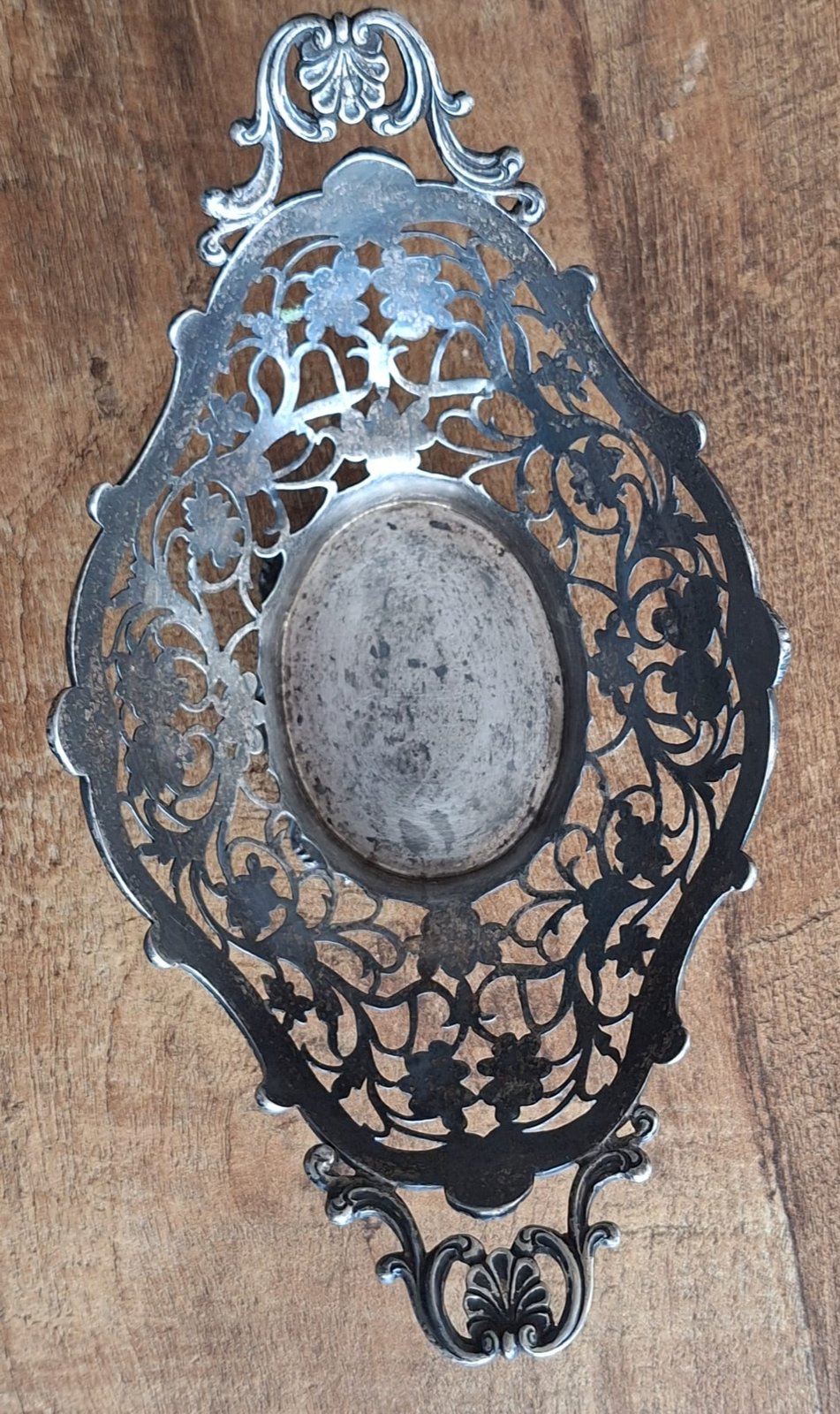
Pierced Silver-Plated Basket or Dish with Floral Motif
QUICK FACTS
Categories
Era
Late 19th to Early 20th Century (c. 1880-1920)
Origin
🌍 International
Rarity
Ordinary (3/10)
Discovered
Jan 14, 2026
1 months ago
DESCRIPTION
This appears to be a silver-plated pierced basket or dish, exhibiting a decorative, ornate design. The intricate piercing features scrolling floral motifs, typical of late 19th to early 20th-century decorative metalware. The central area on the interior shows significant wear and tarnish, which is common for objects that have seen use, and hints at the underlying base metal beneath the silver plating. The elongated, oval form, flanked by decorative handles or embellishments, suggests it may have served as a fruit bowl, serving dish, or a decorative centerpiece.
CULTURAL ECHOES
Where This Object Echoes
The elaborate floral and scrolling motifs parallel the prevalent 'naturalistic' and 'rococo revival' styles popular in European and American decorative arts of the late 19th century.
The mass production of elegant yet affordable silver-plated items for domestic use was a hallmark of societal changes during the Edwardian period, bringing refined aesthetics to more households.
Ritual & Ceremonial Use
- •The ritual of tea time and formal dining, where such pieces would have been used for serving fruit, sweets, or as a general centerpiece.
- •The act of domestic display, where such ornate items were arranged to showcase the homeowner's taste and refinement.
Meaning Through Time
During its creation, this item would have signified elegance, domestic sophistication, and the availability of luxury (albeit plated) to the aspirational middle class.
Over time, as tastes shifted towards more minimalist aesthetics, such rococo-influenced pieces were sometimes viewed as overly fussy or old-fashioned, often relegated to attics or flea markets.
Today, these pieces are appreciated for their historical context, craftsmanship, and decorative appeal, fitting into vintage, antique, or eclectic decor schemes, sometimes repurposed for modern uses like displaying trinkets.
HISTORICAL STORY
DID YOU KNOW?
Electroplating, the technology that allowed for the mass production of silver-plated items, was first patented in 1840, democratizing access to 'silver' tableware far beyond solid silver's exclusivity.
The intricate pierced designs found on pieces like this were often achieved through a combination of stamping and hand-finishing, reflecting a blend of industrial efficiency and artisanal craft.
MATERIAL & CONDITION
Surface
The surface exhibits a tarnished, silver-plated finish, showing distinct areas of wear through to the darker base metal, particularly in the central basin. The intricate pierced fretwork is largely intact, though some of the delicate edges show minor rubbing. The overall impression is one of aged metal, with a dull luster rather than a bright shine.
Weight & Feel
Based on its size and the material appearance, I'd expect this piece to have a moderate weight, substantial enough to feel stable on a table, but not overly heavy. The base metal (likely Britannia metal or another alloy) beneath the plating would contribute significantly to its heft.
Condition
The object presents with visible wear, particularly to the silver plating in the central well and along the raised decorative elements, where the base metal is exposed. There is overall tarnish, typical of aged silver-plated items that haven't been regularly polished. No obvious structural damage like major dents or significant losses to the fretwork are apparent.
RARITY ANALYSIS
Standard antiques commonly found at estate sales and flea markets. Plentiful supply meets modest demand.
Typical Characteristics
- Moderate production runs
- Common at estate sales
- Entry-level collectibles
EXPERT ANALYSIS
Decorative Arts Specialist
The confidence level is high based on the clear visual cues of style, material, and construction consistent with silver-plated decorative wares from the described era. However, the absence of visible marks prevents definitive maker attribution, slightly tempering full certainty.
KEY EVIDENCE
- 1The pierced and scrolling floral design is highly characteristic of late Victorian or Edwardian stylistic trends.
- 2The material appears to be silver-plated, indicated by the typical wear patterns showing a darker base metal underneath.
- 3The form, an elongated oval dish with prominent handles, aligns with common serving wares of the period.
- 4The overall patina and condition suggest genuine age and use.
UNCERTAINTIES
- •Lack of visible maker's marks or hallmarks in the provided images makes precise attribution impossible.
- •The extent of the wear on the plating could indicate a lower quality of plating originally or very heavy use.
WHAT WOULD IMPROVE CERTAINTY
- →Photograph the underside and any other areas carefully, looking for impressed marks, hallmarks, or manufacturer stamps.
- →Attempt to gently clean a small, inconspicuous area to ascertain if any plating is still present and could be restored, or if the wear is too extensive.
- →A weight measurement would help confirm material assumptions (e.g., if it feels unusually light, it might be aluminum with lighter plating; unusually heavy, a brass or bronze base).
ESTIMATED VALUE
Updated: Feb 26, 2026
- Market comparables from auctions & retail
- Condition, completeness & craftsmanship
- Current collector demand & trends
- Low = quick sale, high = patient seller
For informational purposes only, not a formal appraisal.

ABOUT DECORATIVE OBJECTS
Ceramics, silver, porcelain, glassware, and decorative arts.
Browse all Decorative ObjectsSHARE THIS CURIOSITY
Have your own curiosities to discover?
Scan Your Curiosity
COMMENTS
No comments yet. Be the first to share your thoughts!
Sign in to leave a comment