Victorian-Revival Upholstered Settee
QUICK FACTS
Categories
Era
Circa 1890-1920
Origin
🌍 International
Brand
Giorgetti
Rarity
Ordinary (3/10)
Discovered
Feb 8, 2026
3 weeks ago
DESCRIPTION
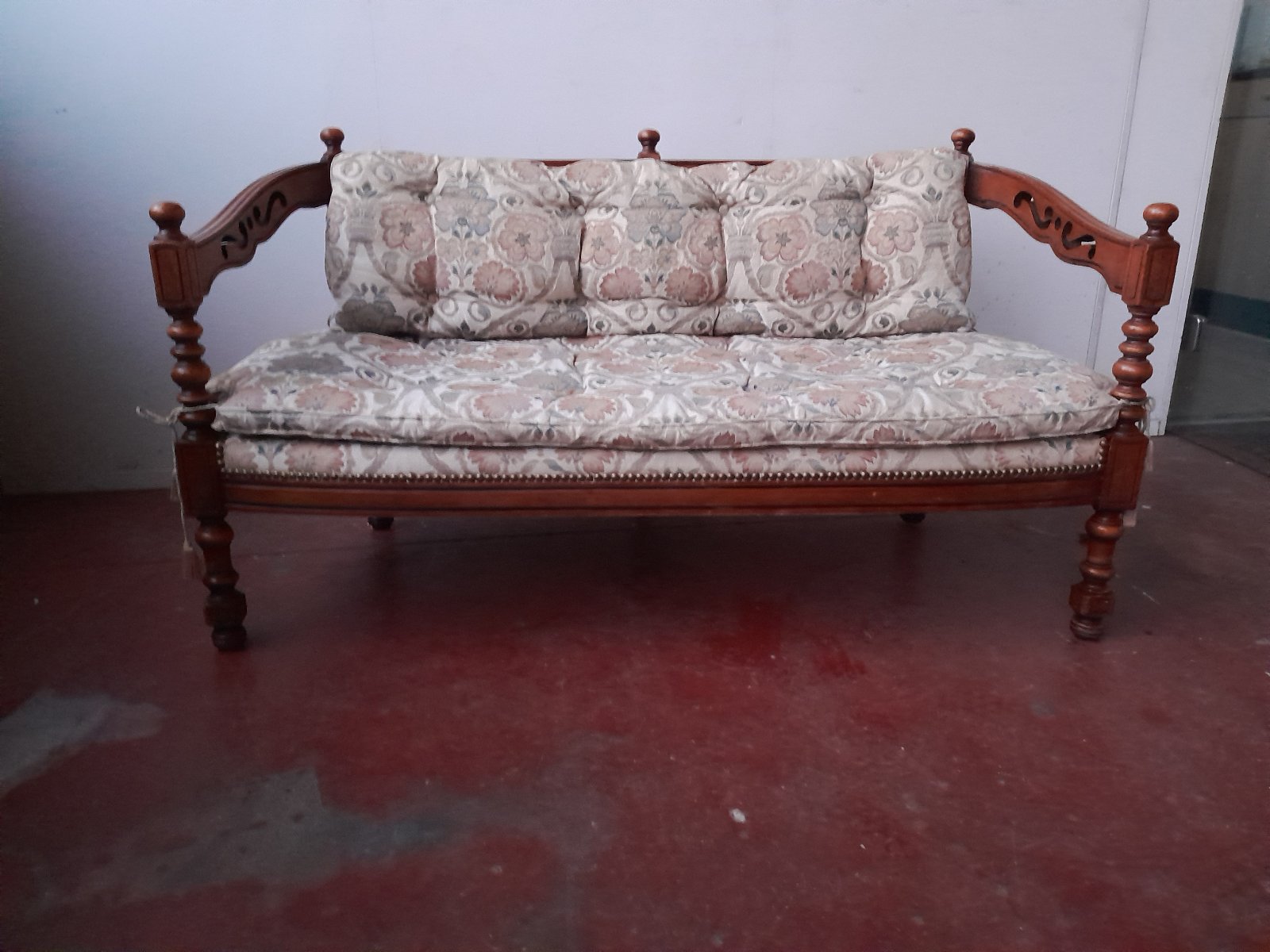
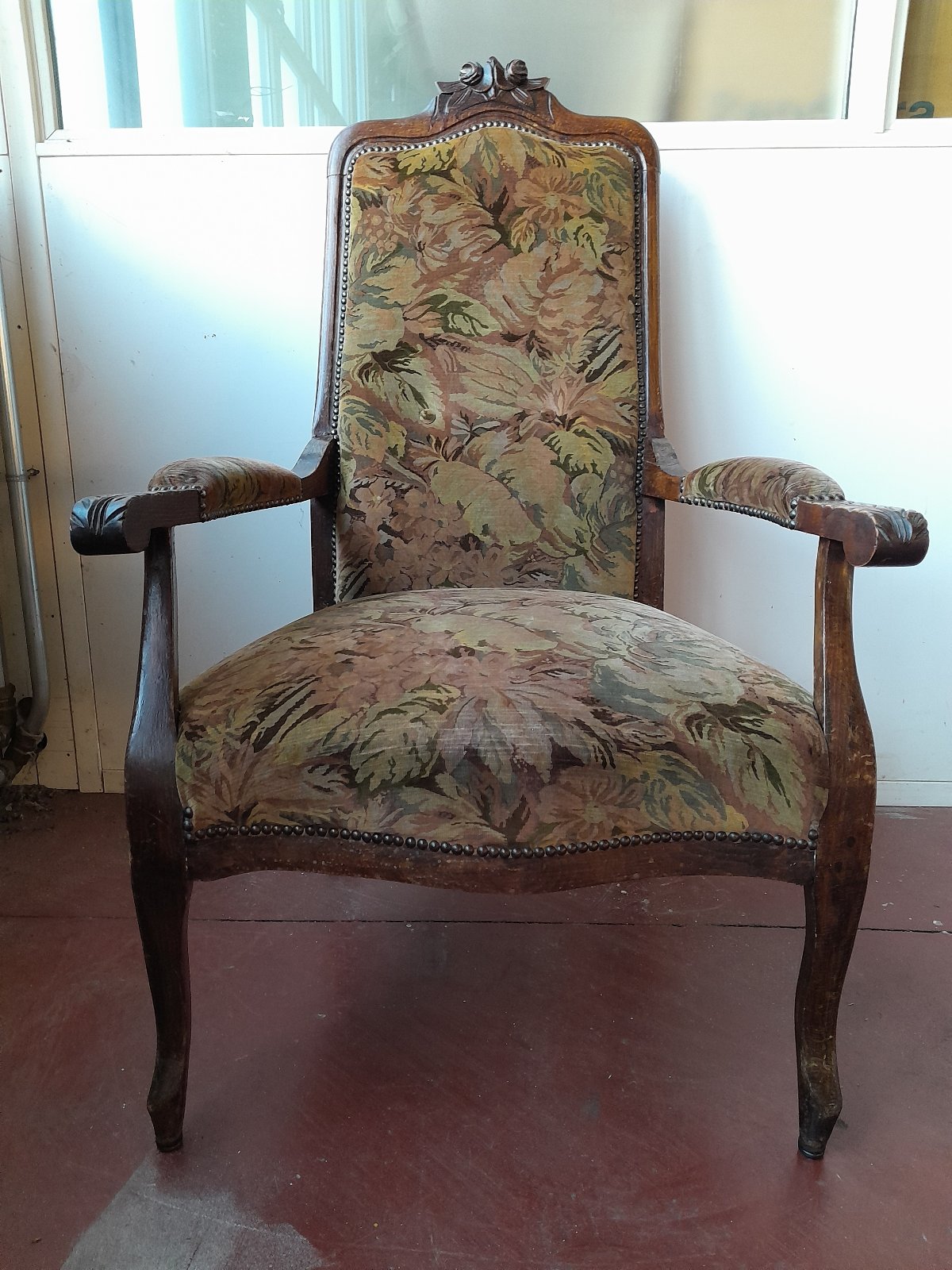
This appears to be a two-seater settee, likely crafted from a hardwood such as mahogany or walnut, featuring turned and carved elements. The overall aesthetic leans towards a late Victorian or early 20th-century revival style, characterized by its ornate open back and scrolled arms, terminating in finials. The upholstery, a floral pattern in muted tones, is likely a later replacement, given its relatively clean appearance compared to the age suggested by the frame.
CULTURAL ECHOES
Where This Object Echoes
The elaborate carving and turned legs are hallmarks of furniture prominent during the Victorian era, specifically the late 19th-century revival movements that drew inspiration from earlier periods.
This style shares elements with the Colonial Revival period in America, which also reinterpreted historical forms, often in lighter hardwoods and with less ornate features than high Victorian pieces.
Ritual & Ceremonial Use
- •In the domestic sphere, settees like this were central to informal social gatherings and parlor conversations, providing comfortable seating for guests in a more intimate setting than formal dining rooms.
- •The practice of reupholstering furniture to update its aesthetic or repair wear reflects a historical tradition of furniture maintenance and extension of an item's functional life, rather than outright replacement.
Meaning Through Time
These pieces symbolized domestic comfort and a burgeoning middle-class desire for stylistic elegance, often mimicking more expensive, bespoke antique forms through mass production.
These settees are often viewed as 'brown furniture' – traditional pieces that, while solid, have seen fluctuating demand. They represent a connection to historical design but can be challenging to integrate into modern, minimalist aesthetics without thoughtful design.
HISTORICAL STORY
DID YOU KNOW?
Settees, originally known as 'long chairs' or 'double chairs,' became popular in the 17th century as a more informal seating option than formal sofas or benches, often used by two people for conversation.
The 'Victorian Revival' period saw a resurgence of 18th-century design elements, blending various historical styles into new, often more decorative, interpretations designed for mass appeal.
MATERIAL & CONDITION
Surface
The wooden frame exhibits a polished, glossy finish over likely a stained hardwood, showing some wear consistent with age, particularly on the prominent curves and turned elements. The upholstery is a woven fabric with a printed floral pattern, appearing relatively soft.
Weight & Feel
Based on the solid turned legs and carved back, this settee would likely feel moderately heavy, substantial, and not easily moved, consistent with a solid wood frame.
Condition
The frame appears structurally sound with no major visible breaks, though some minor scratches and dings are evident on the finish. The upholstery is moderately worn and dated, showing some compression in the cushions and possibly a small tear on the undercarriage fabric visible in one image.
RARITY ANALYSIS
Standard antiques commonly found at estate sales and flea markets. Plentiful supply meets modest demand.
Typical Characteristics
- Moderate production runs
- Common at estate sales
- Entry-level collectibles
EXPERT ANALYSIS
Furniture Historian & Restoration Specialist
The confidence level is good as the stylistic elements clearly point to a late Victorian or early 20th-century revival settee. However, the lack of maker's marks, specific joinery views, and the likely re-upholstery prevent a more precise identification of origin or a definitive date.
KEY EVIDENCE
- 1Carved and turned wooden frame with scrolled arms and finials, indicative of late Victorian or early 20th-century revival styles.
- 2Two-seater configuration, consistent with a settee or loveseat intended for a parlor or drawing room.
- 3Upholstery fabric appears to be a replacement, given its relative condition and pattern which may not be original to the frame's style.
- 4Visible stretcher bar and exposed frame construction from the rear, suggests a solid, traditional build.
UNCERTAINTIES
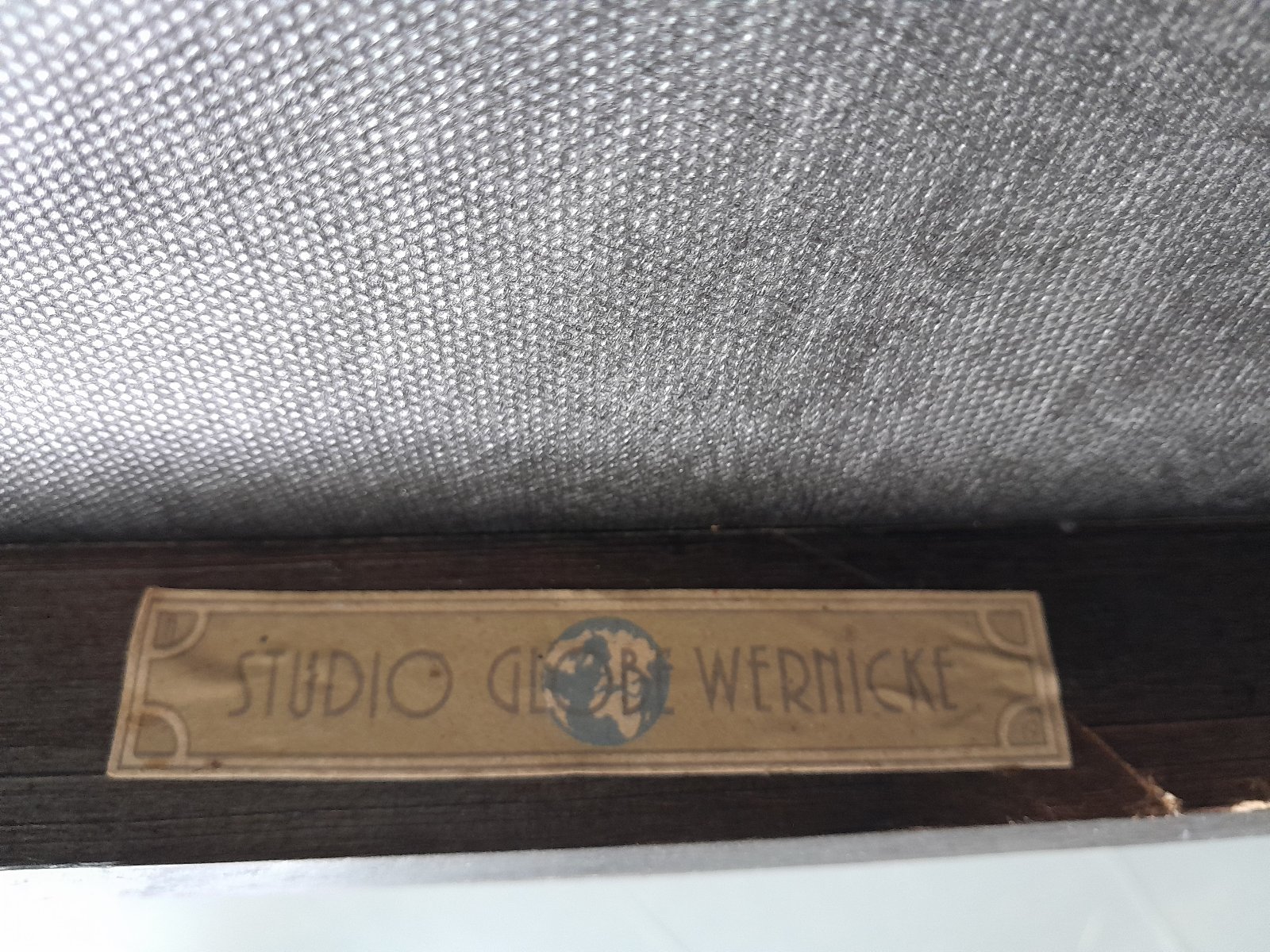
- •No visible maker's marks or labels.
- •The exact wood species cannot be confirmed from images alone.
- •Extent of internal structural integrity or previous repairs is unknown due to upholstery.
WHAT WOULD IMPROVE CERTAINTY
- →Provide clear photographs of any joinery (e.g., where legs meet the frame, or armrests join the back).
- →Examine the underside of the frame for any stamps, labels, or original hardware.
- →If possible, remove a small section of the dust cover (the light fabric under the seat) to inspect the webbing, springs, and internal frame construction.
- →Check the screws if any are exposed – the type of screw (slotted vs. Phillips head, machine cut vs. hand cut) can help with dating.
ESTIMATED VALUE
Updated: Feb 27, 2026
- Market comparables from auctions & retail
- Condition, completeness & craftsmanship
- Current collector demand & trends
- Low = quick sale, high = patient seller
For informational purposes only, not a formal appraisal.

ABOUT INTERIOR
Furniture, lamps, lighting, chandeliers, decorative objects for the home.
Browse all InteriorSHARE THIS CURIOSITY
Have your own curiosities to discover?
Scan Your Curiosity
COMMENTS
No comments yet. Be the first to share your thoughts!
Sign in to leave a comment