Japanese Satsuma-style Eggshell Porcelain Tea Set
QUICK FACTS
Categories
Era
Early 20th Century (c. 1900-1940)
Origin
🇯🇵 Japan
Rarity
Average (4/10)
Discovered
Jan 16, 2026
1 months ago
DESCRIPTION
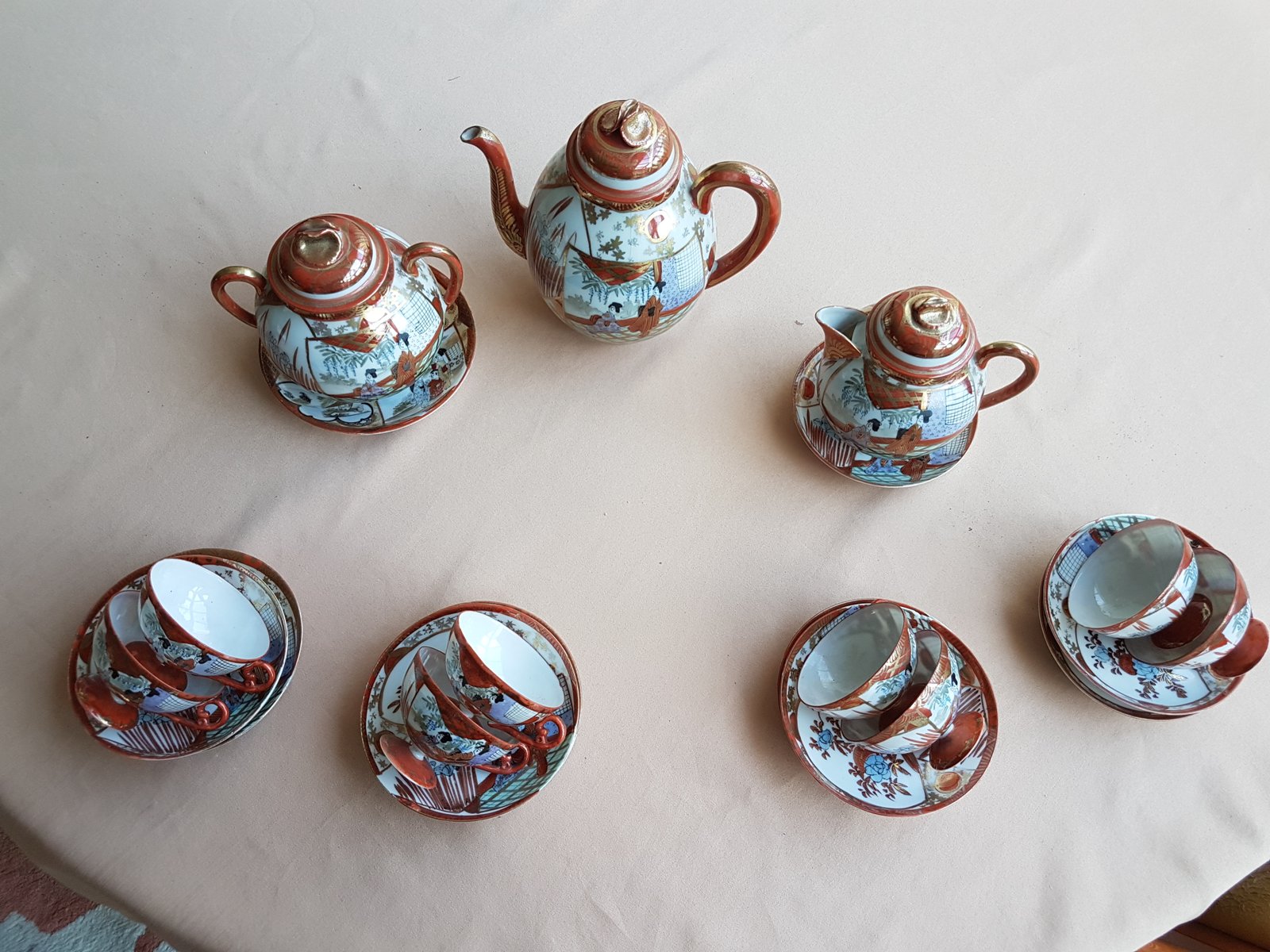
This appears to be a Japanese tea set executed in a style reminiscent of Satsuma ware, notable for its finely painted decorations on a thin, almost translucent 'eggshell' porcelain body. The set comprises a teapot, a lidded sugar bowl, a creamer, and three cups with their matching saucers. The decoration features traditional Japanese motifs, likely depicting geisha or samurai figures in scenic settings, rendered with a combination of overglaze enamels and gilded details. The predominant colors are a rich iron red, light blue, and various tones of gold, characteristic of this decorative style. The 'eggshell' quality suggests a deliberate choice of a very fine and delicate porcelain body.
CULTURAL ECHOES
Where This Object Echoes
Highly decorated porcelain pieces specifically created for Western markets during the Meiji and Taisho periods, often adapting traditional motifs to cater to foreign tastes.
The Western aesthetic trend influenced by Japanese art, particularly its decorative motifs, asymmetric compositions, and use of vibrant colors, which drove demand for such export wares.
Ritual & Ceremonial Use
- •Afternoon Tea Service: These sets were primarily intended for the European and American custom of afternoon tea, a social ritual that required specific vessels for brewing and serving tea.
- •Gift-Giving: Often purchased as exotic souvenirs or luxury gifts, reflecting cultural exchange and appreciation for fine foreign craftsmanship.
Meaning Through Time
Represented exotic luxury and sophisticated taste in Western homes, often displayed as much as used.
Transitioned to collectible antique status, valued for craftsmanship, historical context, and decorative appeal, rather than daily use.
HISTORICAL STORY
DID YOU KNOW?
Despite their delicate appearance, 'eggshell porcelain' teacups were surprisingly durable due to the high firing temperatures and quality clay used in their production.
The extensive use of gold in the decoration served not only as an aesthetic accent but also to indicate the luxuriousness and high craftsmanship of the piece for the export market.
MATERIAL & CONDITION
Surface
The surface is a finely potted, smooth, white porcelain, hand-decorated with rich overglaze enamels, particularly a vibrant iron red, and significant gilding. The gilding shows some wear, which is common for pieces of this age, especially on rims and handles that experienced frequent contact. There appear to be no visible crackle or heavy glaze, suggesting a clear porcelain body rather than earthenware.
Weight & Feel
Given the 'eggshell' characteristic, this set would feel remarkably lightweight and delicate despite its intricate decoration. The pieces would have a thin, almost brittle feel in hand, requiring careful handling.
Condition
The set appears to be in generally good condition for its age, though there is visible wear to the gilt details, especially on the teapot and sugar bowl lids, handles, and cup rims. There are no immediately obvious chips or cracks from these images, but typical antique porcelain wear such as small firing flaws, faint surface scratches, or minor losses to the enamel decoration should be expected.
RARITY ANALYSIS
Typical antique shop fare. Requires some searching but regularly available. This is where most genuine antiques fall.
Typical Characteristics
- Standard antique shop items
- Regularly available
- Moderate collector interest
EXPERT ANALYSIS
Decorative Arts Specialist
My confidence is high based on the visual evidence of the porcelain type, decorative style, and common composition of these tea sets for the Western export market. However, a precise attribution to a specific maker or an exact date range requires examining the un-photographed bases for factory marks.
KEY EVIDENCE
- 1Fine, translucent porcelain body indicative of 'eggshell' ware.
- 2Elaborate hand-painted (or partially hand-finished) overglaze enamel decoration.
- 3Extensive use of gold gilding, common for Japanese export wares of the period.
- 4Traditional figural and floral motifs, characteristic of Satsuma-style decorative porcelain.
- 5Set composition (teapot, sugar, creamer, cups/saucers) typical of Western tea services.
UNCERTAINTIES
- •Absence of visible markings on the base, which are crucial for precise dating and attribution.
- •Difficulty in distinguishing truly hand-painted areas from overpainted transfer-prints without closer inspection.
- •The common association with 'Satsuma' can be misleading as many porcelain factories made similar wares.
WHAT WOULD IMPROVE CERTAINTY
- →Provide clear, well-lit images of the base of all pieces, particularly any marks or signatures.
- →Examine the decoration under magnification to determine if it is entirely hand-painted or if transferware was employed and subsequently hand-finished.
- →Perform a UV light test to check for any professional restoration or repairs to the porcelain body.
- →Conduct a 'tap test' on each piece to listen for any dull sounds that might indicate hairlines or cracks.
ESTIMATED VALUE
Updated: Feb 26, 2026
- Market comparables from auctions & retail
- Condition, completeness & craftsmanship
- Current collector demand & trends
- Low = quick sale, high = patient seller
For informational purposes only, not a formal appraisal.
SHARE THIS CURIOSITY
Have your own curiosities to discover?
Scan Your Curiosity
COMMENTS
No comments yet. Be the first to share your thoughts!
Sign in to leave a comment