Javanese Keris (Kris) Dagger
DESCRIPTION
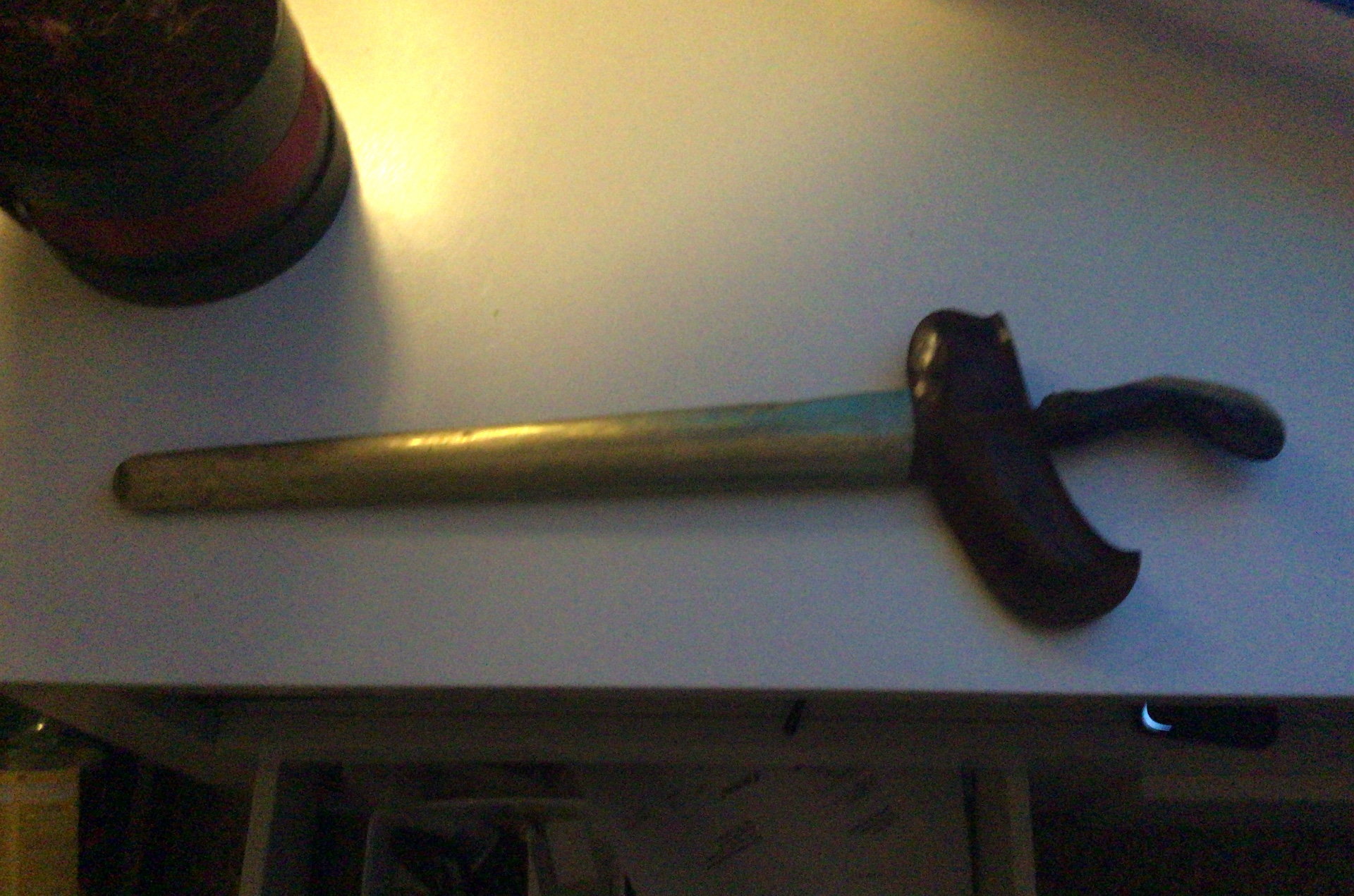
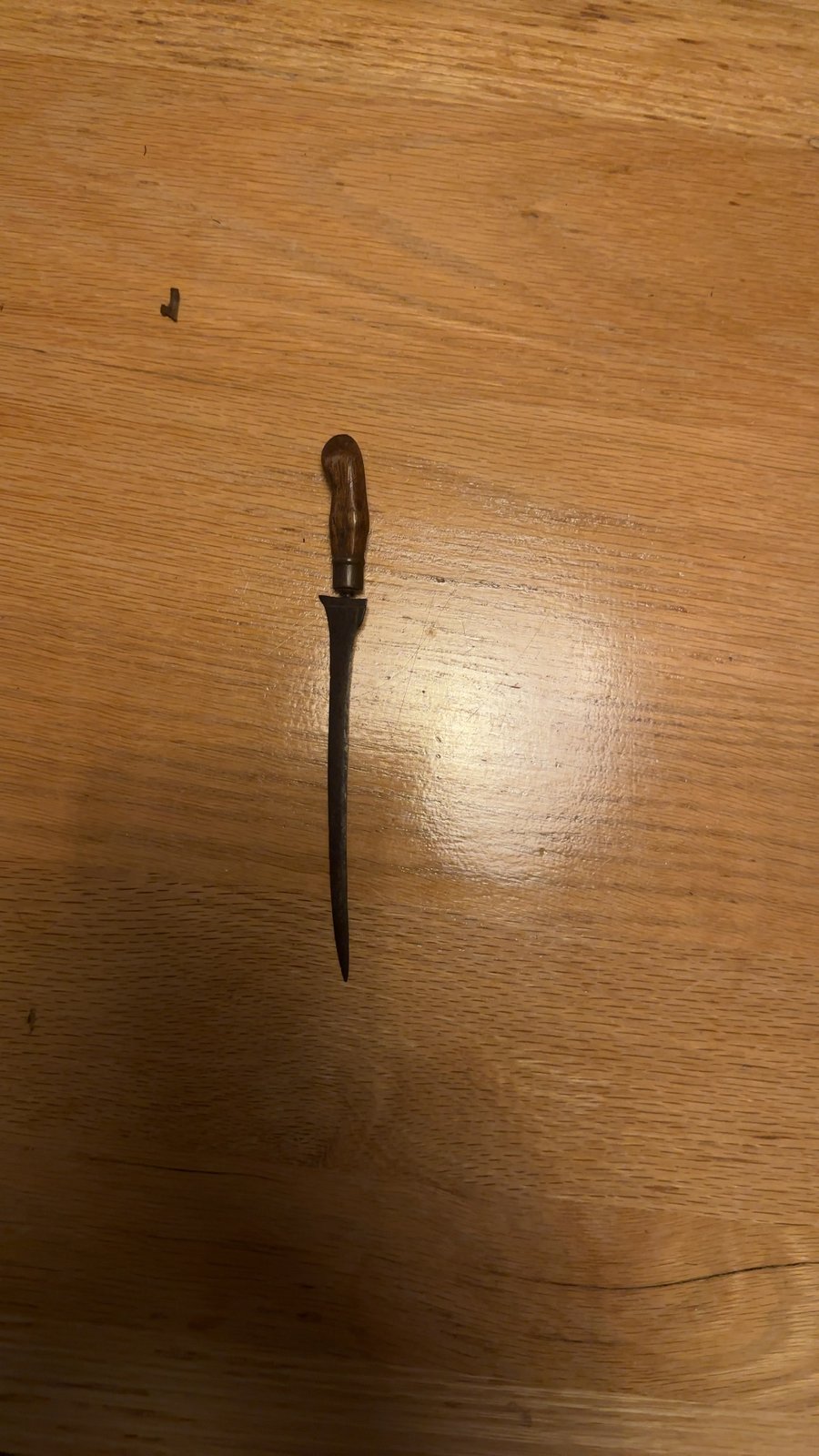
From a material culture perspective, this is a Keris, a highly symbolic dagger from the Indonesian archipelago. The form of the hilt ('ukiran') and the boat-shaped top of the scabbard ('warangka gayaman') strongly suggest a Javanese origin. The hilt is carved in a stylized figural form, a common tradition, while the sheath appears to have a painted stem ('gandar') rather than a more formal metal cover ('pendok'). The true identity and value of a keris lie in its blade ('bilah'), which is unfortunately obscured by the low light and poor resolution.
CULTURAL ECHOES
Where This Object Echoes
Early keris hilts often incorporated figures from Hindu mythology, like Garuda or rakshasas, reflecting the influence of Indian religions in early Indonesian kingdoms.
Like the Japanese katana, the keris blade is a sophisticated example of pattern welding, where layers of different metals are forged together to create a blade that is both hard and flexible, with a visually stunning surface.
Ritual & Ceremonial Use
- •As a 'pusaka' or heirloom, a keris is passed down through generations and is central to Javanese ceremonies like weddings, where the groom wears it as part of his formal attire.
- •In traditional Javanese mysticism (Kejawen), specific keris are used in rituals for protection, to gain power, or to communicate with ancestral spirits.
Meaning Through Time
Symbol of social status, authority, and mystical power, reserved for royalty and warriors.
Became a symbol of resistance against colonial rule, as well as a more common personal sidearm.
Largely ceremonial and artistic, a national symbol and a collector's item, embodying cultural heritage.
HISTORICAL STORY
DID YOU KNOW?
A keris is traditionally considered a living entity with a spirit of its own. Owners would present it with offerings of flowers and incense to maintain its powers.
The number of waves, or 'luk', on a keris blade is almost always odd and carries symbolic meaning. A straight blade represents stability, while a wavy one symbolizes the 'naga', a mythical serpent.
MATERIAL & CONDITION
Surface
The hilt and sheath top are dark, possibly oiled hardwood with a patina from handling. The sheath's stem appears to be wood covered with a worn layer of flat, possibly greenish-blue paint. The partially visible blade is dark and matte, consistent with an uncleaned carbon steel surface.
Weight & Feel
A genuine keris would feel dense and blade-heavy, with the hilt acting as a counterbalance. Likely weighing between 400 to 800 grams total.
Condition
The piece appears intact but in a state of neglect, as the user noted. The wood likely needs cleaning and oiling, the painted sheath is worn, and the blade is obscured by oxidation or grime, requiring careful cleaning by a specialist to reveal the underlying pamor without causing damage.
RARITY ANALYSIS
Typical antique shop fare. Requires some searching but regularly available. This is where most genuine antiques fall.
Typical Characteristics
- Standard antique shop items
- Regularly available
- Moderate collector interest
EXPERT ANALYSIS
Material Culture Specialist
Confidence is low because the object's identity as a Javanese-style keris is clear, but its authenticity, age, and quality are impossible to verify from the provided low-resolution, poorly-lit images. The most critical component, the blade, is almost completely obscured.
KEY EVIDENCE
- 1The object is identifiable as a keris by its asymmetrical blade base, pistol-grip hilt, and distinct scabbard.
- 2The 'gayaman' style of the scabbard's top piece strongly points to an origin in Java, Indonesia.
- 3The hilt ('ukiran') is carved from dark wood in a stylized anthropomorphic or zoomorphic form, typical for this region.
- 4The condition appears aged, with wear on the hilt and sheath, aligning with the user's note that it needs restoration.
- 5The blade, visible only in one blurry image, appears to be straight ('dapur lurus') but its essential 'pamor' pattern is not visible.
UNCERTAINTIES
- •Extremely poor image quality prevents any assessment of the blade, which is the primary determinant of a keris's authenticity and value.
- •The painted sheath stem is atypical for high-status antique keris and could indicate a more modern or tourist-oriented piece.
WHAT WOULD IMPROVE CERTAINTY
- →Provide clear, well-lit photos of the entire blade, taken out of the sheath, against a neutral background.
- →Take a close-up photo of the blade's surface, ideally after a gentle cleaning with oil, to show the 'pamor' pattern.
- →Photograph any details on the hilt carving and the metal ring ('mendak') between the hilt and blade.
- →Document any known family history or provenance for the object.
ESTIMATED VALUE
Updated: Feb 25, 2026
- Market comparables from auctions & retail
- Condition, completeness & craftsmanship
- Current collector demand & trends
- Low = quick sale, high = patient seller
For informational purposes only, not a formal appraisal.
CONTEXT ANALYSIS
How your provided context compares with Curiosa.com scanner findings.
What Aligned
- The user's description of 'needs restoration' aligns with the visible aged and worn condition of the wood and sheath.
- The user's belief that it is an 'Original/Authentic' piece is plausible, as the object's form is consistent with a traditional Javanese keris.
What Conflicted
- While the user believes it to be authentic, critical features like the blade's pamor pattern are not visible for verification, and some features like the painted sheath are more common on later or tourist-grade examples.
ABOUT MILITARIA
Military uniforms, weapons, medals, equipment, and war memorabilia.
Browse all MilitariaSHARE THIS CURIOSITY
Have your own curiosities to discover?
Scan Your Curiosity
COMMENTS
No comments yet. Be the first to share your thoughts!
Sign in to leave a comment