Mid-Century Modern Saucer Pendant Lamp
QUICK FACTS
Categories
Era
Mid-20th Century (1950s-1970s)
Origin
🌍 International
Rarity
Average (4/10)
Discovered
Jan 13, 2026
1 months ago
DESCRIPTION
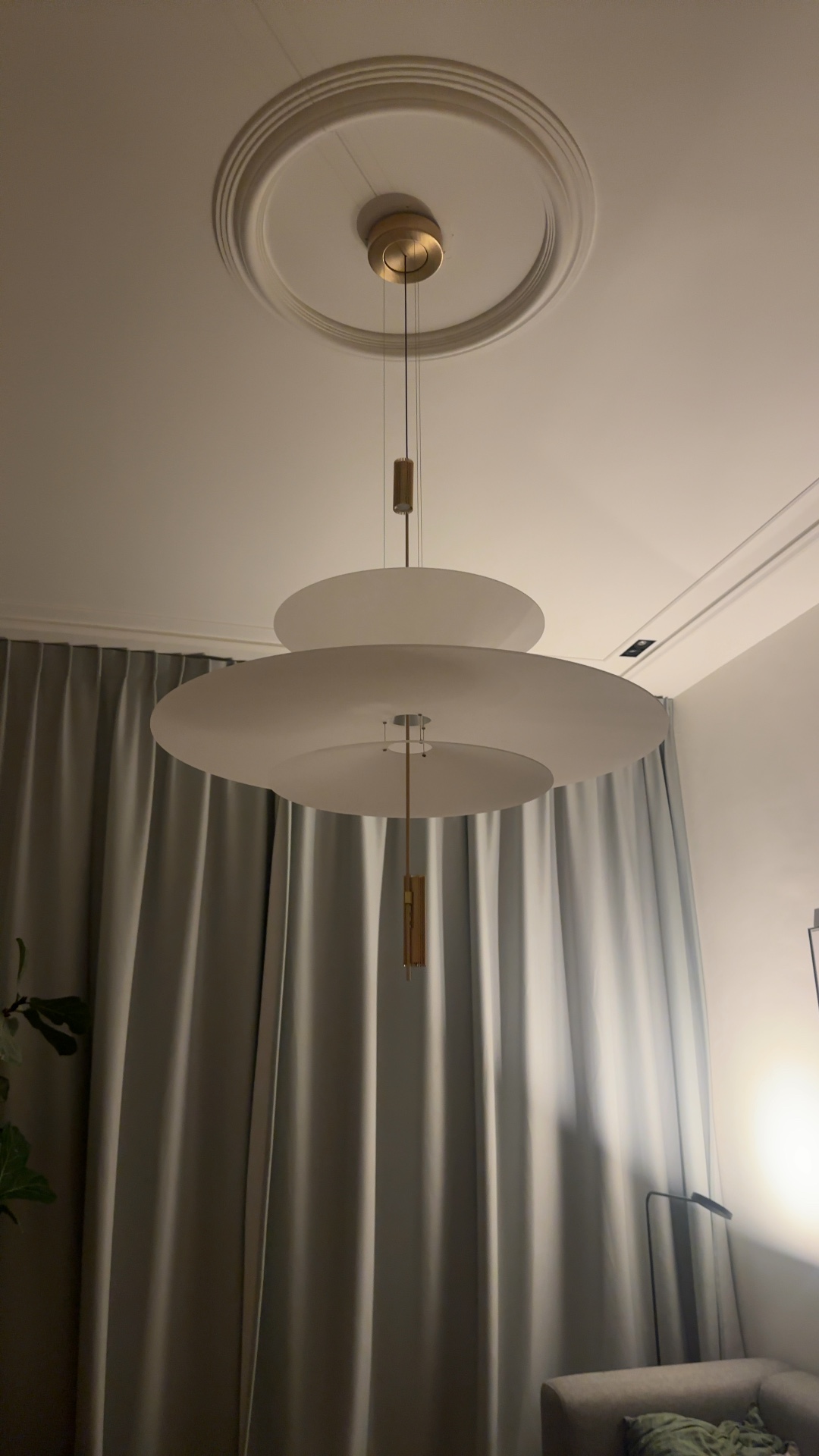
This appears to be a Mid-Century Modern multi-layer saucer pendant lamp, likely designed with a focus on diffused, glare-free light distribution. The tiered, organic forms are characteristic of Scandinavian and broader European design trends from the mid-20th century. The central spindle and brass details suggest a quality construction, though the materials would need closer inspection.
CULTURAL ECHOES
Where This Object Echoes
Designs by Poul Henningsen (PH Artichoke, PH5) and Verner Panton are recognized for their multi-layered, glare-free lighting principles.
Designers like Gino Sarfatti and Angelo Lelli also explored multi-shade lighting solutions with elegant metallic details during the same era.
Ritual & Ceremonial Use
- •The placement of such a light fixture above a dining table or in a central living space, serving as both functional illumination and a decorative statement piece, central to social gatherings and domestic rituals.
Meaning Through Time
During its creation, this type of lamp symbolized modernity, optimism, and a departure from more ornate, traditional fixtures prevalent in earlier decades.
Today, these designs are highly sought after, representing timeless style, quality craftsmanship, and a connection to a significant design movement.
HISTORICAL STORY
DID YOU KNOW?
Many iconic pendant lamp designs from the Mid-Century Modern era were inspired by natural forms or mathematical principles to achieve their unique light diffusion.
The tiered shade design, often seen in lamps of this style, is specifically engineered to hide the light source and prevent direct glare, creating a soft, inviting glow.
MATERIAL & CONDITION
Surface
The shades appear to be made of a frosted or opaque acrylic or possibly glass, providing a matte, diffused surface for light. The central elements show a metallic (likely brass) finish that looks smooth and slightly reflective. There is a ceiling rose made of plaster, painted white, which is a common decorative element, often original to the building rather than the lamp.
Weight & Feel
I'd estimate this fixture to be moderately heavy, perhaps 5-10 lbs, given the number of shades and the metallic components. It's suspended by a single cord, which suggests it's not excessively weighty.
Condition
Visually, the lamp appears to be in good condition. The shades seem intact without obvious cracks or discoloration. The metallic elements show a consistent finish, suggesting either good preservation or possibly a recent cleaning/polishing. Without a closer inspection, it's hard to tell if the wiring is original or updated.
RARITY ANALYSIS
Typical antique shop fare. Requires some searching but regularly available. This is where most genuine antiques fall.
Typical Characteristics
- Standard antique shop items
- Regularly available
- Moderate collector interest
EXPERT ANALYSIS
Furniture Historian & Restoration Specialist
The tiered saucer design and material choice strongly align with Mid-Century Modern aesthetics. However, the lack of specific identifying marks or detailed construction photos prevents a more precise attribution or dating, leading to a moderate confidence level.
KEY EVIDENCE
- 1Multi-tiered saucer shade design, indicative of Mid-Century Modern aesthetic.
- 2Central support structure with brass-toned metallic elements.
- 3Suspension mechanism typical of pendant lighting from the era.
- 4Apparent material consistency (frosted acrylic/glass shades, metal accents).
UNCERTAINTIES
- •No visible maker's marks or labels.
- •Uncertainty regarding the exact material of the shades (glass or acrylic).
- •Unclear if the wiring is original, which could be a safety concern for older fixtures.
WHAT WOULD IMPROVE CERTAINTY
- →Examine the lamp for any labels, stamps, or marks, particularly on the metallic components or inner rim of the shades.
- →Take close-up photos of the suspension hardware, electrical components, and the connection points of the shades.
- →Determine the material of the shades (e.g., tap gently to differentiate between glass and acrylic).
- →Inspect the wiring for signs of age or replacement, and consult with a qualified electrician if planning to use an older fixture.
ESTIMATED VALUE
Updated: Feb 26, 2026
- Market comparables from auctions & retail
- Condition, completeness & craftsmanship
- Current collector demand & trends
- Low = quick sale, high = patient seller
For informational purposes only, not a formal appraisal.
ABOUT INTERIOR
Furniture, lamps, lighting, chandeliers, decorative objects for the home.
Browse all InteriorSHARE THIS CURIOSITY
Have your own curiosities to discover?
Scan Your Curiosity
COMMENTS
No comments yet. Be the first to share your thoughts!
Sign in to leave a comment