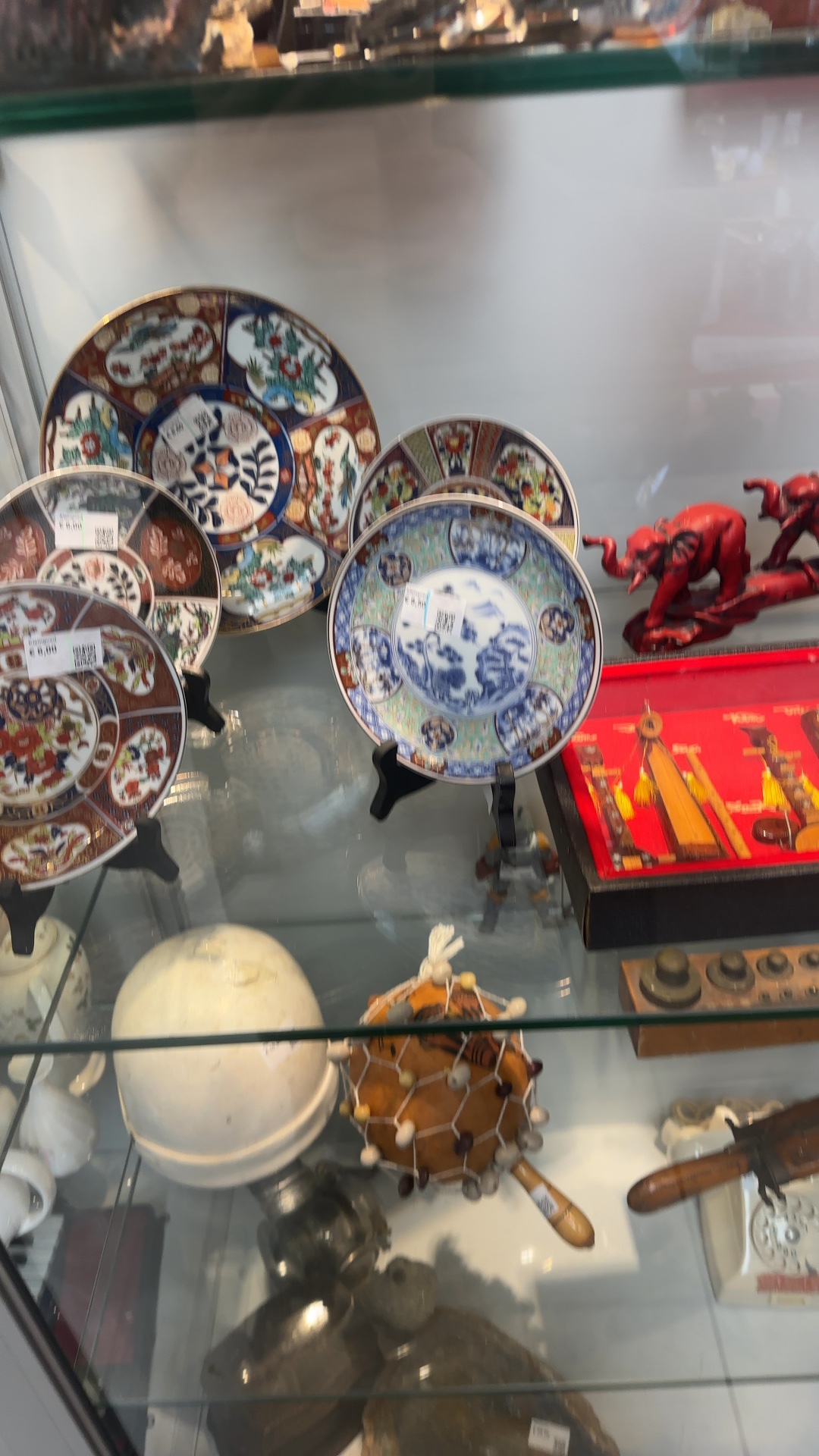
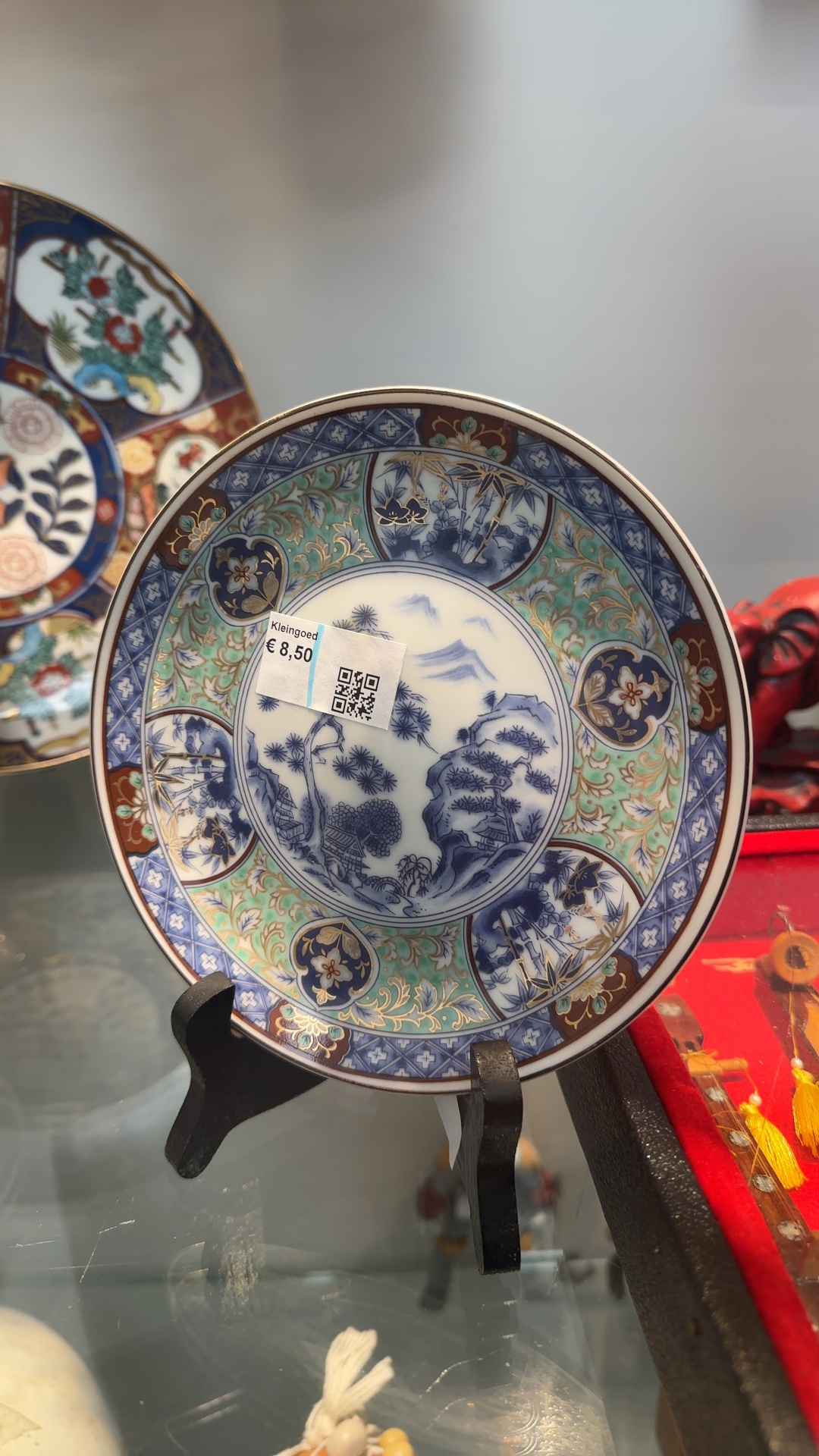
Japanese Imari-style Porcelain Plate with Landscape Motif
QUICK FACTS
Categories
Era
Late 19th to Early 20th Century (Meiji-Taisho Period)
Origin
🇯🇵 Japan
Rarity
Average (4/10)
Discovered
Jan 31, 2026
4 weeks ago
DESCRIPTION
This appears to be a Japanese porcelain plate, rendered in what is commonly referred to as Imari style. The central medallion features a traditional blue and white landscape scene, depicting mountains, water, and perhaps a building or two. This central design is then encircled by panels of colored enamels – green, rust-red, and gold – against a white ground, typically including floral or geometric patterns. While displaying characteristics of the Imari palette and decorative layout, the style of the blue and white landscape suggests a later production, potentially Meiji period or later, aiming to combine different decorative traditions within a single piece.
CULTURAL ECHOES
Where This Object Echoes
The blue and white landscape motif, while integrated into Japanese Imari, has strong roots in earlier Chinese porcelain traditions, particularly from the Ming and Qing dynasties.
The popularity of Japanese Imari in Europe led to numerous European manufacturers, such as Meissen, producing their own versions with similar color palettes and decorative layouts.
Ritual & Ceremonial Use
- •These types of decorative plates were often used for formal dining or display in homes, reflecting cultural appreciation for intricate ceramic artistry.
- •Gift-giving on special occasions was also a common practice, with such elaborate pieces symbolizing good taste and status.
Meaning Through Time
Imari porcelain symbolized Japan's growing export prowess and cultural exchange with the West, becoming a highly desirable luxury item in European courts.
As Japan modernized and embraced Western influences, Imari wares continued to be produced, with some designs evolving to appeal to an international market, sometimes blending traditional motifs with more modern aesthetics.
HISTORICAL STORY
DID YOU KNOW?
The distinctive Imari palette of blue, red, and gold was so highly prized in Europe that it influenced local porcelain production, with factories like Meissen and Chelsea producing their own 'Imari' patterns.
True Imari wares were exported through the port of Imari, which gave the style its name, even though the ceramics were produced in nearby Arita kilns.
MATERIAL & CONDITION
Surface
The surface is glazed white porcelain with underglaze cobalt blue painting and overglaze enamels in typical Imari hues of rust-red, green, and gilding. The enamel work appears competent, showing some variations in thickness and slight hand-painted irregularities, which is characteristic of the period.
Weight & Feel
Based on its size and porcelain composition, the plate would feel moderately substantial in hand, possessing the characteristic density of glazed ceramic.
Condition
The visible surface appears to be in good condition, with no obvious chips, cracks, or significant losses to the enamel or gilding from what can be observed through the glass. There may be minor surface wear consistent with age and handling.
RARITY ANALYSIS
Typical antique shop fare. Requires some searching but regularly available. This is where most genuine antiques fall.
Typical Characteristics
- Standard antique shop items
- Regularly available
- Moderate collector interest
EXPERT ANALYSIS
Asian Art Specialist
The visual evidence strongly points to a Japanese Imari-style porcelain plate due to its characteristic color palette and decorative layout. However, the exact period attribution remains somewhat generalized without inspecting the base and tactile qualities.
KEY EVIDENCE
- 1Distinctive use of underglaze blue and overglaze red and gold enamels, characteristic of the Imari palette.
- 2Traditional compartmentalized decoration with a central design surrounded by decorative panels.
- 3The landscape motif in the center, rendered in blue and white, is a common feature in later Imari and Arita wares.
- 4The overall stylistic elements suggest Japanese manufacture, likely from the Meiji or Taisho era.
UNCERTAINTIES
- •No visible base or footrim to inspect for manufacturing nuances or possible marks.
- •The small 'price tag' obscures a portion of the design, preventing full assessment of detail and condition in that area.
WHAT WOULD IMPROVE CERTAINTY
- →Obtain clear, high-resolution images of the reverse of the plate, particularly the footrim and any potential marks.
- →Inspect the plate out of the display case for any hairline cracks, repairs, or wear not visible through the glass.
- →Evaluate the quality of the enamels and gilding under magnification for signs of contemporary application vs. later restoration.
ESTIMATED VALUE
Updated: Feb 27, 2026
- Market comparables from auctions & retail
- Condition, completeness & craftsmanship
- Current collector demand & trends
- Low = quick sale, high = patient seller
For informational purposes only, not a formal appraisal.
SHARE THIS CURIOSITY
Have your own curiosities to discover?
Scan Your Curiosity
COMMENTS
No comments yet. Be the first to share your thoughts!
Sign in to leave a comment