Southeast Asian Carved Wooden Figure/Fragment on Stand
Estimated value
$250 - $750Rarity
Uncommon(5/10)Category
Tribal & EthnographicEra
Early 20th Century to Mid-20th CenturyOrigin
InternationalAuthenticity
SOUTHEAST ASIAN CARVED WOODEN FIGURE/FRAGMENT ON STAND: IDENTIFICATION
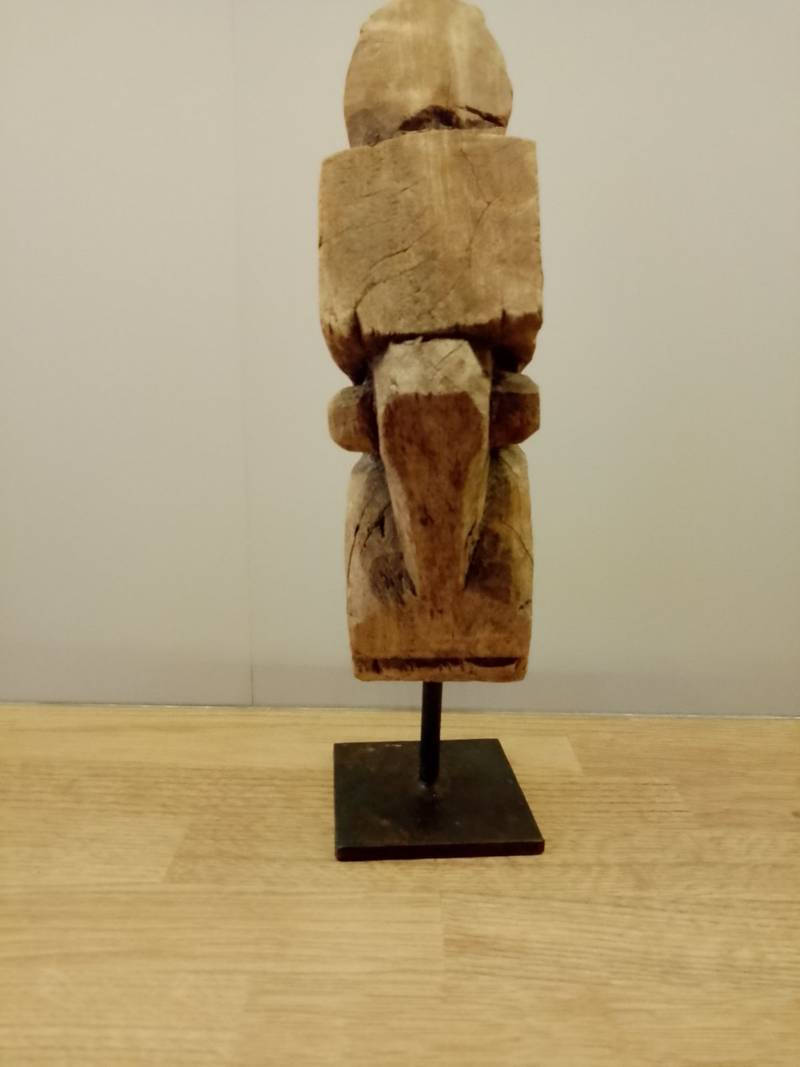
This appears to be a carved wooden figure or architectural fragment, possibly an ancestral figure or part of a larger religious carving, hailing from Southeast Asia. The carving style exhibits a rough, almost blocky abstraction with some more refined elements, suggesting a traditional folk art or tribal origin. It is mounted on a modern metal display stand, indicating it's now presented as a decorative or collectible art object.
CROSS-CULTURAL PARALLELS
Where This Object Echoes
Stylized ancestor figures or architectural elements show similar abstract human forms, geometric motifs, and weathering.
Rice deities (bulul) often feature similarly simplified, blocky forms, though typically with more distinct facial features.
Ritual & Ceremonial Use
- •Ancestral veneration where such figures serve as embodiments or representations of deceased ancestors, guarding the household.
- •Harvest ceremonies or agricultural rites, where figures might represent deities of fertility or prosperity.
Meaning Through Time
Primarily functional as a sacred object, embodying spiritual power and serving a specific religious or communal role.
Increasingly appreciated as ethnographic art, removed from its original context and valued for aesthetic and cultural heritage in collector markets.
SCARCITY
Genuine antiques with fewer examples on the market. Named makers, documented provenance, or early production examples.
Typical Characteristics
- Limited production
- Named makers
- Growing collector demand
Confidence Factors
- Similar 'tribal' aesthetics are commonly produced for tourism or decorative markets, making age and original purpose difficult to ascertain without expertise.
- Lack of specific provenance or detailed stylistic identifiers makes precise regional or ethnic attribution challenging from images alone.
- The weathering could be natural or artificially induced to create an 'antique' appearance.
SPECIALIST ASSESSMENT
Asian Art Specialist
The visual evidence strongly points to an older, hand-carved Southeast Asian wooden object based on material, weathering, and general style. However, precise attribution to a specific culture or period and confirmation of its original purpose are limited by the available imagery and the abstract nature of the piece, thus warranting a moderate confidence.
KEY EVIDENCE
- 1Carving style: rough, geometric, and abstracted, consistent with traditional Southeast Asian tribal or folk art.
- 2Wood material: exhibits significant natural aging, cracking, and a weathered patina, suggesting considerable age.
- 3Lack of fine detail or specific iconography: Indicates either a fragment, a highly stylized piece, or perhaps a guardian figure meant to be seen from a distance or in a specific context.
- 4Modern display stand: points to its current function as a decorative or collected object rather than its initial functional purpose.
UNCERTAINTIES
- •The level of weathering could be natural or artificially expedited, requiring expert hands-on examination to confirm.
- •Absence of specific tribal markers makes it difficult to definitively attribute to a particular ethnic group or region without further investigation.
- •The overall form is quite abstract, which can sometimes be a characteristic of later decorative reproductions trying to evoke an 'ancient' feel.
WHAT WOULD IMPROVE CERTAINTY
- →High-resolution images of the base and any concealed areas for additional marks or structural clues.
- →Detailed close-ups of the carved surfaces to identify specific tool marks and wood grain patterns.
- →Consultation with an ethnographic art specialist focusing on Southeast Asian tribal art.
- →If significant value is suspected, a wood species identification and carbon-14 dating could provide definitive age confirmation.
CONDITION & GRADE
Condition
The carving shows significant signs of age and weathering, including deep fissures and cracks across multiple surfaces. The edges appear worn and softened, indicating handling and exposure. The integrity of the wood itself seems stable despite the cracking, with no apparent active rot or insect damage, suggesting a dry stored environment for some time.
MARKET VALUATION
Updated: Feb 27, 2026
- Market comparables from auctions & retail
- Condition, completeness & craftsmanship
- Current collector demand & trends
- Low = quick sale, high = patient seller
For informational purposes only, not a formal appraisal.
ABOUT TRIBAL & ETHNOGRAPHIC
Tribal art, masks, ethnographic objects, and indigenous crafts.
Tribal & Ethnographic value and rarity guideSHARE THIS CURIOSITY
Have your own curiosities to discover?
Scan Your Curiosity
COMMENTS