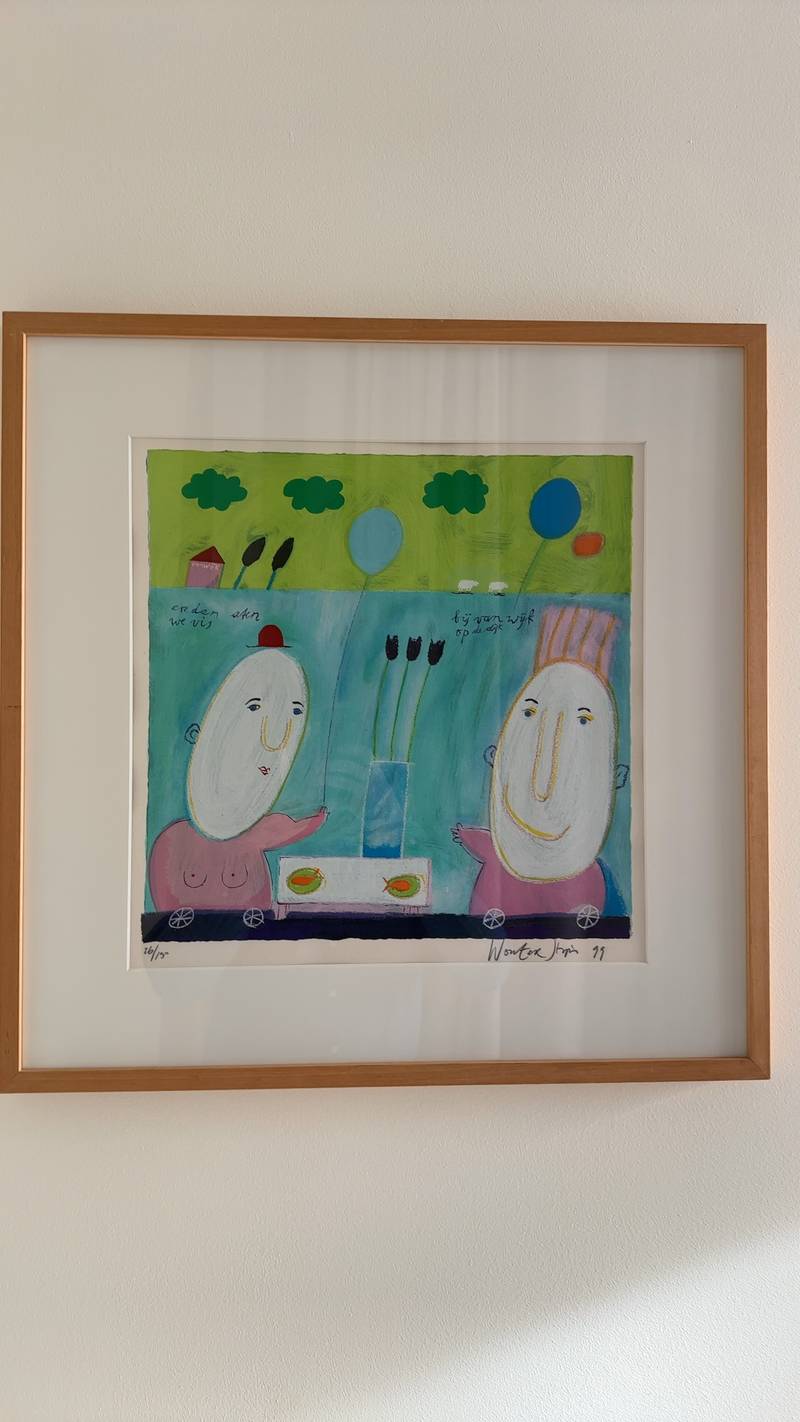
Wouter Tulp, 'Erden aan wie wij zijn' (We are what we are), Print, 1999
Estimated value
$150 - $450Rarity
Uncommon(5/10)Category
Prints & PostersEra
Late 20th Century (1999)Origin
NetherlandsArtist / Creator
Wouter TulpAuthenticity
WOUTER TULP, 'ERDEN AAN WIE WIJ ZIJN' (WE ARE WHAT WE ARE), PRINT, 1999: IDENTIFICATION
This appears to be a framed limited edition print, likely a silkscreen or lithograph, by the artist Wouter Tulp, dated 1999. The whimsical style, characterized by simplified figures and vibrant, almost childlike coloring, suggests a narrative or illustrative quality. The composition features two large-headed figures with minimal facial features, a vase of tulips, and balloons, set against a two-part background of a green landscape and a blue sky. The signature and edition number '26/199' are visible at the bottom.
COLLECTOR NOTES
Wouter Tulp (born 1971) is a Dutch illustrator and character designer known for his work in animation and publishing, suggesting this print might be an early personal artistic exploration or a commissioned piece related to his illustrative style.
SCARCITY
Genuine antiques with fewer examples on the market. Named makers, documented provenance, or early production examples.
Typical Characteristics
- Limited production
- Named makers
- Growing collector demand
Confidence Factors
- Signature and date are clear and consistent with known works by the artist.
- Edition number '26/199' indicates a limited run, typical for prints.
- The style is highly distinctive and recognizable for the artist.
PRINT SPECIALIST'S TAKE
Museum-Trained Art Historian
The visible signature, date, edition number, and highly recognizable style strongly attribute this to Wouter Tulp. The framing and condition appear appropriate for a print of this era, allowing for high confidence in its identification as a genuine limited edition print by the artist.
KEY EVIDENCE
- 1Visible artist's signature 'Wouter Tulp' and date '99' (1999) in the lower right.
- 2Limited edition numbering '26/199' in the lower left, indicating a print.
- 3Distinctive illustrative style consistent with known works by Wouter Tulp, a Dutch artist.
- 4Composition and color palette typical of contemporary whimsical or narrative art.
UNCERTAINTIES
- •Without direct examination of the paper and printing technique, the exact printmaking method (e.g., lithograph, silkscreen, giclée) cannot be definitively confirmed from images alone. This would affect secondary market value for some collectors.
WHAT WOULD IMPROVE CERTAINTY
- →Examine the edges of the print for deckled (rough) edges or plate marks, which can help identify printmaking technique.
- →Verify the specific paper type and its condition outside the frame, if possible.
- →Conduct a more thorough search for comparable prints by Wouter Tulp from the same period to establish a more precise market value.
- →Research the specific title 'Erden aan wie wij zijn' for any documented exhibition history or scholarly mentions.
CONDITION & GRADE
Condition
The print appears to be in very good condition, carefully matted and framed. No obvious signs of foxing, discoloration, or paper degradation are visible through the glass. The colors remain vibrant, suggesting it has been kept out of direct sunlight.
PRINT MARKET VALUATION
Updated: Feb 27, 2026
- Market comparables from auctions & retail
- Condition, completeness & craftsmanship
- Current collector demand & trends
- Low = quick sale, high = patient seller
For informational purposes only, not a formal appraisal.
ABOUT PRINTS & POSTERS
Vintage prints, posters, advertising signs, and graphic art.
Prints & Posters value and rarity guideSHARE THIS CURIOSITY
Have your own curiosities to discover?
Scan Your Curiosity
COMMENTS