Dutch East Indies Klewang M1898
Estimated value
$250 - $550Rarity
Average(4/10)Category
MilitariaBrand
HembrugEra
Early 20th Century (circa 1910-1940)Origin
NetherlandsArtist / Creator
VocAuthenticity
DUTCH EAST INDIES KLEWANG M1898: IDENTIFICATION
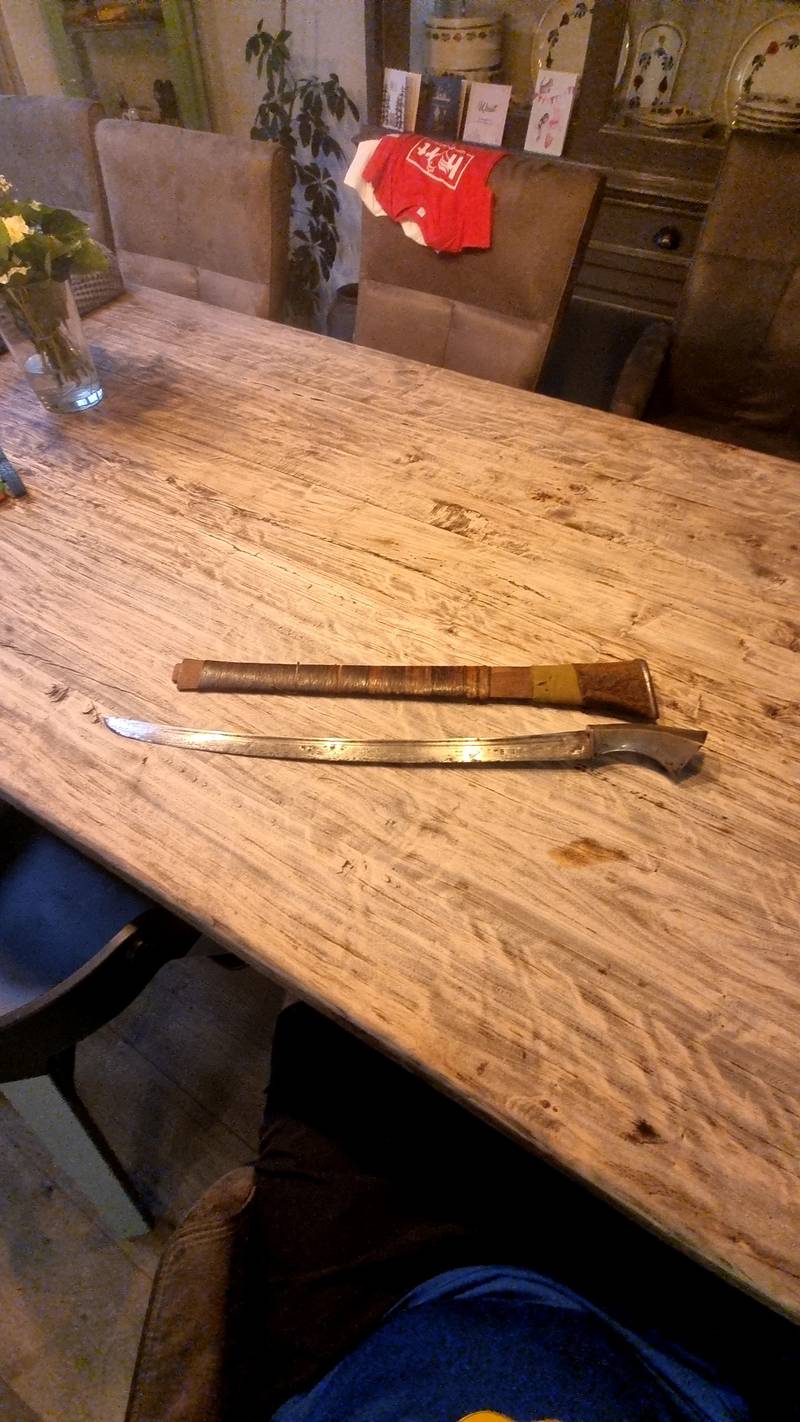
A military-issue cutlass featuring a distinctive clip-point blade and a steel basket-style guard often referred to as a 'Hembrug' pattern. This specimen exhibits the curved 625mm blade and a wooden scabbard reinforced with leather wrapping and brass fittings. The blade bears visible arsenal stampings including numerical identifiers and what appears to be a crowned proof mark, characteristic of Dutch Royal Army (KNIL) issue.
CROSS-CULTURAL PARALLELS
Where This Object Echoes
The klewang represents a hybrid design merging European metallurgy with the utility of Indonesian traditional blades like the golok.
Ritual & Ceremonial Use
- •Standard military dress for the Korps Marechaussee during jungle patrols in Aceh.
Meaning Through Time
A tool of authority and colonial policing in the East Indies archipelagos.
In Indonesia, captured klewangs often symbolize the struggle for independence against colonial rule.
ISSUE & SERVICE HISTORY
COLLECTOR NOTES
During the Japanese occupation of the Dutch East Indies (1942-1945), many of these klewangs were captured and repurposed by Japanese naval forces or local militias.
SCARCITY
Typical antique shop fare. Requires some searching but regularly available. This is where most genuine antiques fall.
Typical Characteristics
- Standard antique shop items
- Regularly available
- Moderate collector interest
Confidence Factors
- Arsenal stampings match known Hembrug production patterns
- Construction techniques for the hilt and scabbard are era-correct
- Wear patterns appear consistent with authentic age rather than artificial distressing
MILITARY HISTORIAN'S TAKE
Militaria Historian
Identification is high due to the unique combination of the Hembrug-style guard and the specific scabbard construction, both which are highly diagnostic of this model.
KEY EVIDENCE
- 1Crowned 'H' or similar arsenal inspection mark visible on the ricasso
- 2Signature asymmetric steel 'basket' guard with flared pommel
- 3Blade profile is a single-edged, slightly curved clip-point typical of the M1898
- 4Wooden scabbard featuring characteristic leather sleeve wrapping
UNCERTAINTIES
- •Heavily cleaned surface may obscure more subtle inspector marks
- •Pitting near the guard suggests storage in a damp environment, which can hide structural weaknesses in the tang
WHAT WOULD IMPROVE CERTAINTY
- →Take a high-resolution macro photograph of the markings on the ricasso to identify the specific inspector
- →Check the spine of the blade near the hilt for additional date or arsenal stamps
- →Verify if the guard has a unit number or crown over a letter (e.g., 'W' for Queen Wilhelmina)
CONDITION & GRADE
Grading breakdown
Scoring is driven by the presence of the original scabbard and legible arsenal marks, offset by surface pitting and leather deterioration.
Condition
The blade remains structurally sound but shows significant oxidation near the ricasso. The scabbard is intact but shows heavy wear to the leather bindings and some separation of the wooden core, which is common for organic materials from the Indonesia region.
MILITARIA VALUATION
Updated: May 11, 2026
Heritage Auctions and specialized militaria dealers like Rock Island typically price these between $300 and $600 depending on condition (2023-2024).
Who buys this
Collectors of Dutch colonial militaria, edged weapons enthusiasts, and US Navy history collectors due to the M1917 connection.
What increases value
- •Presence of original scabbard (often lost or rotted)
- •Legibility of Hembrug arsenal and inspector stamps
- •Condition of the wooden hilt slabs
What lowers value
- •Severe pitting or rust deeply etching the steel
- •Loose hilt or damaged tang reducing structural integrity
What makes top-tier examples
- •Numbered matching set between blade and scabbard throat
- •Presence of a pre-1940 Dutch inspection date
Grade & condition
Completeness of the scabbard, clarity of stamps, and lack of active corrosion.
Rarity & demand
For informational purposes only, not a formal appraisal.
ABOUT MILITARIA
Military uniforms, weapons, medals, equipment, and war memorabilia.
Militaria value and rarity guideSHARE THIS CURIOSITY
Have your own curiosities to discover?
Scan Your Curiosity
COMMENTS