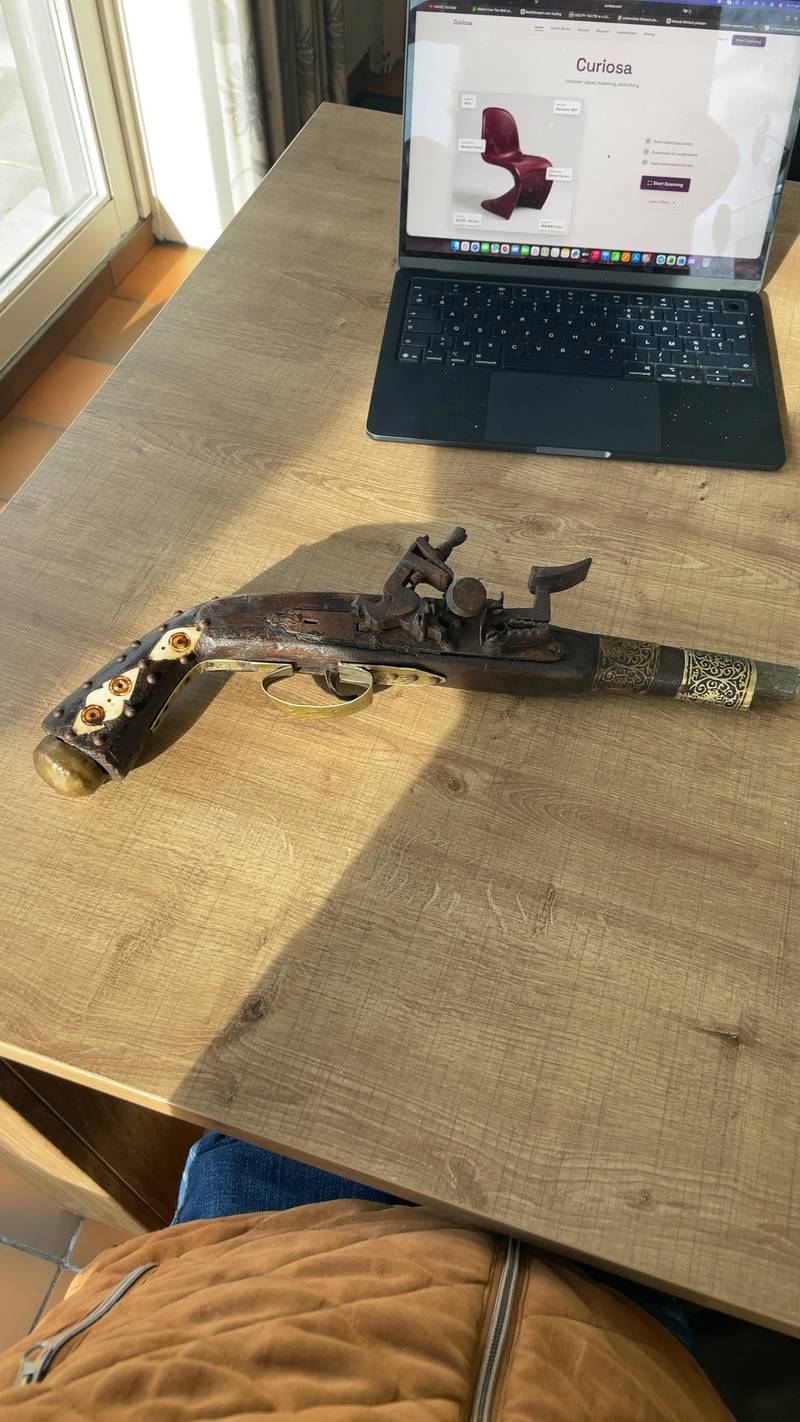
Ottoman-style Flintlock Pistol (Reproduction)
Estimated value
$75 - $250Rarity
Common(2/10)Category
MilitariaEra
Post-1950 (Reproduction)Origin
InternationalAuthenticity
OTTOMAN-STYLE FLINTLOCK PISTOL (REPRODUCTION): IDENTIFICATION
This appears to be a replica or decorative reproduction of an early modern, possibly Ottoman-influenced, flintlock pistol. The ornate brass barrel decoration and the inlaid grip with 'eye' motifs are characteristic of styles found in the Balkans and Ottoman Empire. Several elements, particularly the condition of the mechanism and the somewhat crude finishing, suggest it is intended for display rather than as an antique firearm.
SCARCITY
Older mass-produced items still widely available. Easy to find on eBay, antique malls, and estate sales in large quantities.
Typical Characteristics
- Mass produced historically
- High survival rate
- Readily available everywhere
Confidence Factors
- The lack of genuine patina or wear on the mechanism and metal components is inconsistent with a functional antique.
- The 'eye' pattern inlays and decorative metalwork, while period-correct in style, appear too uniform and clean for an artifact of genuine age.
- Firearms from this period typically bear proof marks, maker's marks, or inspection stamps, none of which are visible.
- Decorative reproductions of flintlock pistols are very common in the market, often imported from regions known for crafting such items.
Expert review recommended. Consider consulting a specialist before making purchasing decisions.
MILITARY HISTORIAN'S TAKE
Militaria Historian
High confidence in identification as an Ottoman-style flintlock pistol, and moderate-to-high confidence that it is a modern decorative reproduction, based on visible construction, finish, and the lack of authentic aging indicators for a genuine antique firearm.
KEY EVIDENCE
- 1Ornate brass-toned relief decoration on the barrel and stock, characteristic of Ottoman-style firearms.
- 2Inlaid 'eye' motifs on the grip, often made from bone or similar material in original historic pieces.
- 3The flintlock mechanism appears complete, but its surface finish and lack of genuine wear suggest it is not a functional antique.
- 4General condition and apparent manufacturing method point to a modern decorative reproduction rather than an authentic period piece.
UNCERTAINTIES
- •Absence of verifiable proof marks, maker's marks, or serial numbers, which would be crucial for authenticating a genuine antique firearm.
- •The overall 'patina' appears intentionally manufactured rather than developed organically over centuries.
- •The mechanism components look rather new and lack the characteristic wear and pitting of a piece that has seen extensive use or age.
WHAT WOULD IMPROVE CERTAINTY
- →Carefully inspect for any small stamps or marks on the underside of the barrel or lock plate.
- →Examine the 'bone' inlays more closely under magnification to determine if they are genuine bone/ivory or a modern synthetic.
- →If possible, determine if the firing mechanism is functional or purely decorative (though caution is advised with any firearm, even replicas).
- →Consult specialized firearms replica databases or catalogs to identify similar decorative models.
CONDITION & GRADE
Condition
The object appears to be in good, intact condition for a decorative piece. There are no obvious signs of significant damage or missing components. The 'aged' look is part of its manufacturing rather than genuine wear from historical use.
MILITARIA VALUATION
Updated: Feb 27, 2026
- Market comparables from auctions & retail
- Condition, completeness & craftsmanship
- Current collector demand & trends
- Low = quick sale, high = patient seller
For informational purposes only, not a formal appraisal.
ABOUT MILITARIA
Military uniforms, weapons, medals, equipment, and war memorabilia.
Militaria value and rarity guideSHARE THIS CURIOSITY
Have your own curiosities to discover?
Scan Your Curiosity
COMMENTS