Triple-Strand Coral Bead Necklace with Gold-Tone Box Clasp
Authenticity
TRIPLE-STRAND CORAL BEAD NECKLACE WITH GOLD-TONE BOX CLASP: IDENTIFICATION
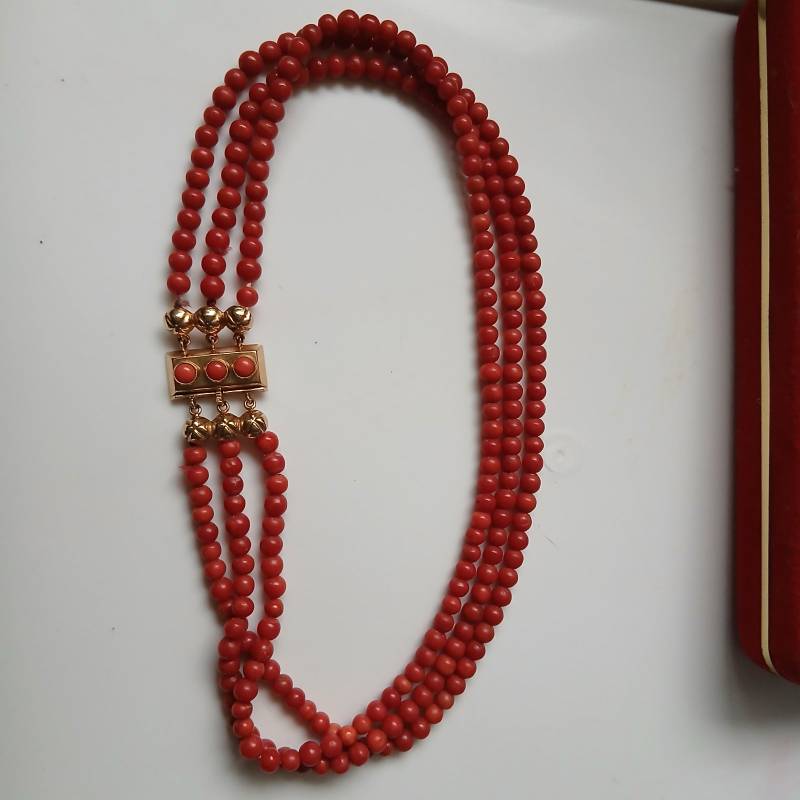
This appears to be a triple-strand necklace composed of numerous small, polished red coral beads, strung together on what looks like pink thread. The strands converge at an ornamental gold-toned box clasp. The clasp features three small cabochon-cut coral inserts on its front, mimicking the main necklace material, and is flanked by decorative gold-toned bead elements where the strands attach. The reverse of the clasp shows a secure box-tab and slot mechanism, a common and robust closure for multi-strand necklaces.
CROSS-CULTURAL PARALLELS
Where This Object Echoes
The popularity of multi-strand necklaces and natural organic materials like coral for adornment.
Italy, particularly Torre del Greco, has a long tradition of coral carving and jewelry making, making such pieces popular throughout Europe.
Ritual & Ceremonial Use
- •Often worn as a decorative statement piece for social gatherings or as part of everyday attire, depending on the era and setting.
- •Gift-giving, particularly as a token of affection or protection.
Meaning Through Time
Symbolized protection, good health, and fertility; believed to ward off evil.
Valued for its natural beauty and exotic origins, often associated with sentimental jewelry.
Embraced for its vibrant color, adding a popular 'pop' to fashion, particularly in beach or resort wear styles.
SCARCITY
Typical antique shop fare. Requires some searching but regularly available. This is where most genuine antiques fall.
Typical Characteristics
- Standard antique shop items
- Regularly available
- Moderate collector interest
Confidence Factors
- Authenticity of coral (natural vs. reconstructed/dyed) cannot be determined from images alone.
- Purity of the metal in the clasp (gold, gold-filled, or plated) is unknown without marks or testing.
- The age and origin are estimated based on general style, requiring further verification.
GEMOLOGIST'S ASSESSMENT
Jewelry Historian & Gemologist-Informed Appraiser
Confidence is good as the object type and approximate era are discernable from the visual evidence, but the lack of clear material identifiers and marks limits certainty regarding metal purity and coral authenticity.
KEY EVIDENCE
- 1Triple-strand construction, a common design element across several periods.
- 2Uniformly sized and polished coral beads, indicative of commercial production rather than raw, hand-cut pieces.
- 3Box clasp mechanism, a robust and era-appropriate closure for multi-strand necklaces.
- 4Decorative gold-toned elements on the clasp with small coral cabochons, enhancing the overall design.
UNCERTAINTIES
- •Absence of visible hallmarks or maker's marks on the clasp, which are crucial for metal identification and attribution.
- •Inability to determine if the coral is natural, dyed, or composite from images alone.
- •The exact metal content (e.g., solid gold, gold-filled, or plated) of the clasp is indeterminate from visual inspection.
WHAT WOULD IMPROVE CERTAINTY
- →Examine the clasp thoroughly under magnification for any hidden hallmarks, purity stamps (e.g., 14K, 18K), or maker's marks.
- →Perform an acid test on the clasp metal to determine gold purity, if any.
- →Conduct a microscopic examination of the coral beads to confirm natural origin and rule out treated or composite materials.
- →Verify the integrity of the stringing by gently manipulating the necklace.
CONDITION & GRADE
Condition
The necklace appears to be in good overall condition. Visible wear includes minor tarnishing or surface scratches on the gold-toned clasp, and superficial abrasion on some coral beads, typical for an item of this type and age. The stringing appears intact, though a closer inspection would be required to assess its integrity.
GEMSTONE & METAL VALUE
Updated: Feb 27, 2026
- Market comparables from auctions & retail
- Condition, completeness & craftsmanship
- Current collector demand & trends
- Low = quick sale, high = patient seller
For informational purposes only, not a formal appraisal.
ABOUT JEWELRY
Fine jewelry, costume pieces, rings, necklaces, bracelets, and brooches.
Jewelry value and rarity guideSHARE THIS CURIOSITY
Have your own curiosities to discover?
Scan Your Curiosity
COMMENTS