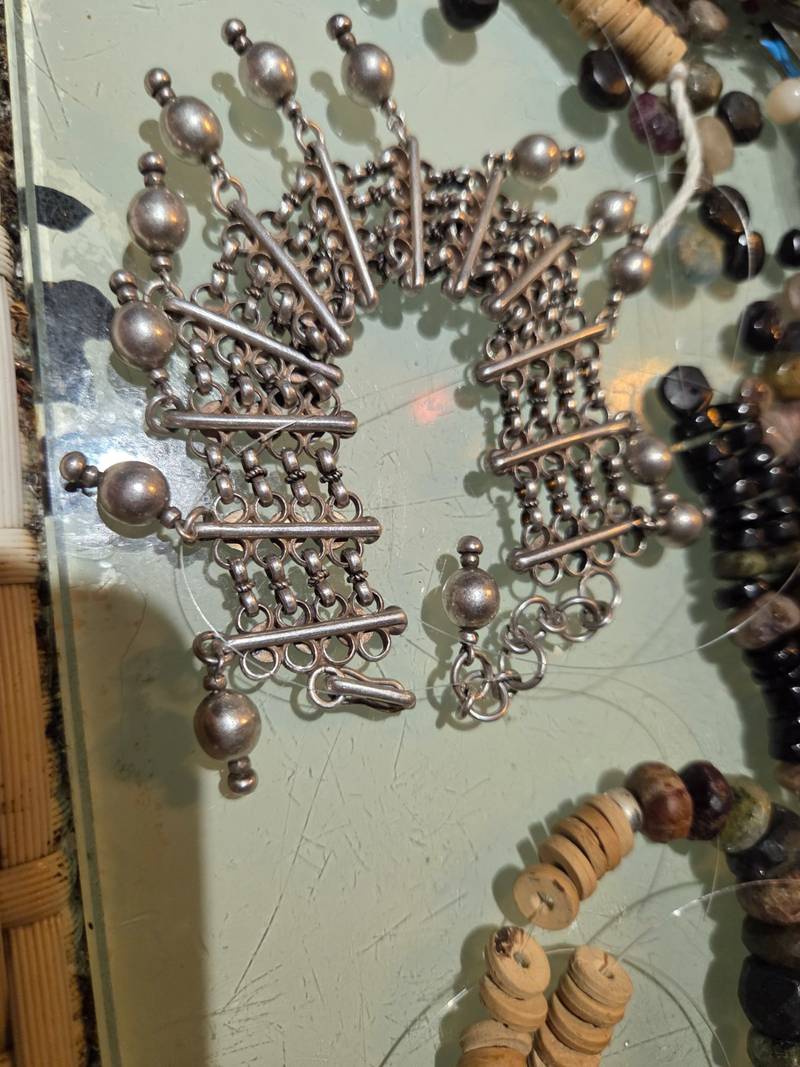
Indian Tribal Silver Ghughroo Dangle Bracelet c.1950-1980
Estimated value
$85 - $175Rarity
Ordinary(3/10)Category
JewelryEra
Mid-to-late 20th century (c. 1950-1980)Origin
IndiaArtist / Creator
Silapo (per user attribution)Authenticity
INDIAN TRIBAL SILVER GHUGHROO DANGLE BRACELET C.1950-1980: IDENTIFICATION
A flexible multi-strand tribal bracelet constructed from high-grade silver alloy links, featuring characteristic 'ghughroo' or hollow sphere dangles. The architecture consists of parallel horizontal bars joined by circular jump rings and twisted wire motifs, a construction technique prevalent in Rajasthan and Gujarat. The piece terminates in a simple hand-formed hook clasp and extension chain.
CROSS-CULTURAL PARALLELS
Where This Object Echoes
Similar use of silver dangles and articulated elements to create movement-based sound in North African jewelry.
Ritual & Ceremonial Use
- •Traditional bridal adornment where silver serves as a dowry and protection.
- •Folk dancing where the ghughroo dangles provide a rhythmic accompaniment to the wearer's movements.
Meaning Through Time
Tribal identity and portable familial wealth.
Bohemian fashion accessory and souvenir of ethnic craft heritage.
SCARCITY
Standard antiques commonly found at estate sales and flea markets. Plentiful supply meets modest demand.
Typical Characteristics
- Moderate production runs
- Common at estate sales
- Entry-level collectibles
Confidence Factors
- Visible 925 stamp conforms to standard export marking practices
- Construction techniques (twisted wire, hand-bent hook) are consistent with regional artisanal production
- Natural oxidation patterns match the age and material type
GEMOLOGIST'S ASSESSMENT
Jewelry Historian & Gemologist-Informed Appraiser
High confidence due to clear visibility of the 925 stamp and distinctive Rajasthani construction methods which are well-documented in specialty catalogs.
KEY EVIDENCE
- 1925 hallmark stamped on a circular link indicating sterling silver content.
- 2Traditional 'Ghughroo' hollow-form dangles characteristic of Indian jewelry.
- 3Articulated ladder-style construction using soldered horizontal bars.
- 4Patina consistent with silver sulfide formation on 90%+ purity alloy.
UNCERTAINTIES
- •Commonality of this design makes precise dating to a specific decade difficult without provenance.
WHAT WOULD IMPROVE CERTAINTY
- →Verify the silver content using a jeweler's acid test on a discreet inner link.
- →Clean a small section with a silver cloth to check for nickel-plating underneath, though 925 stamp suggests solid alloy.
- →Inspect each jump ring for gaps to ensure dangles are secure.
CONDITION & GRADE
Grading breakdown
Grade assigned based on the presence of all decorative dangles and the legibility of the 925 hallmark. Heavy tarnish is considered 'surface character' rather than damage in this category.
Condition
Significant surface oxidation present throughout the links. Several jump rings show slight elongation from wear, but the overall structural integrity of the articulated bars remains intact.
GEMSTONE & METAL VALUE
Updated: May 11, 2026
Who buys this
Collectors of ethnic silver, devotees of 'Bohemian' style jewelry, and buyers valuing artisan-made South Asian metalwork.
What increases value
- •Total weight of the silver (gram weight)
- •Completeness of dangles (any missing bells lower value)
- •Legibility of the 925 hallmark
What lowers value
- •Excessive cleaning that removes desirable aged patina
- •Broken links or loose jump rings that lead to lost components
What makes top-tier examples
- •Early 20th-century examples with high-relief hand-chasing
- •Signed pieces from recognized regional workshops
Grade & condition
Completeness of components, clasp security, and depth of silver tarnish.
Rarity & demand
For informational purposes only, not a formal appraisal.
ABOUT JEWELRY
Fine jewelry, costume pieces, rings, necklaces, bracelets, and brooches.
Jewelry value and rarity guideSHARE THIS CURIOSITY
Have your own curiosities to discover?
Scan Your Curiosity
COMMENTS