Hand-Carved Soapstone Elephant Procession Set
Estimated value
$15 - $45Rarity
Common(2/10)Category
Decorative ObjectsEra
Late 20th Century (circa 1970-1990)Origin
InternationalAuthenticity
HAND-CARVED SOAPSTONE ELEPHANT PROCESSION SET: IDENTIFICATION
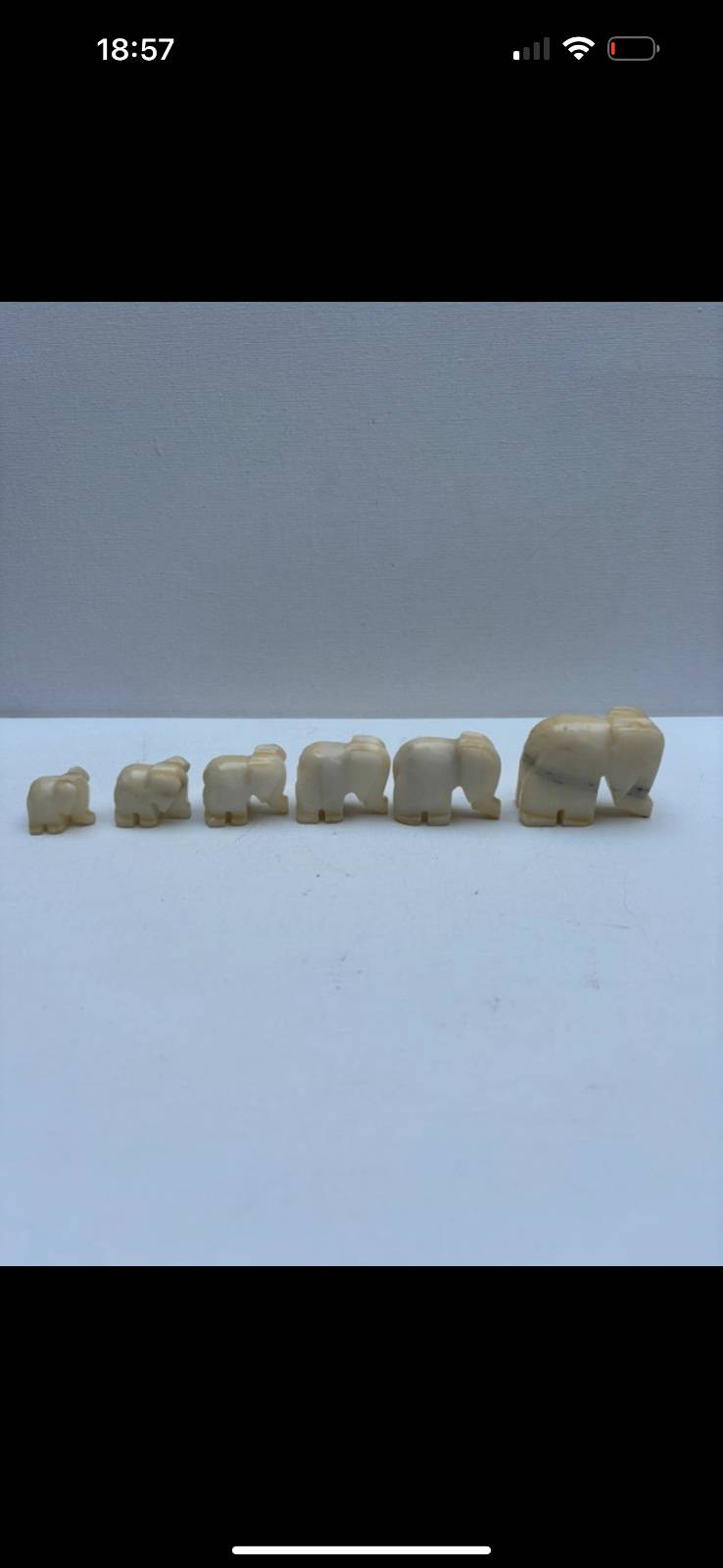
A set of six graduated elephant figurines ranging from approximately 1.5 cm to 4 cm in height. These are hand-carved from a light-colored, cream-to-off-white soapstone (steatite), featuring stylized silhouettes with minimal anatomical detailing. The largest elephant exhibits natural grey-black mineral veining characteristic of steatite deposits. The uniform squared-off base execution and repetitive forms suggest production from a regional craft workshop rather than a single studio artist.
PRODUCTION PERIOD
SCARCITY
Older mass-produced items still widely available. Easy to find on eBay, antique malls, and estate sales in large quantities.
Typical Characteristics
- Mass produced historically
- High survival rate
- Readily available everywhere
Confidence Factors
- Materials and carving style are entirely consistent with documented regional craft export wares of the late 20th century.
- Low market value makes deliberate forgery of these specific items economically unfeasible.
DECORATIVE ARTS EXPERT'S TAKE
Decorative Arts Specialist
The visual characteristics of the stone and carving style are highly diagnostic for late 20th-century soapstone exports, with a high volume of market comparables via platforms like eBay and Etsy.
KEY EVIDENCE
- 1Graduated sizes indicate a commercially intended decorative set.
- 2Mineral veining in the largest piece confirms natural soapstone rather than resin or cast glass.
- 3Stylized, simplified anatomy (lack of eyes, toes, or tusks) points to workshop production.
- 4Trunk-down pose is a common variant in South Asian and African export carvings.
UNCERTAINTIES
- •Absence of markings or labels makes precise regional attribution (e.g., India vs. Kenya) difficult without tactile inspection of the stone's specific hardness.
WHAT WOULD IMPROVE CERTAINTY
- →Conduct a scratch test with a fingernail on the base; genuine soapstone will show a faint mark due to its high talc content.
- →Inspect for a small 'Made in India' or 'Kenya' sticker residue on the underside of the largest elephant.
CONDITION & GRADE
Condition
The figures show minor surface abrasions and edge wear consistent with age and shelf display. There are no apparent fractures or missing trunks, which are the most common points of failure in small stone carvings.
Weight & feel
The set likely weighs between 150g and 250g total; individuals will feel surprisingly dense and cool to the touch despite their small size.
DECORATIVE ARTS VALUATION
Updated: May 11, 2026
Similar 6-7 piece soapstone sets frequently sell for $20-$40 on secondary marketplaces such as Etsy and eBay as of 2024-2025.
Who buys this
Casual decorators, collectors of elephant-themed items, and vintage souvenir enthusiasts.
What increases value
- •Completeness of the set (all sizes present)
- •Absence of chips on the fragile trunk tips
- •Presence of attractive natural mineral veining
What lowers value
- •Commonness of the type limits significant appreciation
- •Unidentified workshop origin prevents 'master carver' premiums
What makes top-tier examples
- •Intricate piercing (jalis) where a smaller elephant is carved inside a larger one
- •Specific documented regional styles like the Kisii variegated stone
Grade & condition
Condition of the stone, specifically at the extremities (ears, trunks), and the vibrancy of the stone's natural color/veining.
Rarity & demand
For informational purposes only, not a formal appraisal.
ABOUT DECORATIVE OBJECTS
Silver, glassware, metalwork, enamelwork, and decorative arts.
Decorative Objects value and rarity guideSHARE THIS CURIOSITY
Have your own curiosities to discover?
Scan Your Curiosity
COMMENTS