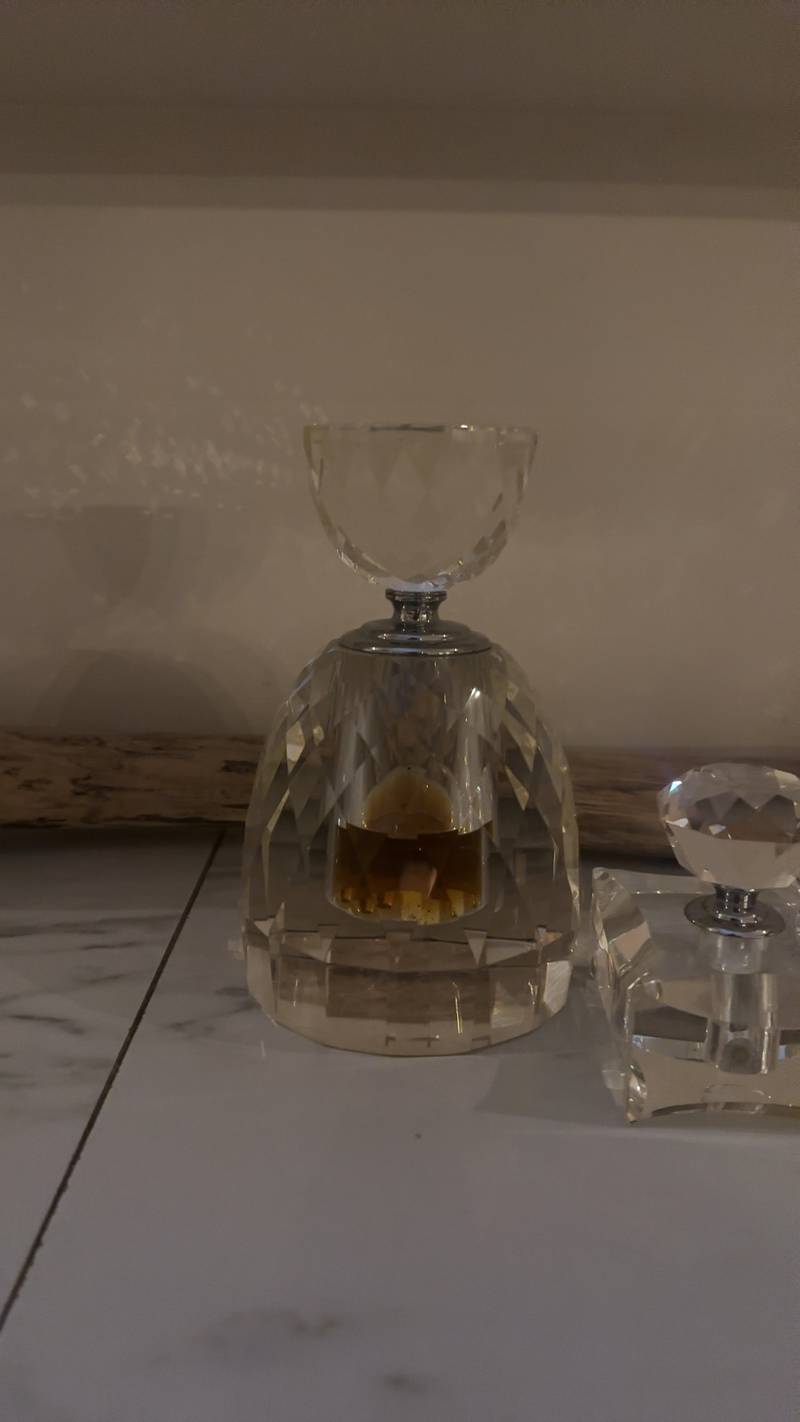
Baccarat 'Masséna' Crystal Scent Bottle (Flacon d'Odeur) c.1980-2000
Estimated value
$250 - $550Rarity
Average(4/10)Category
Decorative ObjectsBrand
BaccaratEra
Late 20th century (c. 1980-2000)Origin
FranceAuthenticity
BACCARAT 'MASSÉNA' CRYSTAL SCENT BOTTLE (FLACON D'ODEUR) C.1980-2000: IDENTIFICATION
A heavy lead-crystal perfume flacon featuring deep vertical and diamond-shaped bevel cuts characteristic of the Baccarat 'Masséna' pattern. The vessel consists of a bell-shaped body with a central reservoir for liquid and a matching oversized faceted stopper. The crystal displays high clarity and a refractive index indicative of 24% lead content minimum. The stopper is secured by a silver-tone metal collar, likely rhodium-plated brass or nickel-plated steel, used to ensure an airtight seal for the fragrance inside.
PRODUCTION PERIOD
SCARCITY
Typical antique shop fare. Requires some searching but regularly available. This is where most genuine antiques fall.
Typical Characteristics
- Standard antique shop items
- Regularly available
- Moderate collector interest
Confidence Factors
- Pattern consistency with documented Baccarat Masséna production
- High refractive index and sharp facet edges typical of lead crystal
- Metal collar assembly matches late 20th century Baccarat flacon construction
DECORATIVE ARTS EXPERT'S TAKE
Decorative Arts Specialist
Identification is based on strong visual matching with the Baccarat Masséna pattern; however, the absence of a visible hallmark in the photo prevents a higher score.
KEY EVIDENCE
- 1Specific bevel cut geometry matches the Masséna catalog
- 2Lead crystal fire and brilliance indicates high-quality manufacture
- 3Stopper-to-body scale ratio typical of Baccarat flacon d'odeur designs
- 4Presence of high-polish metal collar for sealing
UNCERTAINTIES
- •Internal staining from aged liquid may impact value if not removable
- •Acid-etched Baccarat logo on base is not visible in current photo
WHAT WOULD IMPROVE CERTAINTY
- →Check the underside for the circular Baccarat acid-etched hallmark
- →Examine the stopper and neck for matching engraved numbers (often used in fitting)
- →Clean internal reservoir with alcohol to remove residue
CONDITION & GRADE
Condition
The crystal appears to have maintained its structural integrity without visible 'fleabite' chips on the sharp facet edges. Dark residue is visible in the internal reservoir, suggesting aged perfume oils that may require chemical cleaning to prevent permanent staining.
Weight & feel
Estimated weight is approximately 0.8 to 1.2 kg, providing a dense, substantial hand-feel typical of high-lead French crystal.
DECORATIVE ARTS VALUATION
Updated: May 11, 2026
Similar Baccarat Masséna scent bottles have realized between $300 and $500 at specialty glass auctions and platforms like 1stDibs and eBay Sold listings in 2023-2024.
Who buys this
Collectors of 20th-century French crystal and enthusiasts of high-end vanity accessories or 'flaconnerie'.
What increases value
- •Clarity of the crystal with no internal clouding
- •Presence of the original stopper without chips
- •Functionality of the metal collar seal
What lowers value
- •Chips to the sharp points of the bevel cuts significantly decrease value
- •Permanent foggy residue ('sick glass') from old perfume oils
What makes top-tier examples
- •Original box and documentation
- •Signed by the maker on the base
- •Pristine, water-clear internal reservoir
Grade & condition
Absence of chips, clarity of crystal, and condition of the metal components.
Rarity & demand
For informational purposes only, not a formal appraisal.
ABOUT DECORATIVE OBJECTS
Silver, glassware, metalwork, enamelwork, and decorative arts.
Decorative Objects value and rarity guideSHARE THIS CURIOSITY
Have your own curiosities to discover?
Scan Your Curiosity
COMMENTS