Dutch or German Wall Clock (Laterndluhr Style) with Painted Dial
Estimated value
$500 - $1,500Rarity
Average(4/10)Category
Decorative ObjectsEra
Early to Mid-19th CenturyOrigin
NetherlandsAuthenticity
DUTCH OR GERMAN WALL CLOCK (LATERNDLUHR STYLE) WITH PAINTED DIAL: IDENTIFICATION
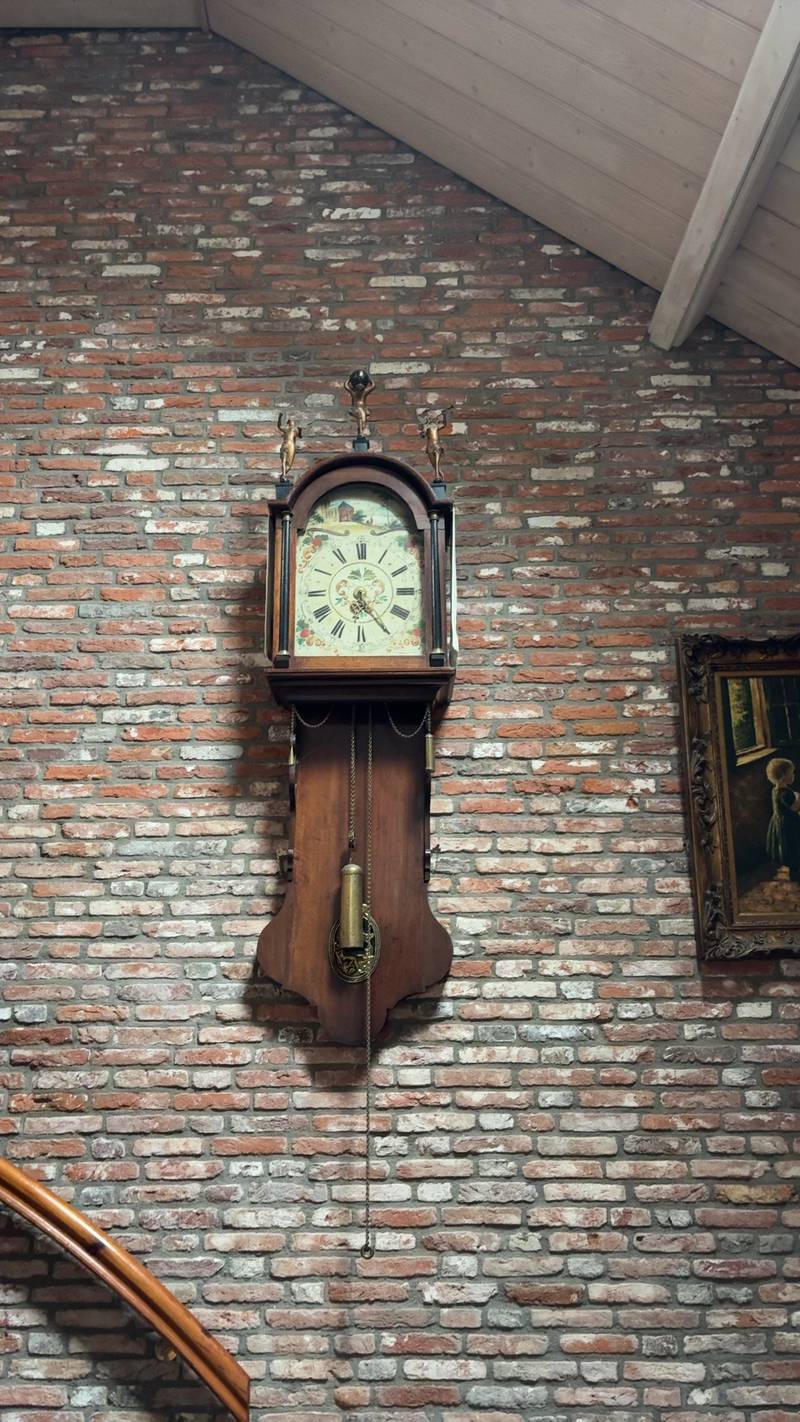
This appears to be a large wall clock, likely Dutch or German in origin, exhibiting features reminiscent of a Laterndluhr or other regional longcase/tallcase influenced designs, adapted for wall mounting. The case is constructed of polished wood, possibly fruitwood or a stained hardwood, featuring a prominent arched pediment and decorative finials, specifically three figural elements. The painted dial, with its floral spandrels and a scenic arch, immediately draws the eye, suggesting a folk-art or regional decorative influence rather than a high-precision, plain scientific dial.
SCARCITY
Typical antique shop fare. Requires some searching but regularly available. This is where most genuine antiques fall.
Typical Characteristics
- Standard antique shop items
- Regularly available
- Moderate collector interest
Confidence Factors
- Figural finials can sometimes be later additions or replacements to enhance decorative appeal.
- The movement's originality and state of repair cannot be determined from images alone, which significantly impacts value.
- Reproduction movements or cases are less common for this type of clock, but dial restoration or repainting is possible.
DECORATIVE ARTS EXPERT'S TAKE
Decorative Arts Specialist
Confidence is high for the general type, era, and likely origin based on visible stylistic elements and construction. However, specific attribution to a maker and verification of mechanical originality require closer inspection.
KEY EVIDENCE
- 1Wooden case with arched pediment and figural finials typical of regional wall clocks.
- 2Painted dial with Roman numerals, Arabic minute track, floral spandrels, and landscape central scene.
- 3Visible brass weights and pendulum, indicating a weight-driven movement.
- 4Overall aesthetic suggests a German or Dutch production from the 19th century.
UNCERTAINTIES
- •No visible maker's marks or date stamps on the dial or accessible case parts.
- •Uncertainty regarding the originality of the figural finials.
- •Inability to assess the mechanical integrity or originality of the movement.
WHAT WOULD IMPROVE CERTAINTY
- →Obtain closer photographs of the clock dial, especially any signatures or markings.
- →Examine the movement by opening the case; look for maker's marks, serial numbers, or pendulum length markings.
- →Inspect the back of the case and movement for any labels or repair dates.
- →If possible, a UV light inspection for dial restoration could be invaluable.
CONDITION & GRADE
Condition
Visually, the clock appears to be in good, aged condition. The painted dial shows some minor wear or discoloration consistent with its age, but the details remain clear. The wood case has a consistent patination. The finials appear intact, and the pendulum and chains are present. Without hands-on inspection, the working condition of the movement cannot be assessed, nor can any internal repairs or replacements.
DECORATIVE ARTS VALUATION
Updated: Feb 27, 2026
- Market comparables from auctions & retail
- Condition, completeness & craftsmanship
- Current collector demand & trends
- Low = quick sale, high = patient seller
For informational purposes only, not a formal appraisal.
ABOUT DECORATIVE OBJECTS
Silver, glassware, metalwork, enamelwork, and decorative arts.
Decorative Objects value and rarity guideSHARE THIS CURIOSITY
Have your own curiosities to discover?
Scan Your Curiosity
COMMENTS