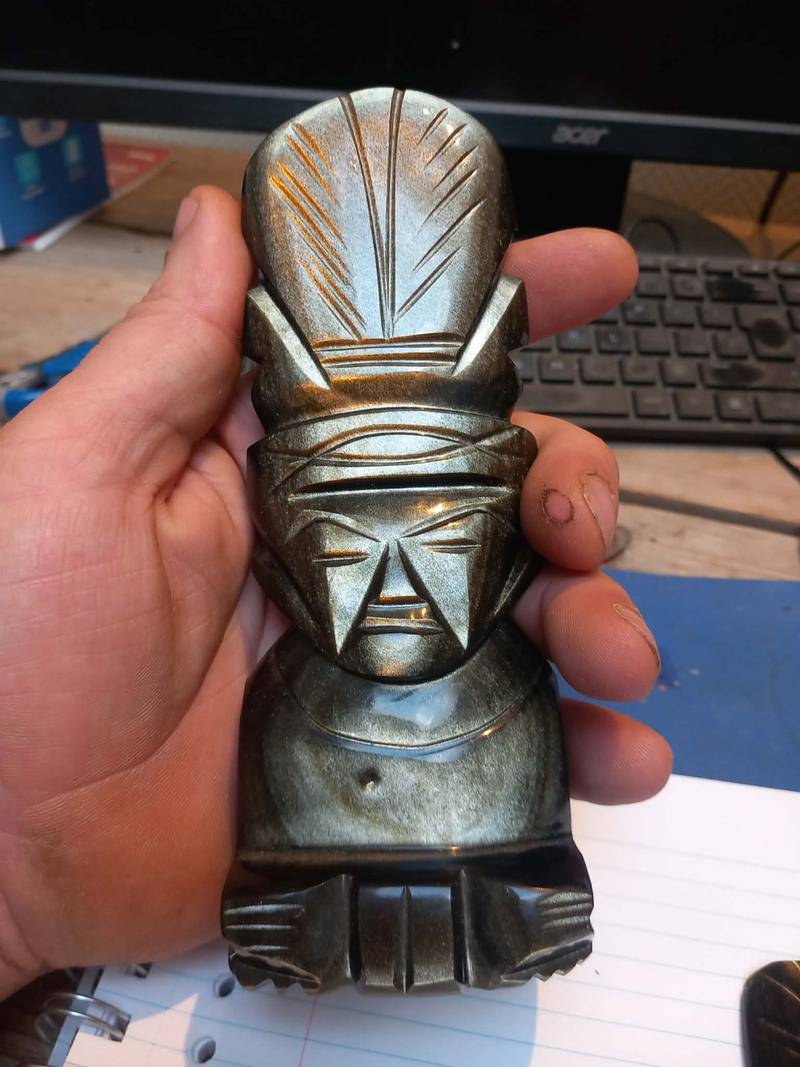
Mesoamerican Style Obsidian Carving, Gold Sheen Obsidian
Estimated value
$45 - $110Rarity
Ordinary(3/10)Category
Decorative ObjectsEra
Circa 1960–1980Origin
MexicoAuthenticity
MESOAMERICAN STYLE OBSIDIAN CARVING, GOLD SHEEN OBSIDIAN: IDENTIFICATION
A decorative hand-carved figure executed in Gold Sheen Obsidian, depicting a stylized deity or figure in the Mesoamerican (Aztec/Mayan) tradition. The piece features a prominent feather-motif headdress and geometric facial planes with recessed eyes and a narrow horizontal mouth. The carving utilizes the natural chatoyancy of the obsidian, where microscopic gas bubbles trapped during volcanic cooling create a gold-metallic luster under direct light. The base shows block-like hands or feet consistent with mid-20th-century decorative souvenir production from central Mexico.
CROSS-CULTURAL PARALLELS
Where This Object Echoes
The headdress design parallels the ‘quetzal’ feather crowns worn by high-ranking nobility and priests in codices such as the Codex Mendoza.
Ritual & Ceremonial Use
- •Obsidian (itzli) was traditionally used for sacrificial blades and scrying mirrors by Aztec priests to communicate with the god Tezcatlipoca.
Meaning Through Time
Sacred material linked to the underworld and divine sight.
A decorative 'tiki' or souvenir item representing national heritage and craft skill.
PRODUCTION PERIOD
SCARCITY
Standard antiques commonly found at estate sales and flea markets. Plentiful supply meets modest demand.
Typical Characteristics
- Moderate production runs
- Common at estate sales
- Entry-level collectibles
Confidence Factors
- Modern tool marks and high-gloss polish are consistent with 20th-century decorative production
- Material and style perfectly match documented Mexican export wares from the 1970s
DECORATIVE ARTS EXPERT'S TAKE
Asian Art Specialist
The material is unmistakably gold sheen obsidian and the carving style is a textbook example of 20th-century Mexican tourist folk art.
KEY EVIDENCE
- 1Presence of 'schiller' or gold sheen is diagnostic of specific volcanic glass flows in Mexico.
- 2Geometric cutting style indicates the use of modern lapidary machinery rather than stone-on-stone percussion.
- 3Scale and lack of calcified burial deposits confirm a mid-century decorative origin.
- 4The high-gloss 'wet look' finish is achieved through modern cerium oxide polishing agents.
UNCERTAINTIES
- •Minor surface abrasions on the chest suggest it has been handled as a decorative object rather than curated.
- •Lack of 'Oxford' or 'TL' testing data is standard for items of this market tier.
WHAT WOULD IMPROVE CERTAINTY
- →Inspect the base for any etched 'Hecho en Mexico' marks often found on these exports.
- →Use a 10x loupe to check the deep grooves for white polishing residue, confirming modern shop production.
- →Verify the weight against the volume to ensure it is solid obsidian and not a resin composite.
CONDITION & GRADE
Condition
The surface maintains a high luster with no visible chips to the fragile headdress edges or base corners; minor superficial scuffing is present on the chest area.
DECORATIVE ARTS VALUATION
Updated: May 10, 2026
Who buys this
Collectors of mid-century Mexican folk art and enthusiasts of mineral specimens/tumbled stones.
What increases value
- •Intensity and coverage of the gold sheen across the face
- •Absence of chips on the sharp, brittle edges
- •Size (this specimen at approx. 6-7 inches is larger than standard 3-inch pocket figures)
What lowers value
- •Chips or flecks on the prominent facial features
- •Dullness in the polish from improper cleaning with abrasives
What makes top-tier examples
- •Deeply undercut three-dimensional carving rather than shallow etching
- •Uniform gold sheen that covers 90% or more of the front surface
Grade & condition
Luster quality, sharpness of carved lines, and integrity of the glass edges.
Rarity & demand
For informational purposes only, not a formal appraisal.
ABOUT DECORATIVE OBJECTS
Silver, glassware, metalwork, enamelwork, and decorative arts.
Decorative Objects value and rarity guideSHARE THIS CURIOSITY
Have your own curiosities to discover?
Scan Your Curiosity
COMMENTS