Bronze Mortar and Pestle with Armorial Decoration
Estimated value
$150 - $400Rarity
Average(4/10)Category
Decorative ObjectsEra
Late 18th to Early 20th CenturyOrigin
InternationalAuthenticity
BRONZE MORTAR AND PESTLE WITH ARMORIAL DECORATION: IDENTIFICATION
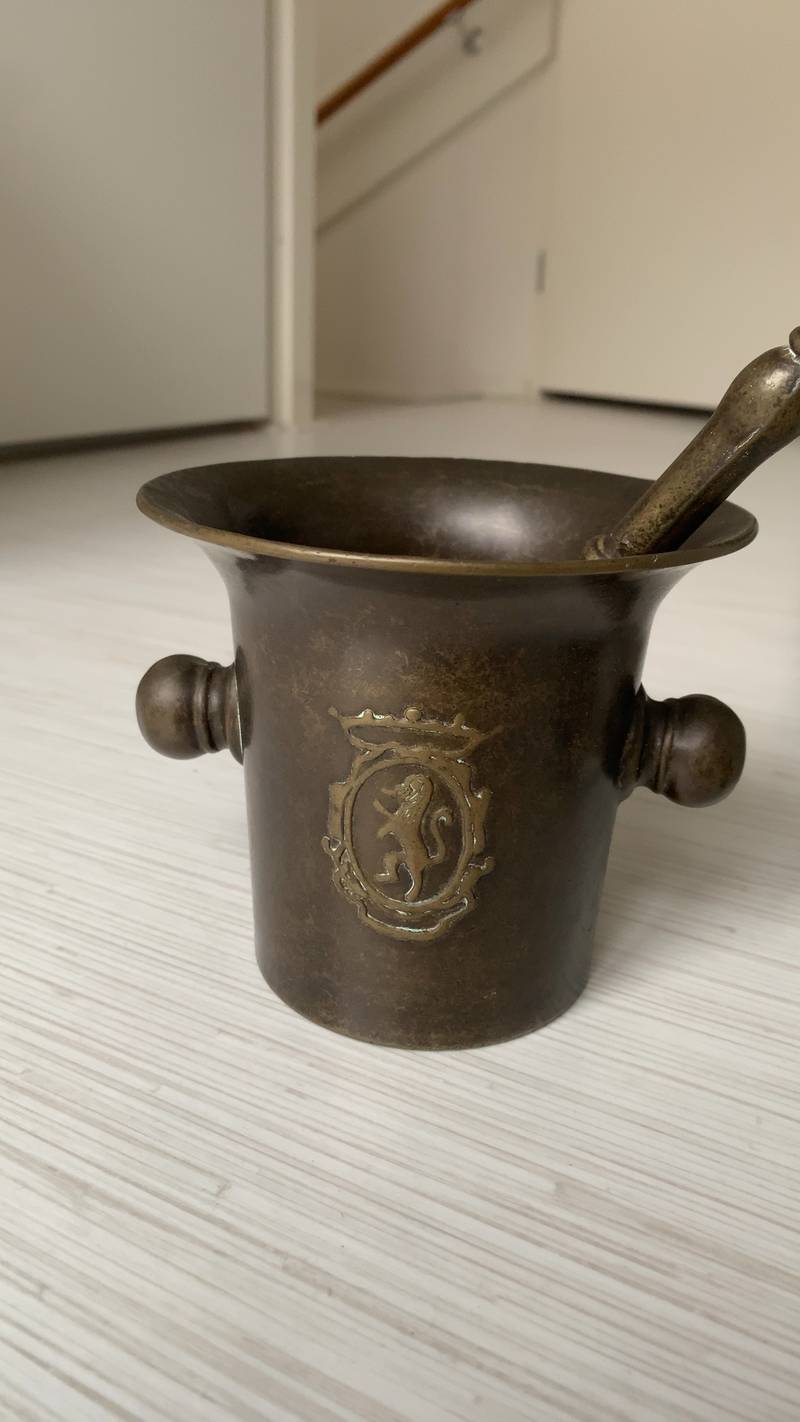
This appears to be a heavy cast bronze mortar and pestle set. The mortar features a flared rim, a sturdy cylindrical body, and two spherical handles, often referred to as 'ears' or 'lugs'. The decoration is an armorial crest, likely cast in relief, depicting a crowned rampant lion within a shield, consistent with European heraldic traditions. The accompanying pestle is also made of bronze, displaying a simple, functional form.
COLLECTOR NOTES
The earliest known mortar and pestle date back to 35,000 BCE, used by ancient hunter-gatherers, proving the enduring utility of this simple design.
SCARCITY
Typical antique shop fare. Requires some searching but regularly available. This is where most genuine antiques fall.
Typical Characteristics
- Standard antique shop items
- Regularly available
- Moderate collector interest
Confidence Factors
- Lack of definitive maker's marks or foundry stamps that would provide clear attribution.
- The armorial crest, while appearing period-appropriate, is not immediately identifiable without clearer provenance.
- Bronze mortars and pestles have been reproduced for decorative purposes over many decades, necessitating close examination of casting methods and patination.
DECORATIVE ARTS EXPERT'S TAKE
Decorative Arts Specialist
The visual evidence strongly points to a genuine antique bronze mortar and pestle from a broad European context. My confidence level reflects the observable material, construction, and patination consistent with the period and type, though specific attribution (maker, exact country of origin) remains speculative without clearer marks.
KEY EVIDENCE
- 1The material is consistently bronze, indicated by color and visible patina.
- 2The style of the armorial crest with a crowned rampant lion is characteristic of European heraldry.
- 3The casting method and general form align with traditional mortar and pestle designs from the late 18th to early 20th century.
- 4The wear patterns on the relief decoration suggest natural erosion from handling, rather than artificial distressing.
UNCERTAINTIES
- •Absence of specific maker's marks or foundry symbols makes precise attribution difficult.
- •The exact heraldry of the lion crest is hard to discern from the current image, limiting specific contextualization.
- •The precise age is challenging to pin down without evaluating the footrim or internal wear.
WHAT WOULD IMPROVE CERTAINTY
- →High-resolution images of any marks or inscriptions on the base or side of the mortar and pestle.
- →A clear close-up of the interior of the mortar and the strike end of the pestle to assess wear patterns from use.
- →Measurement of the mortar's height and diameter for better cataloging and comparison.
- →Examination of the footrim for casting characteristics and wear consistent with age.
CONDITION & GRADE
Condition
The overall condition appears good, with no obvious cracks, breaks, or repairs evident from the images. The natural patina is well-preserved. Minor surface abrasions and discoloration are present, consistent with age and use. The pestle shows similar patination and wear.
DECORATIVE ARTS VALUATION
Updated: Feb 27, 2026
- Market comparables from auctions & retail
- Condition, completeness & craftsmanship
- Current collector demand & trends
- Low = quick sale, high = patient seller
For informational purposes only, not a formal appraisal.
ABOUT DECORATIVE OBJECTS
Silver, glassware, metalwork, enamelwork, and decorative arts.
Decorative Objects value and rarity guideSHARE THIS CURIOSITY
Have your own curiosities to discover?
Scan Your Curiosity
COMMENTS