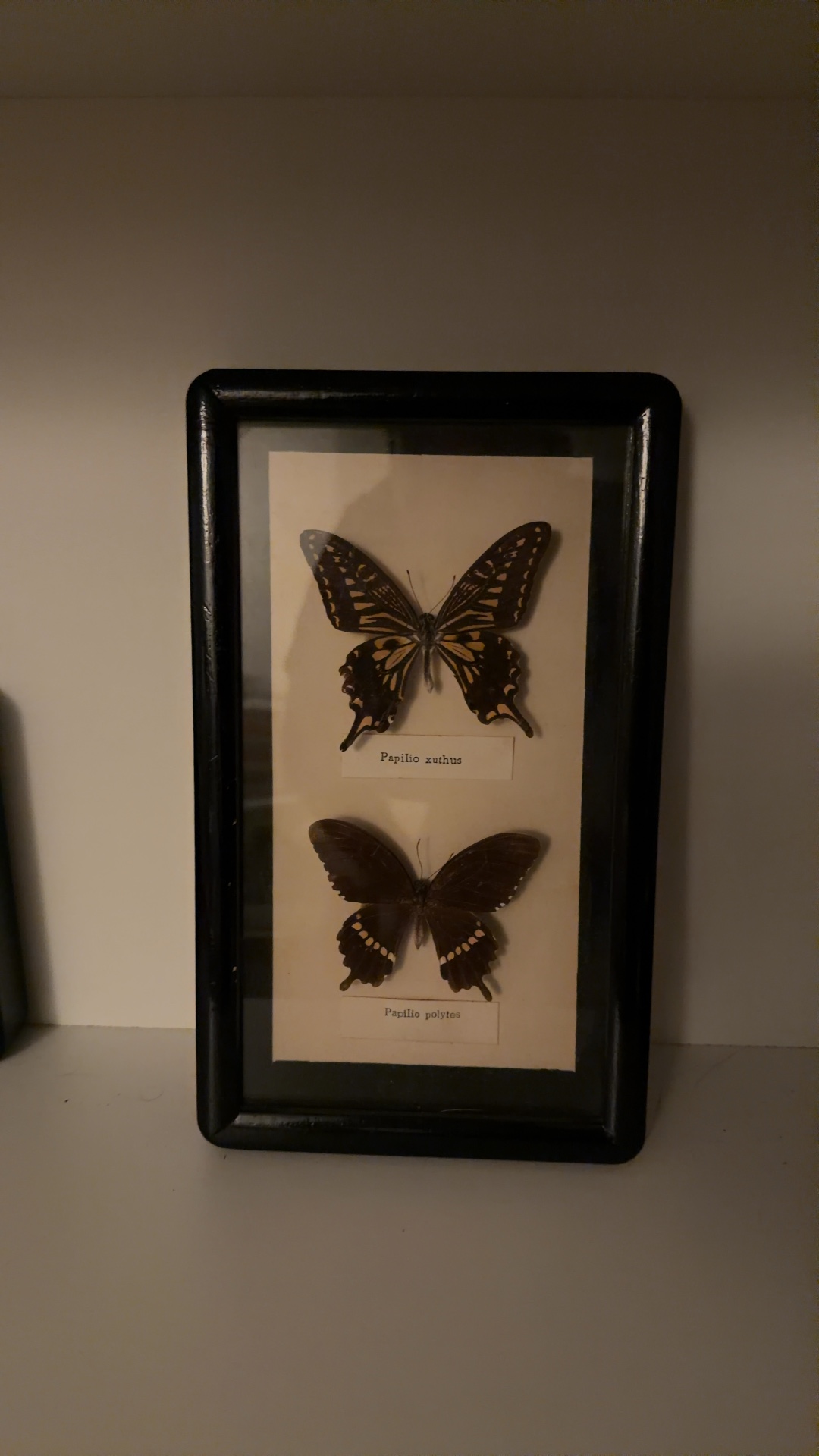
Framed Butterfly Specimen Display (Papilio xuthus & Papilio polytes)
QUICK FACTS
Categories
Era
Mid-20th Century
Origin
🌍 International
Rarity
Average (4/10)
Discovered
Jan 27, 2026
1 months ago
DESCRIPTION
This is a framed entomological display featuring two mounted butterfly specimens: a Papilio xuthus (Asian Swallowtail) and a Papilio polytes (Common Mormon). Both specimens appear to be pinned to a backing board, likely cork or foam, and protected under glass within a simple, dark-stained wooden frame. The scientific names are clearly labeled beneath each butterfly, which is standard practice in entomological collections.
CULTURAL ECHOES
Where This Object Echoes
The widespread passion for collecting and displaying natural specimens, driven by scientific curiosity and aesthetic appreciation, leading to the creation of elaborate 'cabinets of curiosities' and framed insect collections.
The tradition of precisely categorizing and visually representing species, influential in early natural history displays for both scientific study and public education.
Ritual & Ceremonial Use
- •The ritual of 'pinning' and preserving insect specimens, a meticulous process to capture their form for study or display.
- •The act of displaying natural history objects as 'conversation pieces' in domestic settings, reflecting the owner's education and interests.
Meaning Through Time
Primarily scientific study, providing tangible examples for taxonomy and biological research.
Transitioned to decorative objects, appreciated for their aesthetic beauty and as a window into the natural world, often without strict scientific rigor.
Valued by collectors for historical context, aesthetic appeal, and increasingly, as a reminder of biodiversity amidst environmental concerns.
HISTORICAL STORY
DID YOU KNOW?
The Papilio xuthus, or Asian Swallowtail, is a common and widespread butterfly species found across East Asia. Its larvae feed on citrus plants, making it a familiar sight in orchards.
Papilio polytes, or Common Mormon, is known for its remarkable mimicry, where some female forms mimic the unpalatable Pachliopta aristolochiae swallowtail to deter predators.
MATERIAL & CONDITION
Surface
The butterflies exhibit typical dried specimen characteristics, with delicate wings that show some possible signs of fading or dust accumulation. The backing paper appears aged with some discoloration. The wooden frame has a glossy, dark stained finish with minor surface wear consistent with age and handling.
Weight & Feel
Given the size of the frame and the delicate nature of the specimens, this piece would be relatively lightweight, likely weighing less than a kilogram, making it easy to handle and display.
Condition
The specimens appear to be intact, though slight wing damage or antenna loss is common in older mounts and cannot be definitively assessed without closer inspection. The paper labels show age-appropriate yellowing. The frame itself seems stable with minimal visible damage.
RARITY ANALYSIS
Typical antique shop fare. Requires some searching but regularly available. This is where most genuine antiques fall.
Typical Characteristics
- Standard antique shop items
- Regularly available
- Moderate collector interest
EXPERT ANALYSIS
Natural History Curator & Specimen Preparator
The clear species identification from the labels and visual characteristics of the butterflies, combined with the typical presentation of an entomological display, allows for a high level of confidence in the object's basic identification. Further details would require physical examination.
KEY EVIDENCE
- 1Clear identification of two common Papilio species: P. xuthus and P. polytes.
- 2Specimens are pinned and labeled, consistent with standard entomological practices.
- 3The frame style and paper aging suggest mid-20th century construction.
- 4The species selected are not rare or endangered, reducing provenance concerns.
UNCERTAINTIES
- •The overall lighting in the images makes it difficult to assess the exact coloration fidelity of the butterflies.
- •The extent of any pest damage (dermestid beetles, etc.) cannot be determined through the glass or from these images.
- •Lack of collection locality or date on the labels, which would add significant scientific value and provenance.
WHAT WOULD IMPROVE CERTAINTY
- →Inspect the specimens closely under good lighting for any signs of pest damage, fading, or repair.
- →Check for any additional labels on the reverse of the frame that might indicate collection details or a preparator.
- →Assess the stability of the mounting pins and condition of the glass seal within the frame.
ESTIMATED VALUE
Updated: Feb 27, 2026
- Market comparables from auctions & retail
- Condition, completeness & craftsmanship
- Current collector demand & trends
- Low = quick sale, high = patient seller
For informational purposes only, not a formal appraisal.
ABOUT NATURAL HISTORY
Fossils, minerals, taxidermy, shells, and natural specimens.
Browse all Natural HistorySHARE THIS CURIOSITY
Have your own curiosities to discover?
Scan Your Curiosity
COMMENTS
No comments yet. Be the first to share your thoughts!
Sign in to leave a comment