Muscovite Mica in Host Rock Specimen
QUICK FACTS
Categories
Era
Geological Formation (Millions of Years Ago)
Origin
🌍 International
Rarity
Average (4/10)
Discovered
Feb 12, 2026
2 weeks ago
DESCRIPTION
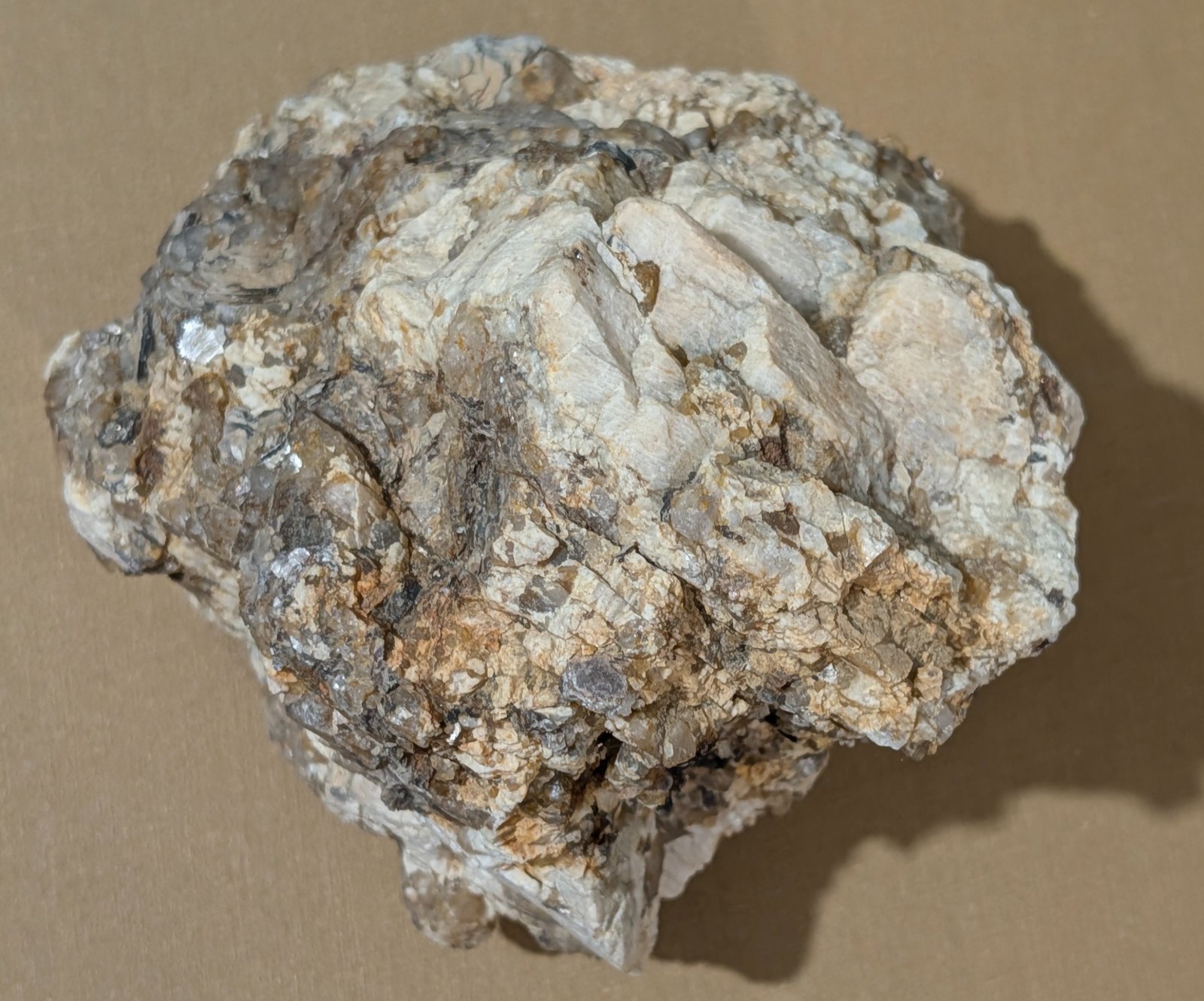
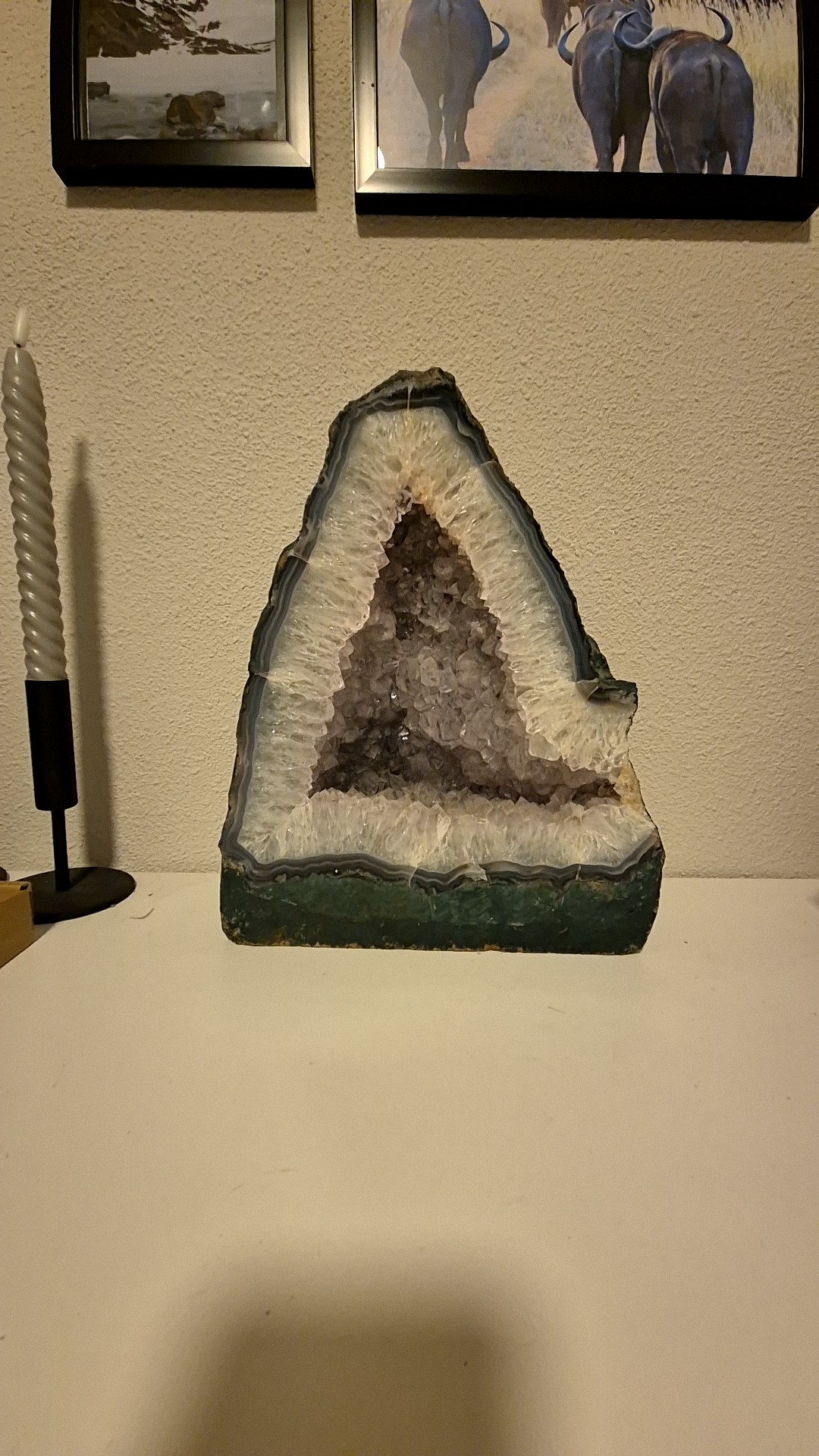
This appears to be a mineral specimen primarily composed of muscovite mica embedded within a matrix of other, often translucent to opaque, rock-forming minerals. The muscovite exhibits its characteristic platy, somewhat iridescent cleavage, catching the light in various orientations. The overall structure suggests a pegmatitic or metamorphic origin, where these large mica plates tend to form.
CULTURAL ECHOES
Where This Object Echoes
Mica was used as 'isinglass' for window panes, particularly in cooler climates where glass production was difficult or expensive.
Meaning Through Time
Primarily viewed as a utilitarian material for insulation and windows due to its physical properties.
Appreciated as a geological specimen, a component in electronics, and a source of shiny pigment for cosmetics and paint.
HISTORICAL STORY
Muscovite, named for Muscovy glass in medieval Russia where it was used as window panes, has been valued for centuries due to its perfect basal cleavage, allowing it to be split into thin, transparent sheets. This material found early uses beyond windows, including ornamental work and as an insulator long before modern synthetics were developed.
DID YOU KNOW?
Muscovite is the most common mica mineral and is found in a wide variety of igneous, metamorphic, and sedimentary rocks, making it ubiquitous in the Earth's crust.
Due to its excellent insulating properties and resistance to heat, muscovite is still used today in electronics, especially as a substrate for delicate components and in high-temperature applications.
MATERIAL & CONDITION
Surface
The specimen displays significant textural variation, from the flaky, somewhat silvery luster of the mica sections to the more granular, duller texture of the surrounding rock matrix, which shows shades of off-white and ochre.
Weight & Feel
Given its size and mineral composition, this specimen likely feels moderately heavy, consistent with a dense aggregate of rock-forming minerals.
Condition
The specimen appears to be in its natural, unpolished state, exhibiting typical geological fractures and cleavage planes. There are no obvious signs of recent damage or alterations, suggesting it is well-preserved as a raw mineral sample.
RARITY ANALYSIS
Typical antique shop fare. Requires some searching but regularly available. This is where most genuine antiques fall.
Typical Characteristics
- Standard antique shop items
- Regularly available
- Moderate collector interest
EXPERT ANALYSIS
Gemologist & Mineral Specialist
The visual characteristics, especially the pronounced platy cleavage and associated luster, are highly indicative of muscovite mica in its natural formation within a host rock. While precise identification of all matrix minerals without physical testing is difficult, the primary component is clearly identifiable.
KEY EVIDENCE
- 1Distinctive platy cleavage and silvery-white to light brown color consistent with muscovite mica.
- 2Iridescent sheen on cleavage surfaces is characteristic of mica group minerals.
- 3Overall crystalline structure indicates natural geological formation.
- 4Absence of uniform crystal faces suggests a mass aggregate rather than a single large crystal.
WHAT WOULD IMPROVE CERTAINTY
- →Perform a Mohs hardness test to confirm the hardness range for muscovite (2-2.5).
- →Examine under magnification to observe the inclusion patterns and crystalline structure of surrounding minerals.
- →If precise identification of the matrix minerals is desired, X-ray diffraction (XRD) would be beneficial.
ESTIMATED VALUE
Updated: Feb 27, 2026
- Market comparables from auctions & retail
- Condition, completeness & craftsmanship
- Current collector demand & trends
- Low = quick sale, high = patient seller
For informational purposes only, not a formal appraisal.
ABOUT NATURAL HISTORY
Fossils, minerals, taxidermy, shells, and natural specimens.
Browse all Natural HistorySHARE THIS CURIOSITY
Have your own curiosities to discover?
Scan Your Curiosity
COMMENTS
No comments yet. Be the first to share your thoughts!
Sign in to leave a comment