Amethyst/Agate Geode Slice
QUICK FACTS
Categories
Era
Post-1950
Origin
🌍 International
Rarity
Average (4/10)
Discovered
Jan 4, 2026
1 months ago
DESCRIPTION
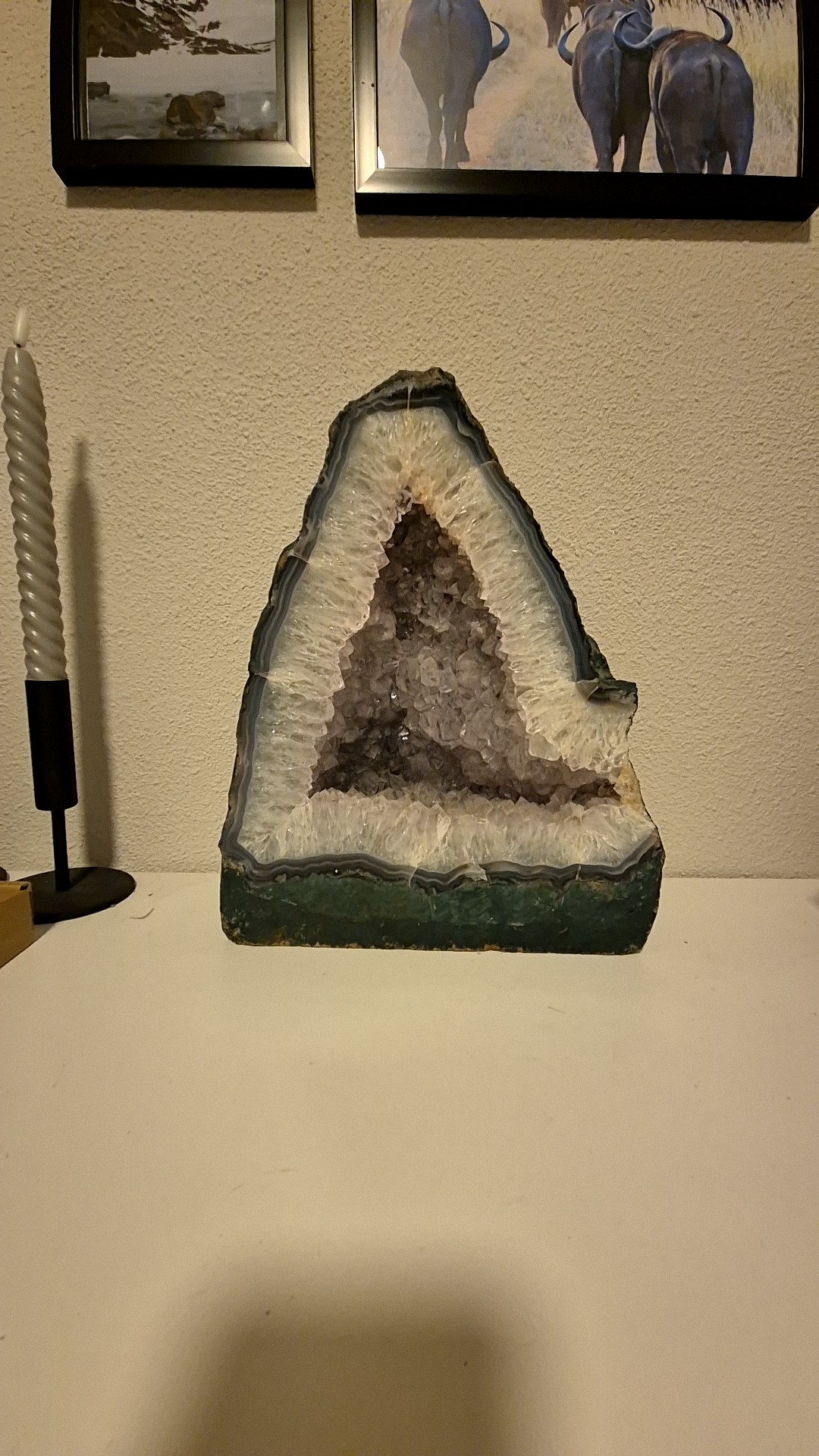
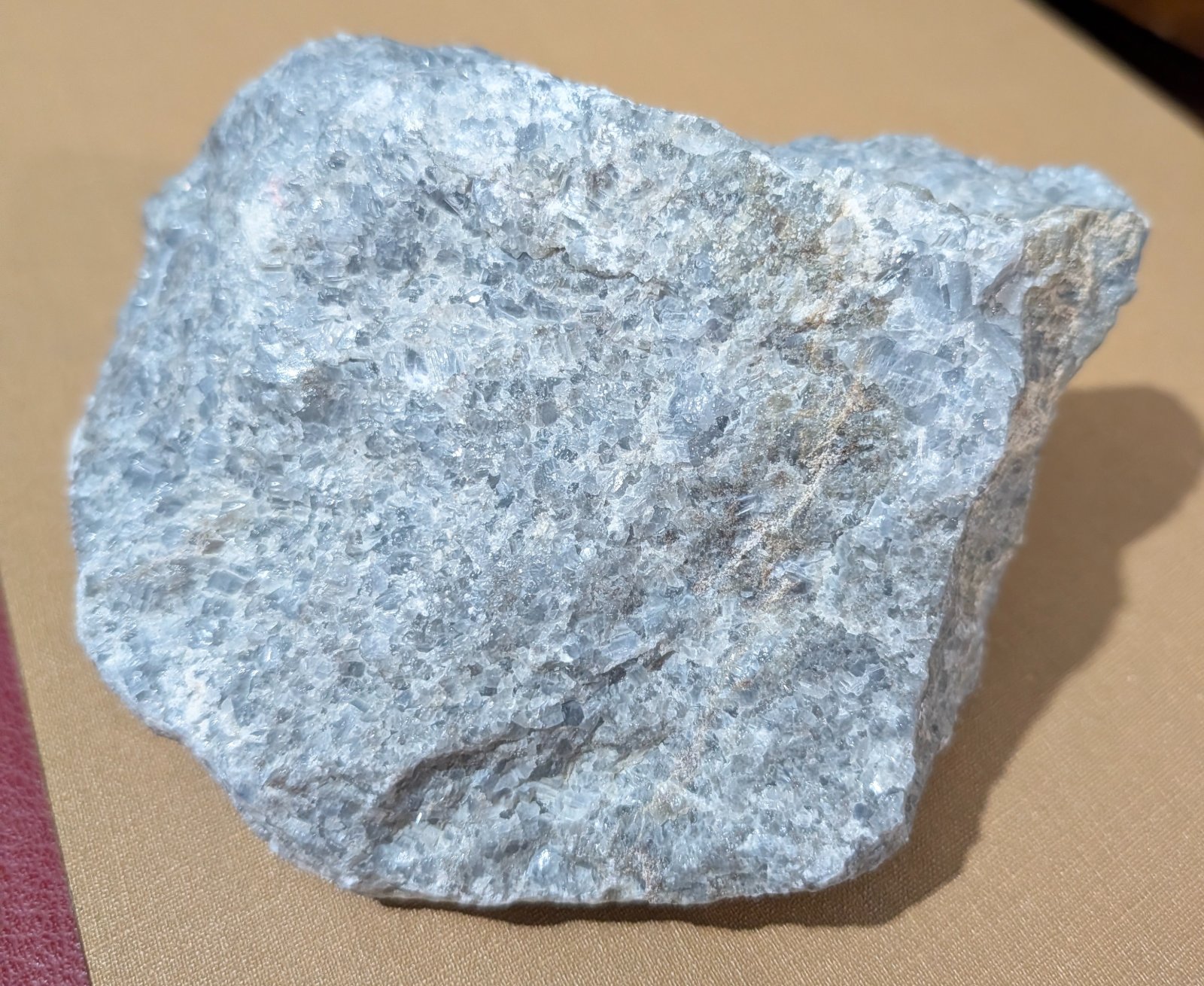
This appears to be a polished slice of a large geode, showcasing an interior lined with glittering quartz crystals. The outer rind exhibits the characteristic banding of agate, with layers of white, grey, and deep green-grey, suggesting further polishing or possible coloration. The crystalline interior prominently displays amethyst, characterized by its purple hue, interspersed with more common milky quartz zones.
CULTURAL ECHOES
Where This Object Echoes
Amethyst was prized as a gemstone believed to confer sobriety and protection against intoxication. It was used in jewelry and ceremonial objects.
Geodes, particularly those containing amethyst, are highly valued for their supposed energetic properties, often used in meditation and crystal healing practices.
Ritual & Ceremonial Use
- •Historically worn as amulets for protection
- •Used in contemporary meditation and energetic clearing practices
Meaning Through Time
Symbolized protection, clarity of thought, and sobriety due to its resemblance to wine and the belief it prevented drunkenness.
Associated with royalty and religious figures, sometimes referred to as the 'Bishop's Stone' due to its purple hue.
Primarily viewed as a decorative natural specimen or for its metaphysical properties in New Age beliefs.
HISTORICAL STORY
DID YOU KNOW?
The unique hollow structure of a geode forms when mineral-rich water seeps into a void or cavity within rock, depositing layers of silica and other minerals over thousands to millions of years.
The vibrant purple color of amethyst comes from iron impurities within the quartz lattice, which are then irradiated naturally by radioactive elements in the surrounding rock.
MATERIAL & CONDITION
Surface
The piece features a rough, natural exterior on its un-cut face, contrasting with the smoothed and polished outer rind of agate on the cut sides. The internal cavity is crystalline, with thousands of individual quartz points, displaying both sparkling amethyst and clearer quartz characteristics. There appears to be a deep green-grey coloration on the outermost rind, which could be natural to the agate or enhanced.
Weight & Feel
Based on its size and the density of quartz and agate, this geode slice would be substantial, likely several pounds, making it a stable decorative object.
Condition
The specimen appears to be in very good condition, with no visible significant damage to the crystal formations or the polished agate rind. Any irregularities are likely natural features of the stone rather than signs of wear or breakage.
RARITY ANALYSIS
Typical antique shop fare. Requires some searching but regularly available. This is where most genuine antiques fall.
Typical Characteristics
- Standard antique shop items
- Regularly available
- Moderate collector interest
EXPERT ANALYSIS
Decorative Arts Specialist
The visual evidence strongly points to a genuine amethyst and agate geode slice, easily identifiable by its characteristic geological features. The slight uncertainty lies in whether the green coloring is entirely natural or enhanced, which is a common practice for some commercial specimens.
KEY EVIDENCE
- 1Distinctive banding on the outer layer typical of agate.
- 2Internal cavity lined with sparkling, terminated quartz crystals.
- 3Presence of purple coloration indicates amethyst, a variety of quartz.
- 4Form suggests a natural geode that has been cut and polished.
- 5Variations in crystal size and clarity are consistent with natural formation.
UNCERTAINTIES
- •The deep green coloration on the outer rim, though visually appealing, should be checked for artificial enhancement. While natural green agate exists, some geodes are dyed to achieve specific colors.
WHAT WOULD IMPROVE CERTAINTY
- →Examine the specific hue of the outer green rind closely; if the color is unusually vivid and uniform, it might suggest artificial dyeing.
- →A scratch test on a discreet area of the outer surface (on the opaque rind, not crystals) could help identify the hardness and confirm agate.
- →Consider measuring the dimensions and weight to better estimate its original size and density for more precise market comparables.
ESTIMATED VALUE
Updated: Feb 26, 2026
- Market comparables from auctions & retail
- Condition, completeness & craftsmanship
- Current collector demand & trends
- Low = quick sale, high = patient seller
For informational purposes only, not a formal appraisal.
ABOUT NATURAL HISTORY
Fossils, minerals, taxidermy, shells, and natural specimens.
Browse all Natural HistorySHARE THIS CURIOSITY
Have your own curiosities to discover?
Scan Your Curiosity
COMMENTS (1)
Did you find this amethyst yourself?
Sign in to leave a comment