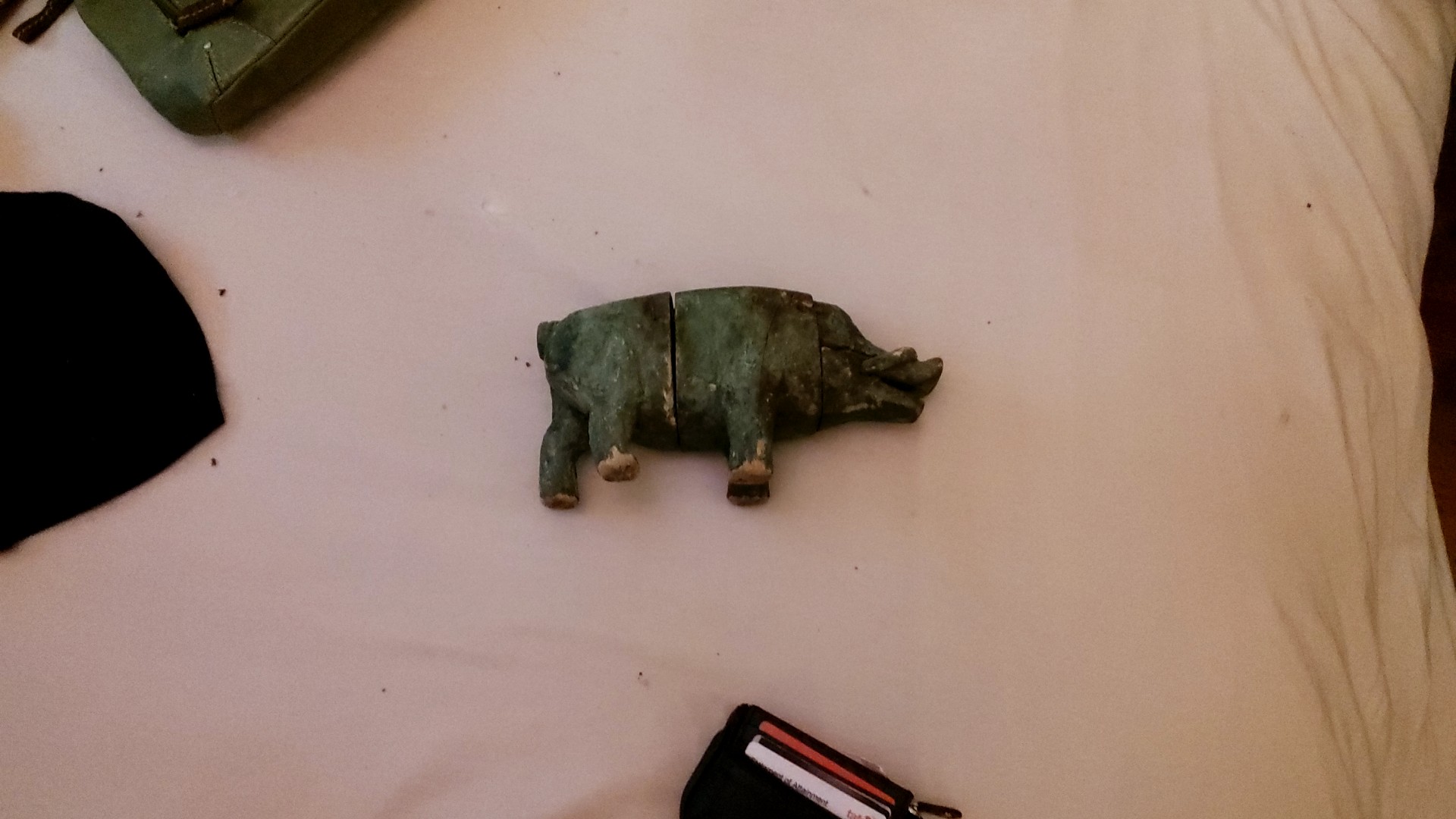
Earthenware Storage / Water Vessel with Coir Rope
QUICK FACTS
Categories
Era
Early 20th Century to Mid-20th Century
Origin
🌍 International
Rarity
Ordinary (3/10)
Discovered
Jan 26, 2026
1 months ago
DESCRIPTION
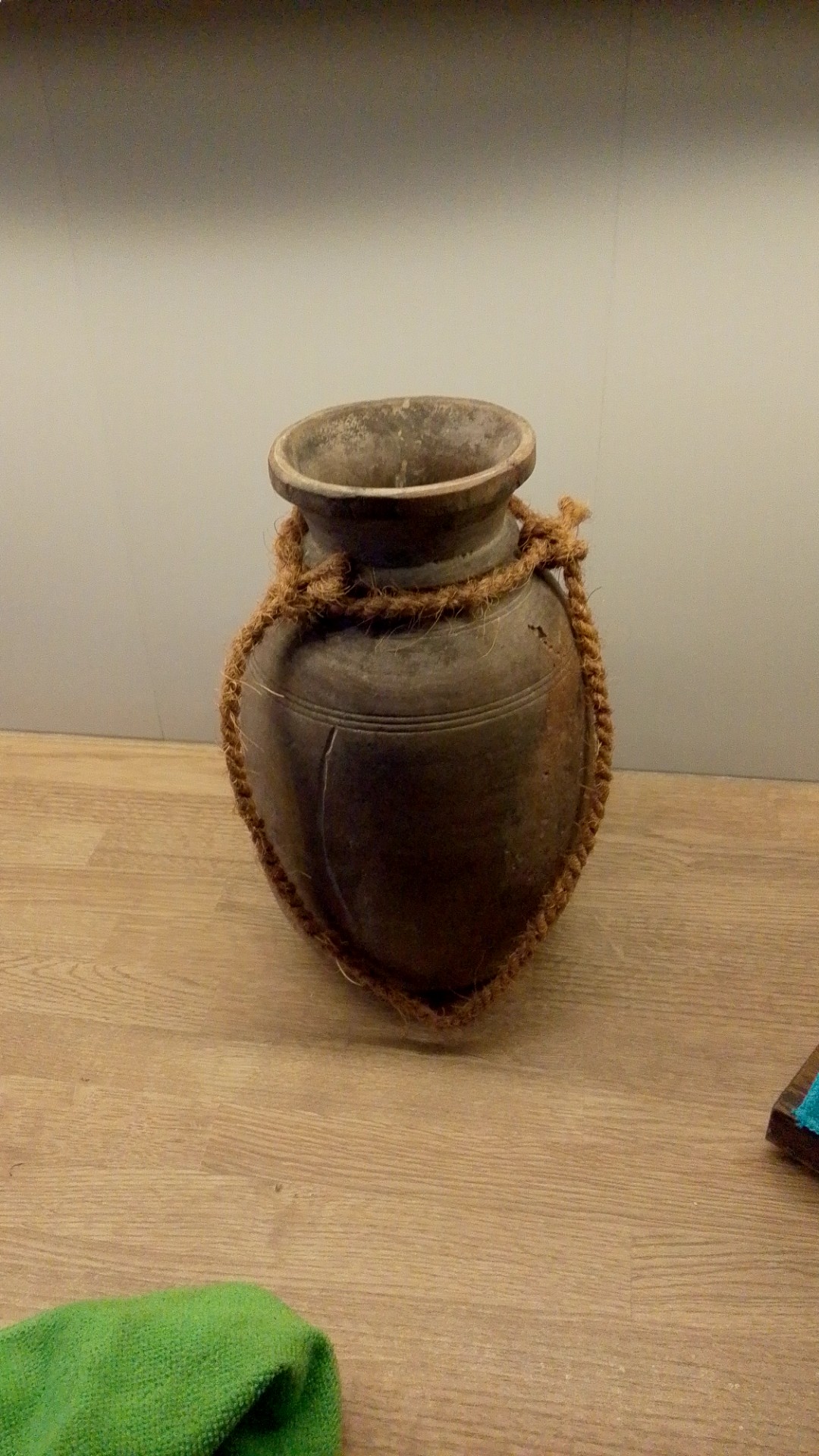
This appears to be a hand-thrown earthenware vessel, likely used for storage or carrying water, given its utilitarian form. The body is an unglazed, porous ceramic, indicative of its functional purpose. The presence of a coir (coconut fiber) rope strung around its neck suggests it was either designed for carrying or once suspended. The dark, earthy tones and visible wear lend an aged character to the piece, hinting at a long history of use.
CULTURAL ECHOES
Where This Object Echoes
Similar forms of unglazed, hand-coiled or thrown vessels are used for water storage and cooking, often with characteristic surface treatments or functional elements like rope carries.
Traditional 'matkas' or 'gharas' (earthen pots) are still widely used for cooling drinking water, sharing the porous, unglazed characteristic and often being transported with ropes.
Ritual & Ceremonial Use
- •Daily water carrying and storage rituals in rural communities globally.
- •Food preparation and preservation techniques reliant on evaporative cooling.
Meaning Through Time
Essential utilitarian object, symbol of sustenance and daily life.
Decorative object, folk art, reminder of traditional craftsmanship and sustainable practices.
HISTORICAL STORY
DID YOU KNOW?
Unglazed earthenware, like this vessel, is naturally porous. When water is stored inside, a small amount seeps through the clay and evaporates from the outer surface, cooling the remaining water within – an ancient form of refrigeration.
The coir rope suggests a tradition of carrying or suspending the pot, a common practice in many cultures for transport or to keep foods and liquids away from pests and off the ground.
MATERIAL & CONDITION
Surface
The surface is matte and unglazed, revealing the coarse texture of the earthenware clay. There are visible striations from the throwing process, and areas of discoloration that suggest long-term contact with moisture and natural earth elements. The coir rope is fibrous and appears worn.
Weight & Feel
Given its size and earthenware construction, it appears to be of moderate weight, substantial but manageable when empty, becoming heavy when filled with liquid.
Condition
The vessel shows significant signs of age and use, including surface abrasions, minor chips, and a distinct crack or score line on one side, which appears stable. The unglazed finish has developed a rich patina from environmental exposure and handling. The coir rope is frayed in areas, consistent with age and probable use.
RARITY ANALYSIS
Standard antiques commonly found at estate sales and flea markets. Plentiful supply meets modest demand.
Typical Characteristics
- Moderate production runs
- Common at estate sales
- Entry-level collectibles
EXPERT ANALYSIS
Decorative Arts Specialist
The visible material, form, and wear patterns strongly suggest a utilitarian earthenware vessel of some age. While specific origin and precise dating are difficult without further examination, the general identification is robust.
KEY EVIDENCE
- 1Unglazed, porous earthenware body, consistent with traditional water or storage vessels.
- 2Hand-thrown construction indicated by subtle irregularities in form and tooling marks.
- 3Visible surface wear, discoloration, and a stable crack suggest genuine age and extended use.
- 4Coir rope around the neck points to a functional carrying or suspension method.
UNCERTAINTIES
- •Without clearer images of the base or any potential marks, precise regional origin and exact age remain speculative.
- •The lighting makes it difficult to discern subtle variations in clay body or firing characteristics that could narrow down provenance.
WHAT WOULD IMPROVE CERTAINTY
- →Examine the base for any maker's marks, potter's fingerprints, or distinct footrim wear.
- →A clearer image under natural light would help assess the true color of the clay body and surface condition.
- →Measure the dimensions (height, diameter) for a more complete description.
ESTIMATED VALUE
Updated: Feb 27, 2026
- Market comparables from auctions & retail
- Condition, completeness & craftsmanship
- Current collector demand & trends
- Low = quick sale, high = patient seller
For informational purposes only, not a formal appraisal.
ABOUT DECORATIVE OBJECTS
Ceramics, silver, porcelain, glassware, and decorative arts.
Browse all Decorative ObjectsSHARE THIS CURIOSITY
Have your own curiosities to discover?
Scan Your Curiosity
COMMENTS
No comments yet. Be the first to share your thoughts!
Sign in to leave a comment