Primitive Wooden Dugout Dough Bowl
QUICK FACTS
Categories
Era
Late 19th to Early 20th Century
Origin
🌍 International
Rarity
Average (4/10)
Discovered
Jan 26, 2026
1 months ago
DESCRIPTION
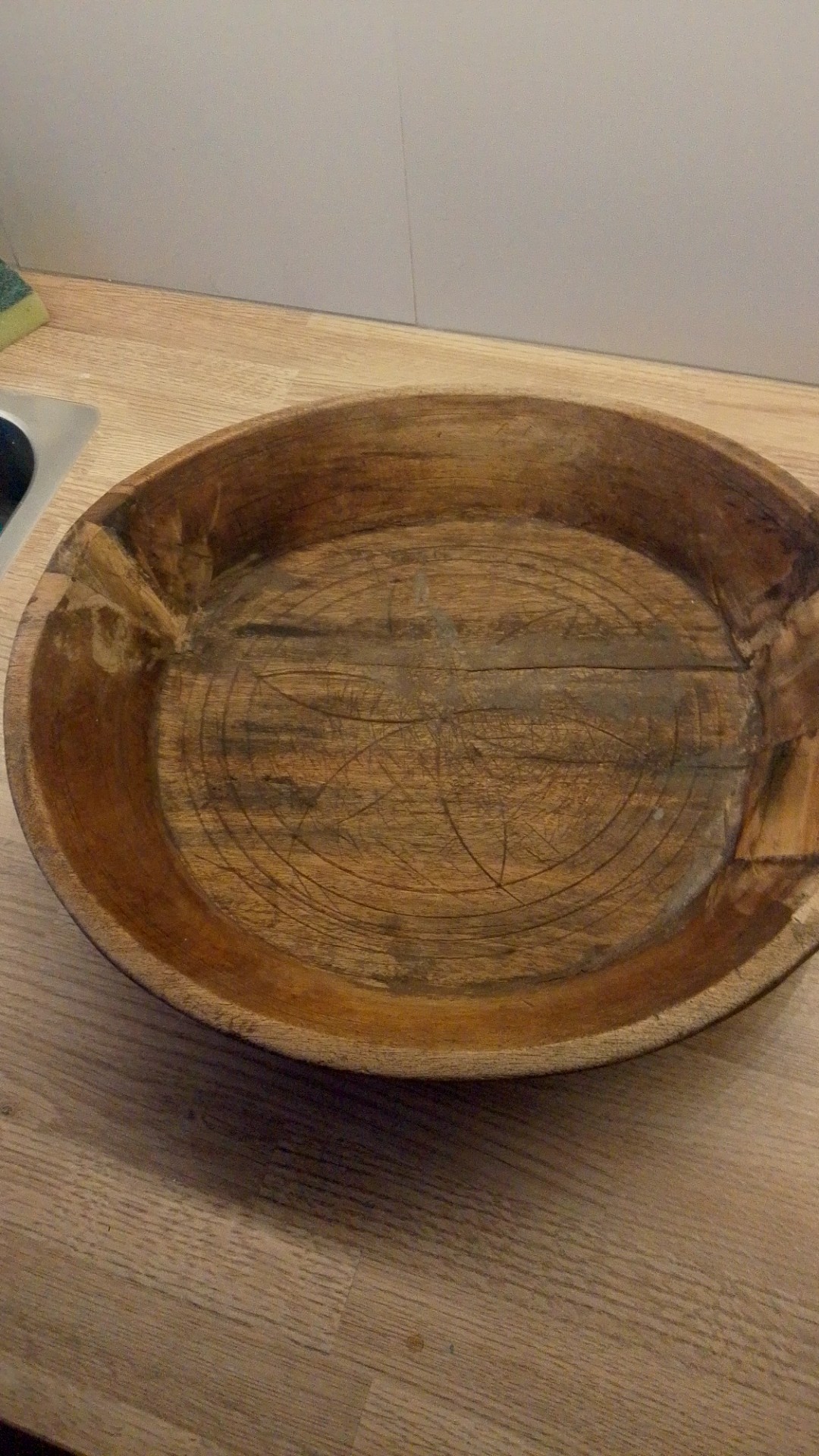
This appears to be a primitive, hand-carved wooden dough bowl, or possibly a 'trencher' or 'trenchard,' typically used for mixing and kneading bread dough. The oval shape and deep basin are characteristic of such items, designed to contain ingredients and facilitate the kneading process. The rough interior and exterior surfaces, along with the visible tool marks, suggest a rustic, likely utilitarian origin.
CULTURAL ECHOES
Where This Object Echoes
Similar large wooden dough bowls were central to rural life across Europe, particularly where home-baked bread was a daily staple.
Dugout bowls and trenchers were integral tools for food preparation in colonial and frontier kitchens, often carved from local hardwoods.
Ritual & Ceremonial Use
- •The daily ritual of bread making, a domestic cornerstone in many cultures, symbolizing sustenance and home economy.
- •Harvest festivals and communal meals, where large bowls like this would have been used for serving or preparation.
Meaning Through Time
Primarily a practical, functional kitchen tool, valued for its utility and durability.
Transitioned into a decorative object, a symbol of rustic charm, farmhouse aesthetic, or historical connection, often repurposed as a centerpiece or fruit bowl.
HISTORICAL STORY
DID YOU KNOW?
Dough bowls were often handed down through generations, becoming cherished family heirlooms and absorbing the collective history of countless meals.
The distinctive 'dugout' style of many early wooden bowls meant they were carved from a single log, a labor-intensive process that required skilled craftsmanship.
MATERIAL & CONDITION
Surface
The surface is heavily patinated wood, exhibiting significant wear and a dry, matte finish. The interior shows deep scoring marks consistent with repeated use for kneading, revealing some underlying lighter wood where the finish has been abraded. The exterior, especially the underside, appears darker and more uniformly aged, suggesting less direct contact and exposure.
Weight & Feel
Based on the apparent thickness of the wood and its size, this bowl would likely feel substantial and reasonably heavy, consistent with a solid, hand-carved piece of hardwood.
Condition
The bowl is in well-used but structurally sound condition, displaying characteristics typical of its age and function. Extensive knife or usage marks are evident on the interior, along with splits and cracks, particularly visible at the ends and bottom, which are characteristic of natural wood movement over time and likely prolonged exposure to changes in moisture. These are part of its appeal and tell its story, rather than being considered significant damage.
RARITY ANALYSIS
Typical antique shop fare. Requires some searching but regularly available. This is where most genuine antiques fall.
Typical Characteristics
- Standard antique shop items
- Regularly available
- Moderate collector interest
EXPERT ANALYSIS
Furniture Historian & Restoration Specialist
The visual evidence strongly points to a genuine, antique hand-carved dough bowl based on its form, extensive wear, and clear signs of age and utilitarian use. The confidence is not higher due to the absence of specific identifying marks or detailed construction views to narrow down its precise origin.
KEY EVIDENCE
- 1The visible deep scoring and knife marks on the interior surface are consistent with extensive historical use for kneading dough.
- 2The irregular, somewhat rough-hewn interior and exterior surfaces, along with visible tool marks, indicate hand-crafting rather than machine production.
- 3The dark, dry patina across the wood indicates significant age and natural environmental exposure.
- 4The presence of splits and cracks, particularly along the grain, is typical for solid wood objects of this age, experiencing natural moisture fluctuations over decades.
UNCERTAINTIES
- •Without closer inspection of the specific tool marks, it's difficult to pinpoint an exact region of origin or specific wood species.
- •The extent of surface treatment or previous restoration attempts is unclear from the images, particularly if any sealants or oils have been applied.
WHAT WOULD IMPROVE CERTAINTY
- →Clear, high-resolution photographs of the end grain to aid in wood species identification.
- →A close-up image of the deepest tool marks or carvings to better assess the type of tools used and their age characteristics.
- →A size reference (e.g., a ruler or common object) to accurately gauge scale.
ESTIMATED VALUE
Updated: Feb 27, 2026
- Market comparables from auctions & retail
- Condition, completeness & craftsmanship
- Current collector demand & trends
- Low = quick sale, high = patient seller
For informational purposes only, not a formal appraisal.
ABOUT DECORATIVE OBJECTS
Ceramics, silver, porcelain, glassware, and decorative arts.
Browse all Decorative ObjectsSHARE THIS CURIOSITY
Have your own curiosities to discover?
Scan Your Curiosity
COMMENTS
No comments yet. Be the first to share your thoughts!
Sign in to leave a comment