Carved Wooden Dough Bowl
QUICK FACTS
Categories
Era
Late 19th to Mid-20th Century
Origin
🌍 International
Rarity
Ordinary (3/10)
Discovered
Jan 27, 2026
1 months ago
DESCRIPTION
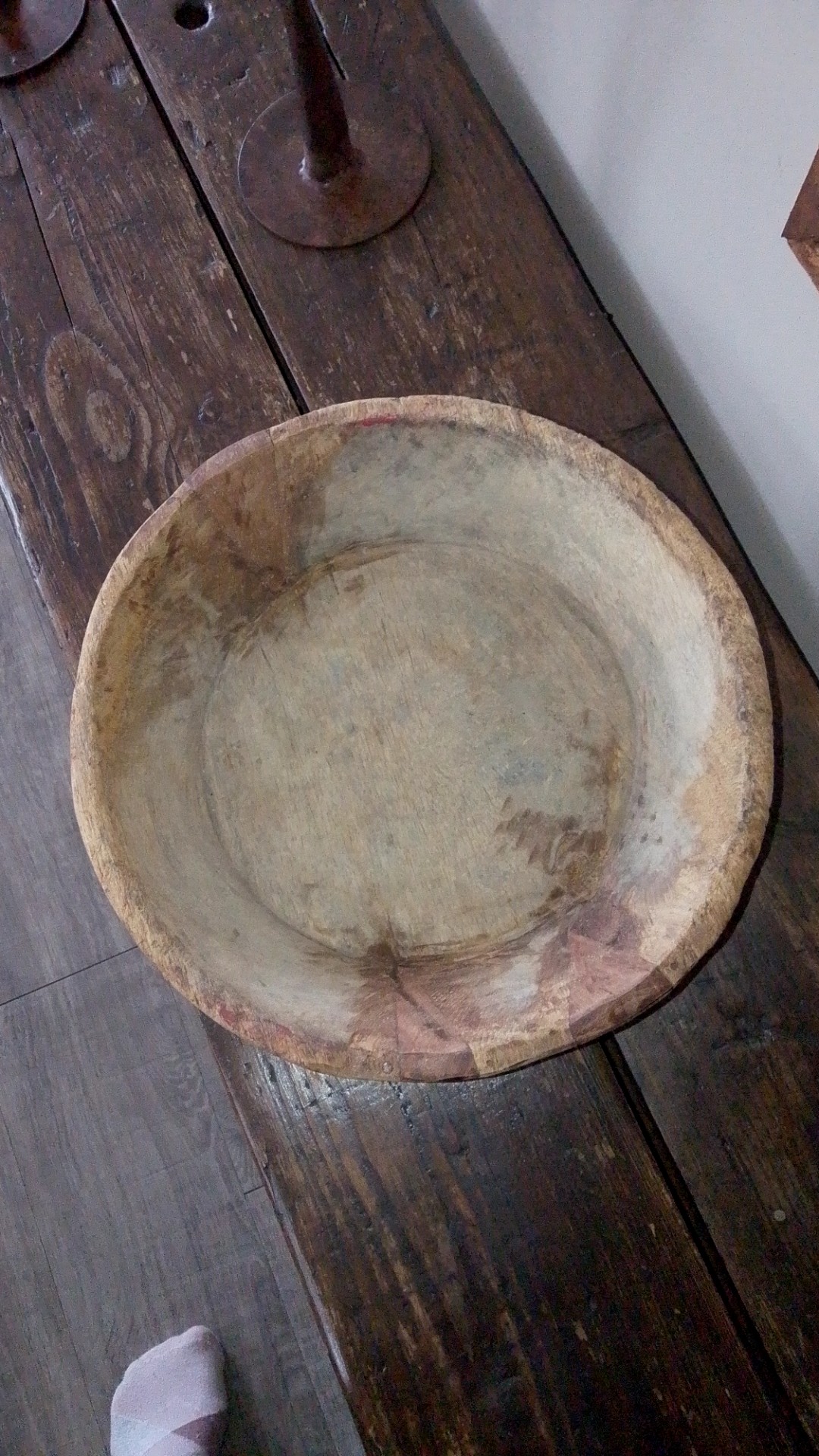
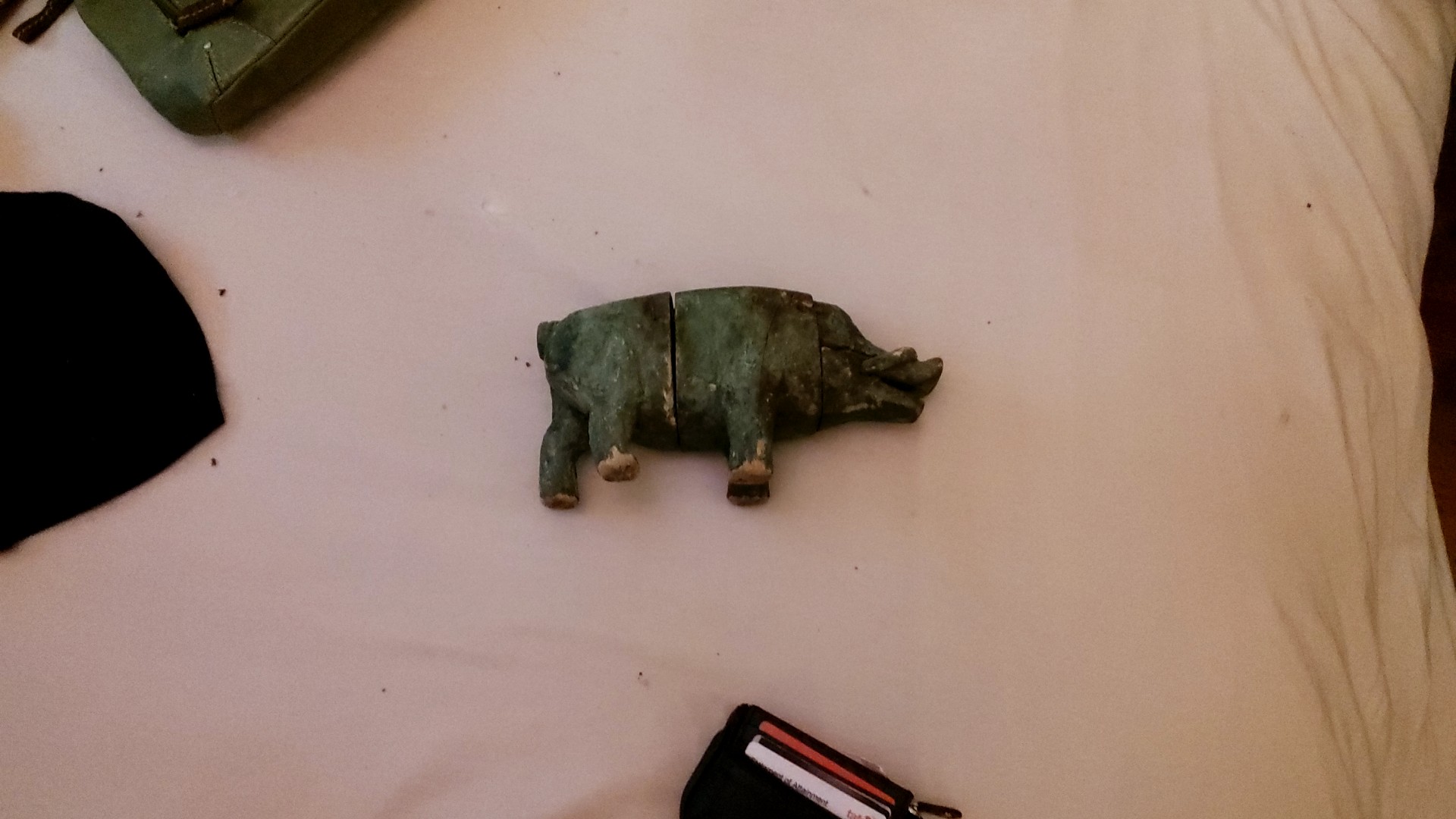
This appears to be a rustic hand-carved wooden bowl, often referred to as a 'dough bowl' or 'trencher'. Its elliptical shape and shallow depth suggest its traditional use in the preparation of bread or other foodstuffs. The visible grain and the slightly uneven finish indicate a handmade origin, likely shaped from a single piece of wood.
CULTURAL ECHOES
Where This Object Echoes
Similar wooden trenchers and dough bowls were essential kitchenware, reflecting self-sufficiency and resourcefulness.
Traditional woodenware for food preparation, often hewn from local timber, has deep roots across rural Europe.
Ritual & Ceremonial Use
- •Daily bread making, a domestic ritual central to family sustenance and community life.
- •The 'breaking of bread' as a symbol of hospitality and fellowship.
Meaning Through Time
A utilitarian tool for food preparation, valued for its function and durability.
A decorative antique, valued for its rustic charm, historical context, and 'farmhouse' aesthetic, often repurposed as a display piece or fruit bowl.
HISTORICAL STORY
DID YOU KNOW?
Dough bowls were often passed down through families, sometimes carrying the faint scent of generations of bread-making within their wood grain.
The inherent insulating properties of wood helped maintain a consistent temperature, crucial for yeast activation and dough rising, making them superior to metal or ceramic bowls for this task.
MATERIAL & CONDITION
Surface
The wooden surface exhibits evident wear and a dry, matte finish. Natural wood grain is prominent, and there are areas of discoloration, possibly from prolonged contact with food or liquids, along with remnants of a reddish pigment on the exterior which could be residual paint or a natural stain. The interior shows evidence of repeated abrasion from use, creating a smoothed, slightly dished profile.
Weight & Feel
Based on its size and apparent timber, I would expect this bowl to feel reasonably substantial, yet manageable, consistent with a hand-carved piece of solid wood.
Condition
The bowl exhibits significant signs of age and use, characterized by surface wear, nicks, and what appear to be splits or cracks in the wood, particularly evident in the second image on the underside. The discoloration and possible remnants of paint suggest a working life rather than purely decorative intent. No obvious repairs are visible, but the dryness of the wood indicates a need for gentle care to preserve its integrity.
RARITY ANALYSIS
Standard antiques commonly found at estate sales and flea markets. Plentiful supply meets modest demand.
Typical Characteristics
- Moderate production runs
- Common at estate sales
- Entry-level collectibles
EXPERT ANALYSIS
Decorative Arts Specialist
My confidence is good given the clear visual cues of hand-carved wood and characteristic form. The wear and patina align well with its presumed historical use. However, precise dating and origin remain broad without physical examination or maker's marks.
KEY EVIDENCE
- 1Visible wood grain and variations indicative of hand-carving from a single block.
- 2Elliptical, shallow form typical of a traditional dough-kneading vessel.
- 3Significant surface wear and discoloration consistent with extended utilitarian use.
- 4Absence of factory marks or precise turning suggests a vernacular, handmade origin.
UNCERTAINTIES
- •The reddish pigment's origin is unclear without closer inspection; it could be original paint, a later decorative addition, or staining.
WHAT WOULD IMPROVE CERTAINTY
- →Examine the wood for specific species identification, which could narrow down origin.
- →Inspect the underside more closely for any faint marks, carvings, or specific tool marks.
- →UV light examination to ascertain any hidden repairs or touch-ups.
- →Gentle cleaning to determine if the reddish pigment is surface residue or embedded stain.
ESTIMATED VALUE
Updated: Feb 27, 2026
- Market comparables from auctions & retail
- Condition, completeness & craftsmanship
- Current collector demand & trends
- Low = quick sale, high = patient seller
For informational purposes only, not a formal appraisal.
ABOUT DECORATIVE OBJECTS
Ceramics, silver, porcelain, glassware, and decorative arts.
Browse all Decorative ObjectsSHARE THIS CURIOSITY
Have your own curiosities to discover?
Scan Your Curiosity
COMMENTS
No comments yet. Be the first to share your thoughts!
Sign in to leave a comment