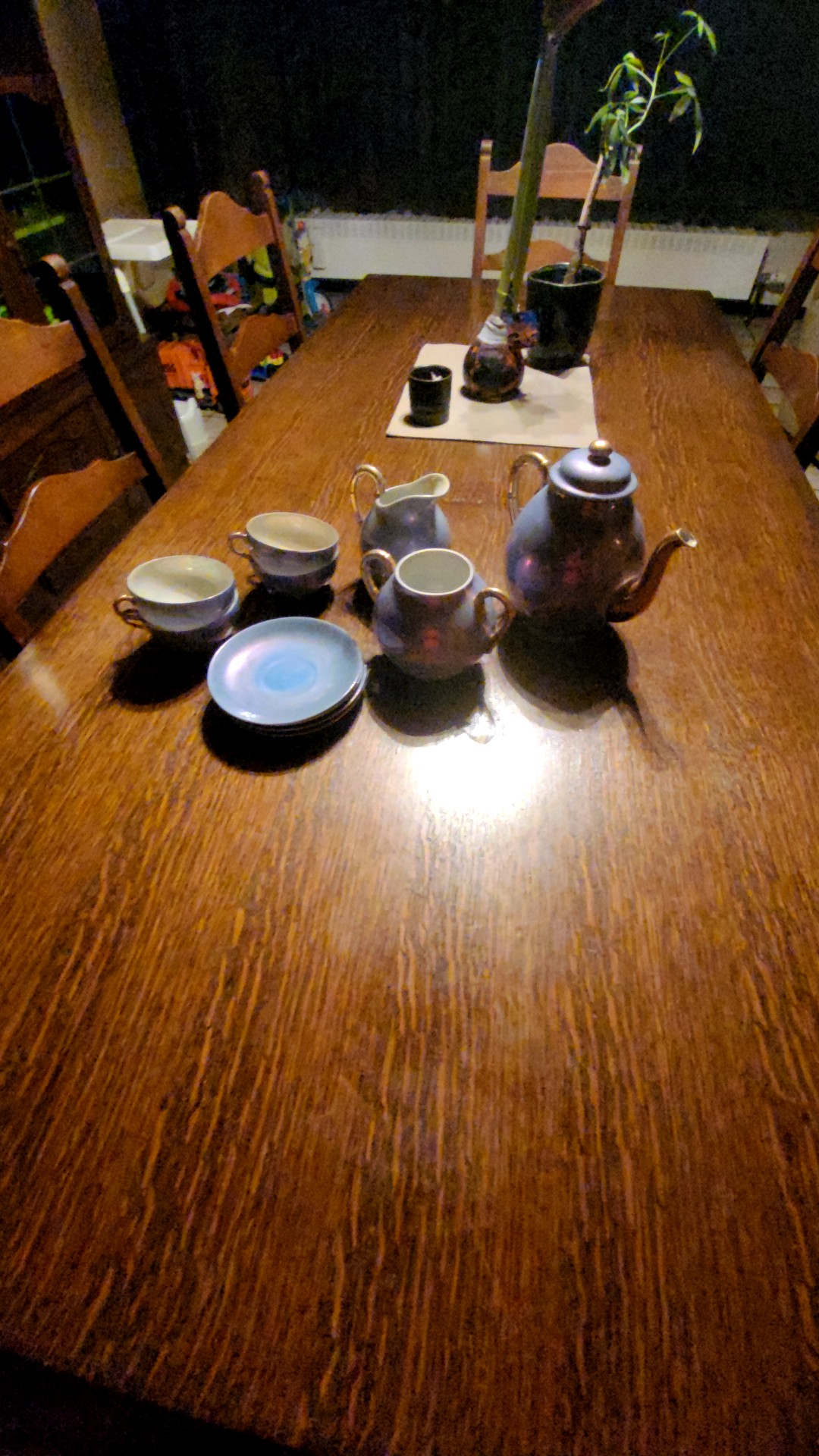
Lustreware Teaset with Teapot, Creamer, Cups, and Saucers
QUICK FACTS
Categories
Era
Early to Mid 20th Century
Origin
null
Rarity
Average (4/10)
Discovered
Jan 13, 2026
1 months ago
DESCRIPTION
This appears to be a small teaset comprising a teapot, creamer, two cups, and three saucers, all crafted from ceramic with a distinctive luster glaze. The iridescent finish, which shifts color depending on the light, is characteristic of lustreware, a decorative technique that rose to prominence in the late 19th and early 20th centuries. The forms suggest a practical, yet decorative, domestic set.
CULTURAL ECHOES
Where This Object Echoes
The iridescent and flowing forms of lustreware were popular during these artistic movements, reflecting their emphasis on natural forms and decorative surfaces.
Both countries were significant producers of lustreware, often creating sets for export that featured similar forms and glazes.
Ritual & Ceremonial Use
- •Afternoon Tea Ceremony: These sets were central to social rituals of tea-drinking, particularly in Western societies, serving as both functional and aesthetic elements of hospitality.
- •Domestic Display: Such decorative sets were often displayed in parlors or dining rooms as indicators of taste and refinement, even when not in active use.
Meaning Through Time
Lustreware marked a revival of ancient ceramic techniques, symbolizing exoticism and intricate craftsmanship in a period of industrialization.
With increasing mass production, lustreware became more accessible, often associated with everyday domesticity and gift-giving, sometimes losing its earlier 'luxury' association.
HISTORICAL STORY
DID YOU KNOW?
The secret to lustreware's shimmering finish lies in a very thin, metallic film applied to the glaze, often containing gold, copper, or silver oxides, giving it a rainbow-like effect.
Early European lustreware, particularly from Josiah Wedgwood's factory in the 18th century, was an attempt to mimic the highly prized mother-of-pearl effects found in Persian and Hispano-Moresque ceramics.
MATERIAL & CONDITION
Surface
The ceramic body is covered with an iridescent lustre glaze, showing hues of purple, blue, and pink, which gives a striking optical effect. The surface appears smooth with a subtle pearlescent shimmer, though without a closer look under direct light, it's hard to discern any crazing or significant wear to the glaze.
Weight & Feel
Based on the forms, the items would likely feel lightweight to moderately substantial, typical for glazed ceramic teawares of this size.
Condition
Visually, the set appears to be in good overall condition with the lustre glaze largely intact. Without closer inspection, it's difficult to ascertain if there are any chips, cracks, or significant wear to the footrims that might affect collectibility. The handle on the cup shows some possible gilding or metallic finish, which would be prone to wear over time.
RARITY ANALYSIS
Typical antique shop fare. Requires some searching but regularly available. This is where most genuine antiques fall.
Typical Characteristics
- Standard antique shop items
- Regularly available
- Moderate collector interest
EXPERT ANALYSIS
Decorative Arts Specialist
The identification as a lustreware teaset is clear due to the distinctive iridescent glaze. The confidence level is moderate due to the inability to discern exact maker or origin without a clear view of the factory mark, which significantly impacts valuation and historical context.
KEY EVIDENCE
- 1The primary visual identifier is the iridescent lustre glaze, shifting in color.
- 2The forms of the teapot, creamer, cups, and saucers are consistent with teasets from the early to mid-20th century.
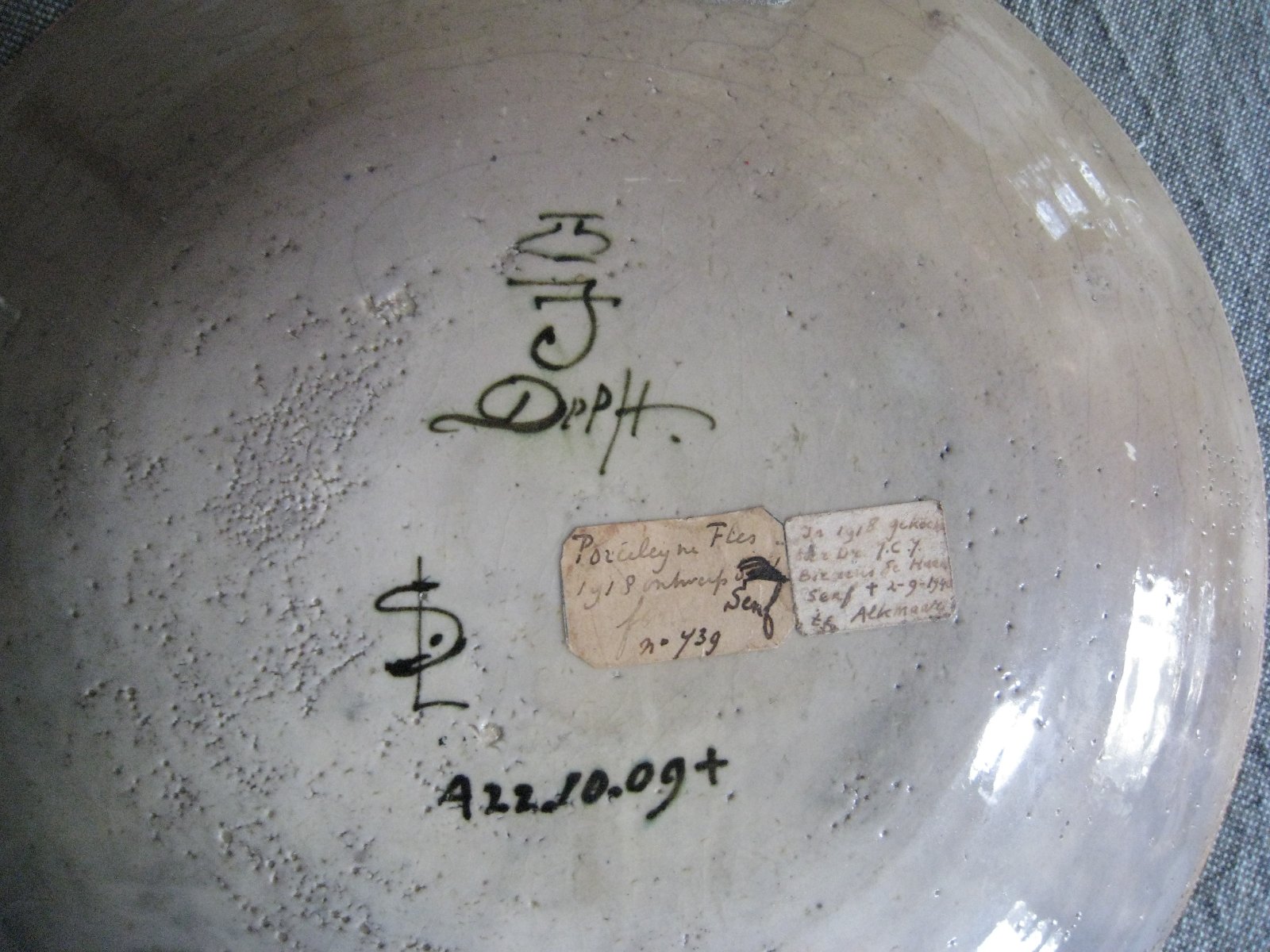
- 3The visible mark on the base of one saucer (though unclear) suggests it is a factory mark from a specific manufacturer.
- 4The metallic-toned handle on the cup implies a gilt or metallic painted finish, typical for decorative teawares.
UNCERTAINTIES
- •The factory mark on the base is too indistinct for identification from the provided image.
- •The exact number of pieces in the set is unclear from the full table shot (e.g., how many cups/saucers beyond the two visible).
WHAT WOULD IMPROVE CERTAINTY
- →A clear, well-lit photograph of the factory mark on the base of each piece for identification.
- →Close-up images of any visible wear to the glaze, especially on the rims and handles.
- →An image of the interior of the teapot to check for staining or cracks.
ESTIMATED VALUE
Updated: Feb 26, 2026
- Market comparables from auctions & retail
- Condition, completeness & craftsmanship
- Current collector demand & trends
- Low = quick sale, high = patient seller
For informational purposes only, not a formal appraisal.
ABOUT DECORATIVE OBJECTS
Ceramics, silver, porcelain, glassware, and decorative arts.
Browse all Decorative ObjectsSHARE THIS CURIOSITY
Have your own curiosities to discover?
Scan Your Curiosity
COMMENTS
No comments yet. Be the first to share your thoughts!
Sign in to leave a comment