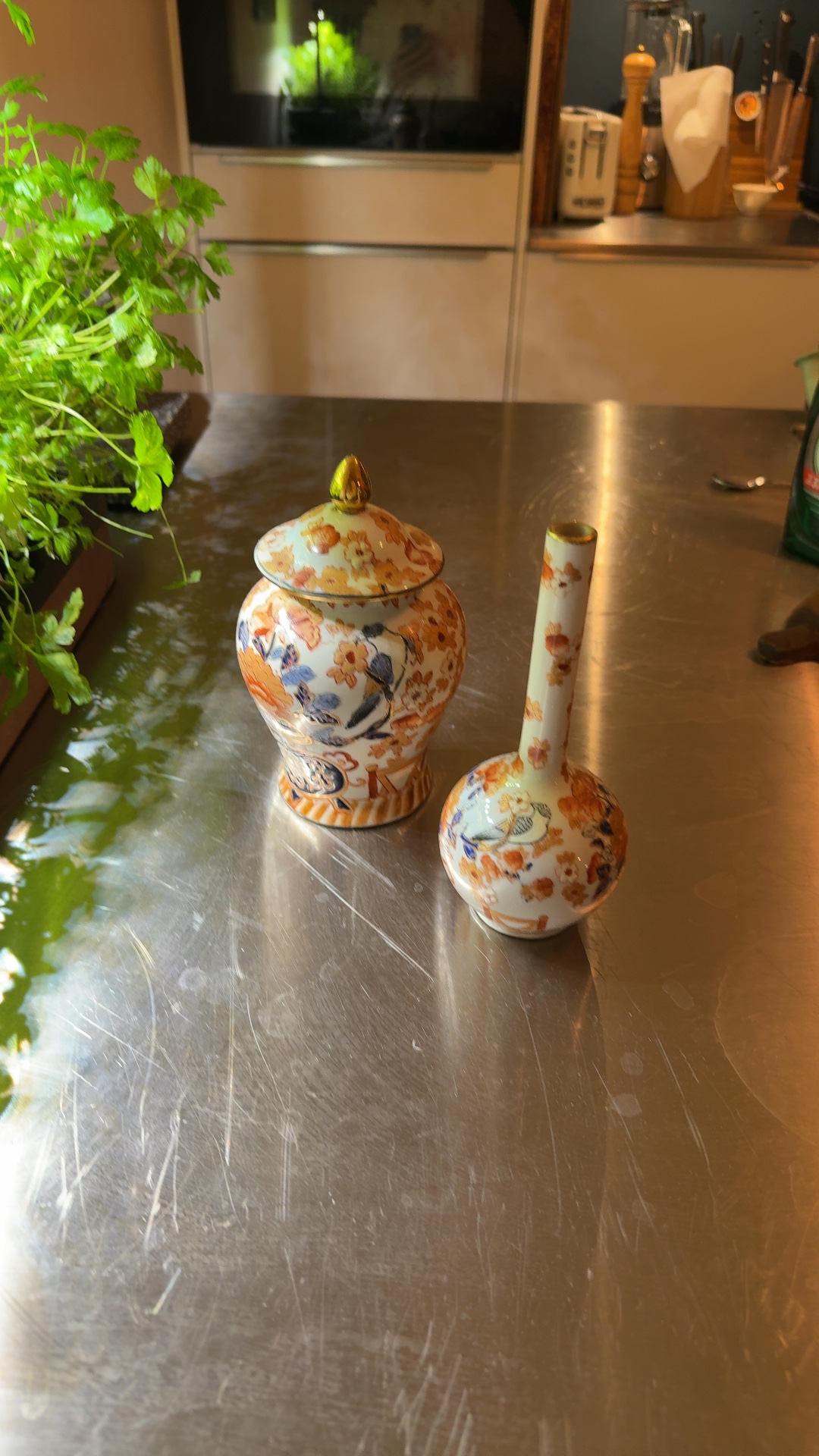
Pair of Japanese Imari-style Porcelain Decorative Vases
QUICK FACTS
Categories
Era
Mid-Late 20th Century
Origin
🌍 International
Rarity
Ordinary (3/10)
Discovered
Jan 26, 2026
1 months ago
DESCRIPTION
This pairing features two ceramic vessels: a lidded ginger jar and a slender bottle vase. Both pieces are decorated in a vibrant Imari palette, dominated by orange, blue, and gilding, with floral and bird motifs characteristic of the style. The forms appear to be mass-produced contemporary interpretations of classic Japanese porcelain designs.
CULTURAL ECHOES
Where This Object Echoes
Chinese export porcelain often influenced and was influenced by Japanese Imari wares, particularly in early trade routes to Europe.
The popularity of Imari wares led many European porcelain manufacturers to develop their own versions, known as 'Chinoiserie' or 'Japonaiserie' styles.
Ritual & Ceremonial Use
- •Display in formal living spaces, often in symmetrical arrangements or as part of a curated collection, a practice popular since the 18th century as porcelain became a status symbol.
- •Gift-giving for housewarmings or other domestic celebrations, where decorative ceramics convey well wishes and aesthetic appreciation.
Meaning Through Time
Imari porcelain symbolized exotic luxury, sophisticated taste, and global trade, often displayed prominently in wealthy European homes.
Japanese aesthetics, including Imari, inspired a broader art movement in the West, influencing design, painting, and decorative arts.
These pieces, being decorative reproductions, serve primarily an aesthetic function, evoking traditional 'Asian' artistry for contemporary home decor, often without deep historical knowledge from the owner.
HISTORICAL STORY
DID YOU KNOW?
True Imari porcelain was often shipped out of the port of Imari, hence its name, even though it was produced in Arita.
The vibrant Imari colors, particularly the distinctive iron red and gilded details, were highly prized in European aristocratic circles during the 17th and 18th centuries.
MATERIAL & CONDITION
Surface
The surface exhibits a glossy, glazed finish with distinct overglaze enamel decoration. The motifs appear to be applied with a combination of hand-painting and possibly decal transfers, typical of mid-century decorative wares. There's visible gilding on the finial of the lidded jar and the rim of the bottle vase.
Weight & Feel
Based on their size and ceramic material, these pieces would likely feel moderately weighty for their size, suggesting a standard earthenware or porcelain body, rather than a finely potted, delicate porcelain.
Condition
Visually, both pieces appear to be in good general condition, with no obvious chips, cracks, or significant losses to the enamel or gilding from these images. The glazes retain their luster, and there are no signs of heavy wear that would indicate extensive use or age.
RARITY ANALYSIS
Standard antiques commonly found at estate sales and flea markets. Plentiful supply meets modest demand.
Typical Characteristics
- Moderate production runs
- Common at estate sales
- Entry-level collectibles
EXPERT ANALYSIS
Decorative Arts Specialist
The confidence level is good as the stylistic features and apparent manufacturing method are consistent with mid-to-late 20th-century decorative ceramics, drawing inspiration from historical Imari wares. However, the lack of visible marks limits a more precise attribution or dating.
KEY EVIDENCE
- 1Overglaze enamel decoration in characteristic Imari palette (orange, blue, gold).
- 2Forms are typical of modern decorative ginger jars and bottle vases.
- 3Overall aesthetic suggests mass-produced contemporary interpretations rather than antique originals.
- 4The gilding on the finial and rim appears intact, indicating contemporary manufacture or very careful handling.
WHAT WOULD IMPROVE CERTAINTY
- →Examine the bases for any factory marks, maker's names, or country of origin stamps.
- →Inspect the glaze under magnification for signs of crazing or genuine age-related wear.
- →Conduct a 'tap test' on the pieces to check for any hidden cracks or repairs that might affect sound resonance.
- →Check under UV light for any signs of restoration, particularly in the gilded areas or on the body of the vessels.
ESTIMATED VALUE
Updated: Feb 27, 2026
- Market comparables from auctions & retail
- Condition, completeness & craftsmanship
- Current collector demand & trends
- Low = quick sale, high = patient seller
For informational purposes only, not a formal appraisal.
ABOUT DECORATIVE OBJECTS
Ceramics, silver, porcelain, glassware, and decorative arts.
Browse all Decorative ObjectsSHARE THIS CURIOSITY
Have your own curiosities to discover?
Scan Your Curiosity
COMMENTS
No comments yet. Be the first to share your thoughts!
Sign in to leave a comment