H&H Cut Crystal Decanter and Wine Glasses Set
QUICK FACTS
Categories
Era
1960s
Origin
🇦🇹 Austria
Brand
H&H
Rarity
Average (4/10)
Discovered
Mar 1, 2026
Today
DESCRIPTION
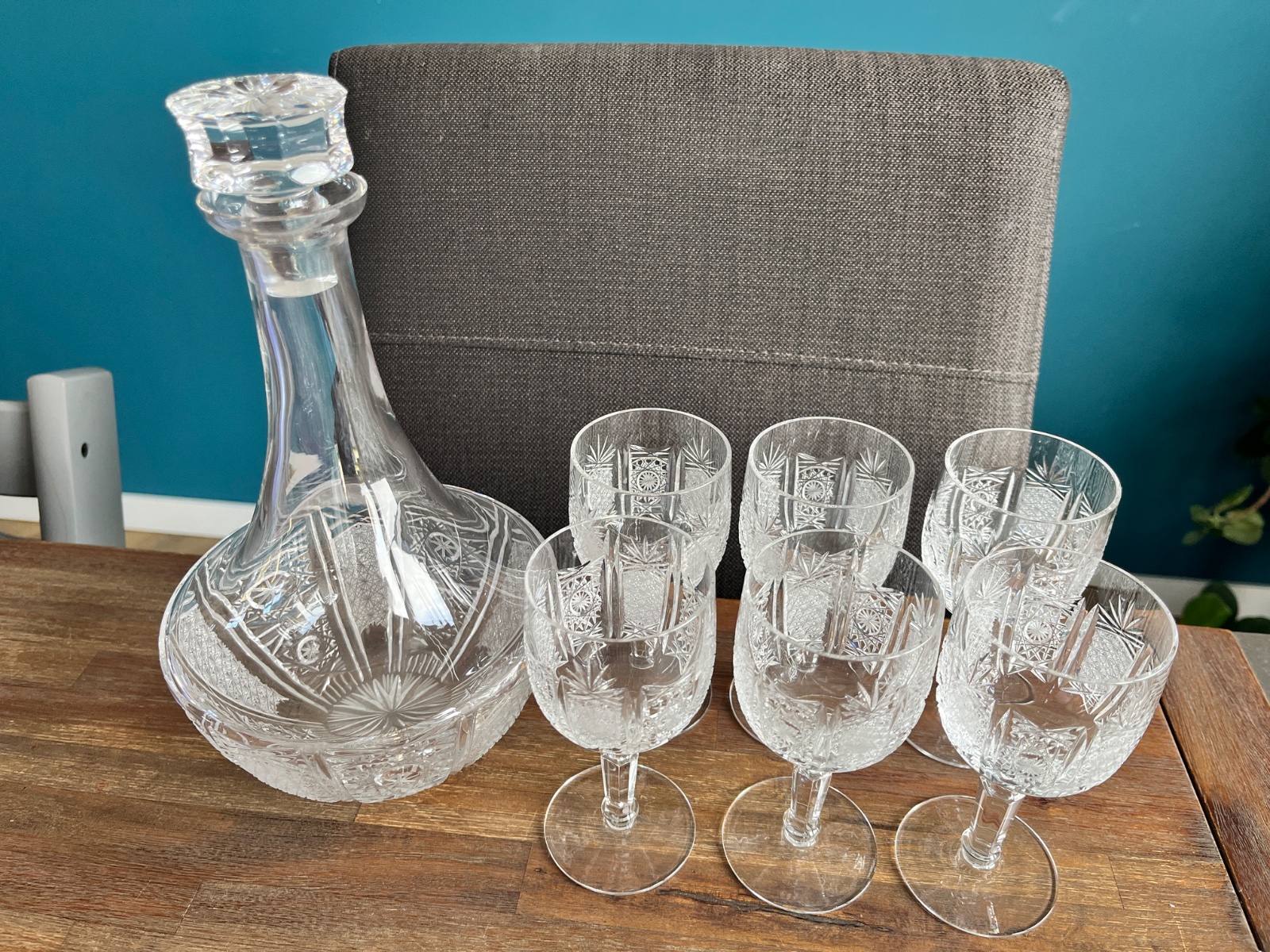
This is a handsome set of cut crystal glassware, comprising a decanter with a stopper and six wine glasses. The design features a classic 'starburst' and 'fan' motif, characteristic of traditional cut crystal production. The decanter, with its broad base and slender neck, suggests it was intended for spirits or wine, designed to both oxygenate and present the beverage in an elegant manner. The accompanying wine glasses share the same intricate cutting, creating a cohesive and visually rich ensemble.
CULTURAL ECHOES
Where This Object Echoes
The intricate cut patterns on this crystal echo the rich heritage of Bohemian glass, a craft known for its detailed engraving and faceting that influenced crystal production across Europe.
The tradition of elegant decanters and matching glassware for spirits consumption was a cornerstone of formal entertaining, reflecting a broader European practice of displaying fine craftsmanship on the dining table.
Ritual & Ceremonial Use
- •Formal dining and entertaining, where such sets were used for serving wine or spirits to guests, signifying hospitality and social standing.
- •Gift-giving for significant life events like weddings or anniversaries, underscoring the enduring value and sentiment attached to fine glassware.
Meaning Through Time
Heavy cut crystal symbolized opulence and the pinnacle of craftsmanship, representing a family's wealth and adherence to traditional etiquette.
While still a mark of quality, crystal sets became more accessible to the burgeoning middle class, becoming a standard item in well-appointed homes for entertaining and display.
With evolving tastes towards minimalism, such elaborate sets sometimes moved from daily use to heirloom status, viewed as traditional rather than contemporary, though they retain value among collectors.
HISTORICAL STORY
DID YOU KNOW?
The intricate 'starburst' and 'fan' patterns on cut crystal are not merely decorative; they are strategically designed to refract light, making the glass sparkle even in dim lighting conditions.
True lead crystal, historically valued for its brilliance and weight, requires a significant lead oxide content, which is why modern producers often use lead-free crystalline glass for health and environmental reasons, though traditional methods persist.
MATERIAL & CONDITION
Surface
The crystal surfaces are highly reflective and faceted, with sharp edges from deep cutting that create a tactile, textured feel. The polished nature of the glass allows for brilliant light play and visual depth.
Weight & Feel
Given the material and form, the decanter and glasses would feel substantial and weighty in hand, indicative of quality crystal rather than lighter glassware.
Condition
The set appears to be in very good condition with minor wear consistent with use and age; no major chips or cracks are immediately visible. The clarity of the crystal is excellent, suggesting good care.
RARITY ANALYSIS
Typical antique shop fare. Requires some searching but regularly available. This is where most genuine antiques fall.
Typical Characteristics
- Standard antique shop items
- Regularly available
- Moderate collector interest
EXPERT ANALYSIS
Cabinet of Curiosities Generalist
Confidence is high due to the clear visual evidence matching the described type of object and the user's context aligning well with observable stylistic characteristics. The lack of visible maker's marks is the primary reason it's not 'near-certain'.
KEY EVIDENCE
- 1The intricate 'starburst' and 'fan' cutting patterns are highly characteristic of traditional fine crystal, suggesting a mid-20th century European influence.
- 2The form of the decanter with its elegant stopper and the delicate stems of the wine glasses are consistent with formal drinkware from the 1960s.
- 3The material appears to be clear, brilliant crystal, aligning with the expected quality of Austrian crystal manufacturers.
- 4The overall condition shows only minor wear, which supports the user's assessment and the presumed age.
UNCERTAINTIES
- •No visible marks or labels are apparent in the images to definitively confirm the 'H&H' brand or Austrian origin, making verification of the user's attribution challenging from images alone.
- •The term 'H&H' is quite generic; further research would be needed to establish which specific Austrian crystal manufacturer this refers to.
WHAT WOULD IMPROVE CERTAINTY
- →Examine the underside of the decanter and the base of the glasses for any etched or printed maker's marks, brand names, or country of origin stamps.
- →Measure the height and diameter of the decanter and glasses to assist in identifying specific patterns or sets from known manufacturers.
- →Perform a ring test (gently tap the rim with a fingernail) to ascertain the characteristic 'ping' of crystal, though this requires handling the object.
ESTIMATED VALUE
Updated: Mar 1, 2026
- Market comparables from auctions & retail
- Condition, completeness & craftsmanship
- Current collector demand & trends
- Low = quick sale, high = patient seller
For informational purposes only, not a formal appraisal.
CONTEXT ANALYSIS
How your provided context compares with Curiosa.com scanner findings.
What Aligned
- User believes the item is original/authentic, which aligns with the visual characteristics of mid-20th century cut crystal.
- The user's attribution to 'H&H' as the brand/maker is accepted, though without a visible mark, it's difficult to verify from images.
- The suggested origin of Austria is plausible, given Austria's strong crystal manufacturing tradition.
- The estimated time period of 1960 aligns perfectly with the style of cutting and overall design, which was popular during that era.
- The user's assessment of 'minor wear' is consistent with the visual evidence, as the set appears well-preserved.
ABOUT DECORATIVE OBJECTS
Ceramics, silver, porcelain, glassware, and decorative arts.
Browse all Decorative ObjectsSHARE THIS CURIOSITY
Have your own curiosities to discover?
Scan Your Curiosity
COMMENTS
No comments yet. Be the first to share your thoughts!
Sign in to leave a comment