Miniature Cyclo Model
QUICK FACTS
Categories
Era
Mid-Late 20th Century
Origin
🇻🇳 Vietnam
Rarity
Ordinary (3/10)
Discovered
Feb 7, 2026
3 weeks ago
DESCRIPTION
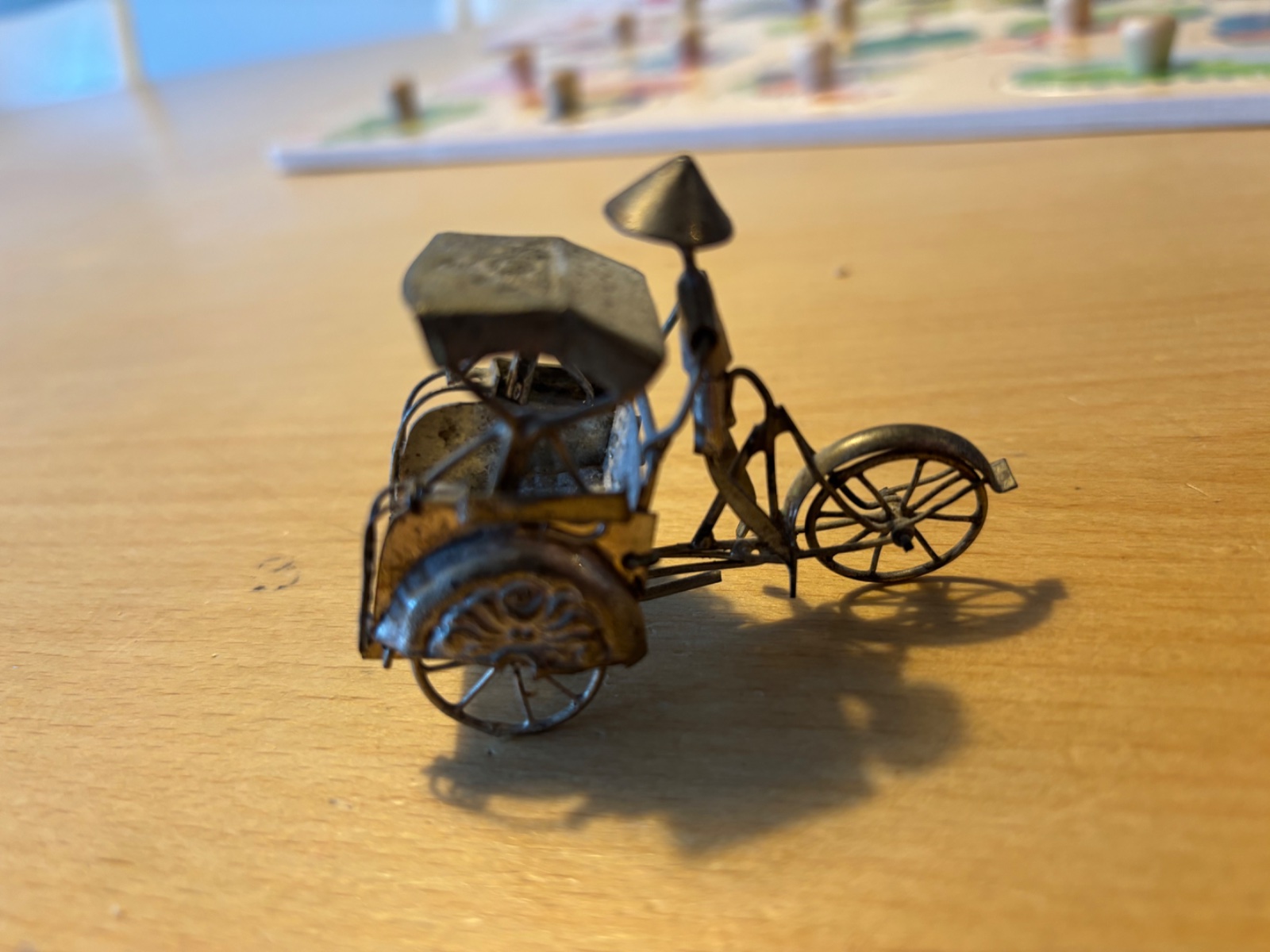
This appears to be a miniature decorative model of a cyclo, a type of bicycle taxi common in Southeast Asian countries, particularly Vietnam and Cambodia. The model features intricate wire work suggesting the frame and wheels, a passenger cabin with a canopy, and a small conical hat (nón lá) often associated with the region. The material seems to be a base metal, likely brass or a similar alloy, given the tarnished, somewhat coppery-gold tones seen in areas.
CULTURAL ECHOES
Where This Object Echoes
The cyclo as an iconic mode of transport and cultural symbol.
Ritual & Ceremonial Use
- •Souvenir collection and display from travels.
- •Gift-giving to commemorate cultural experiences or shared heritage.
Meaning Through Time
Primarily a practical mode of urban transport and labor for drivers.
Increasingly a tourist attraction and a nostalgic symbol of a bygone era, with fewer operating as daily transport.
HISTORICAL STORY
DID YOU KNOW?
The nón lá (conical hat) on the driver figure is a quintessential symbol of Vietnam, often worn by individuals working outdoors for sun protection and as traditional attire.
Cyclos are generally human-powered, distinguishing them from motor-powered rickshaws, though motorized versions exist in some areas today.
MATERIAL & CONDITION
Surface
The metal surface exhibits a noticeable patina, suggesting age and exposure to air. Some areas have a darker, almost blackened tarnish, while others show a duller, oxidized metallic sheen. The texture appears somewhat rugged, typical of a cast or wire-formed metal souvenir.
Weight & Feel
Based on its small size and metal construction, the item would likely feel light but somewhat dense in hand, giving it a tangible, solid feel for a miniature.
Condition
The model appears to be in relatively good condition for its age, with visible tarnishing/patina consistent with an older metal item. There are no obvious signs of breakage or significant structural damage, though specific details are somewhat obscured by image focus.
RARITY ANALYSIS
Standard antiques commonly found at estate sales and flea markets. Plentiful supply meets modest demand.
Typical Characteristics
- Moderate production runs
- Common at estate sales
- Entry-level collectibles
EXPERT ANALYSIS
Trading Card Market Analyst
Confidence is high based on the clear visual representation of a cyclo model with distinct cultural markers and the consistent material characteristics. Lack of a clear maker mark or exact dimensions prevent a higher confidence.
KEY EVIDENCE
- 1The item is a miniature model of a 'cyclo' or pedicab, identifiable by its bicycle-driven passenger carriage design.
- 2The presence of the conical hat (nón lá) on the driver adds a strong cultural indicator, pointing towards Vietnam or a neighboring Southeast Asian country.
- 3The metallic construction and visible patina are consistent with souvenir items produced from base metals from the mid-to-late 20th century.
- 4The intricate wire-work suggests a handmade or small-scale artisanal production, typical for decorative models.
UNCERTAINTIES
- •The overall focus in the images is soft, making it difficult to discern very fine details or potential maker's marks.
- •Without clearer images, it's difficult to confirm the exact metal composition beyond a base metal alloy.
WHAT WOULD IMPROVE CERTAINTY
- →Provide clearer, high-resolution images, especially focusing on any potential markings or stamps.
- →Examine the underside or less visible areas for any manufacturer's labels or country-of-origin stamps.
- →Consider a gentle cleaning to remove some surface tarnish, if desired, to better reveal underlying metal (though this could diminish collectible value for some).
- →Measure the dimensions of the model to better ascertain its specific scale and type.
ESTIMATED VALUE
Updated: Feb 27, 2026
- Market comparables from auctions & retail
- Condition, completeness & craftsmanship
- Current collector demand & trends
- Low = quick sale, high = patient seller
For informational purposes only, not a formal appraisal.
ABOUT DECORATIVE OBJECTS
Ceramics, silver, porcelain, glassware, and decorative arts.
Browse all Decorative ObjectsSHARE THIS CURIOSITY
Have your own curiosities to discover?
Scan Your Curiosity
COMMENTS
No comments yet. Be the first to share your thoughts!
Sign in to leave a comment