Abstract Mixed Media Print ('Monoprint')
QUICK FACTS
Categories
Era
Mid-20th Century to Late 20th Century
Origin
🌍 International
Artist/Maker
Kicken
Rarity
Uncommon (5/10)
Discovered
Feb 7, 2026
3 weeks ago
DESCRIPTION
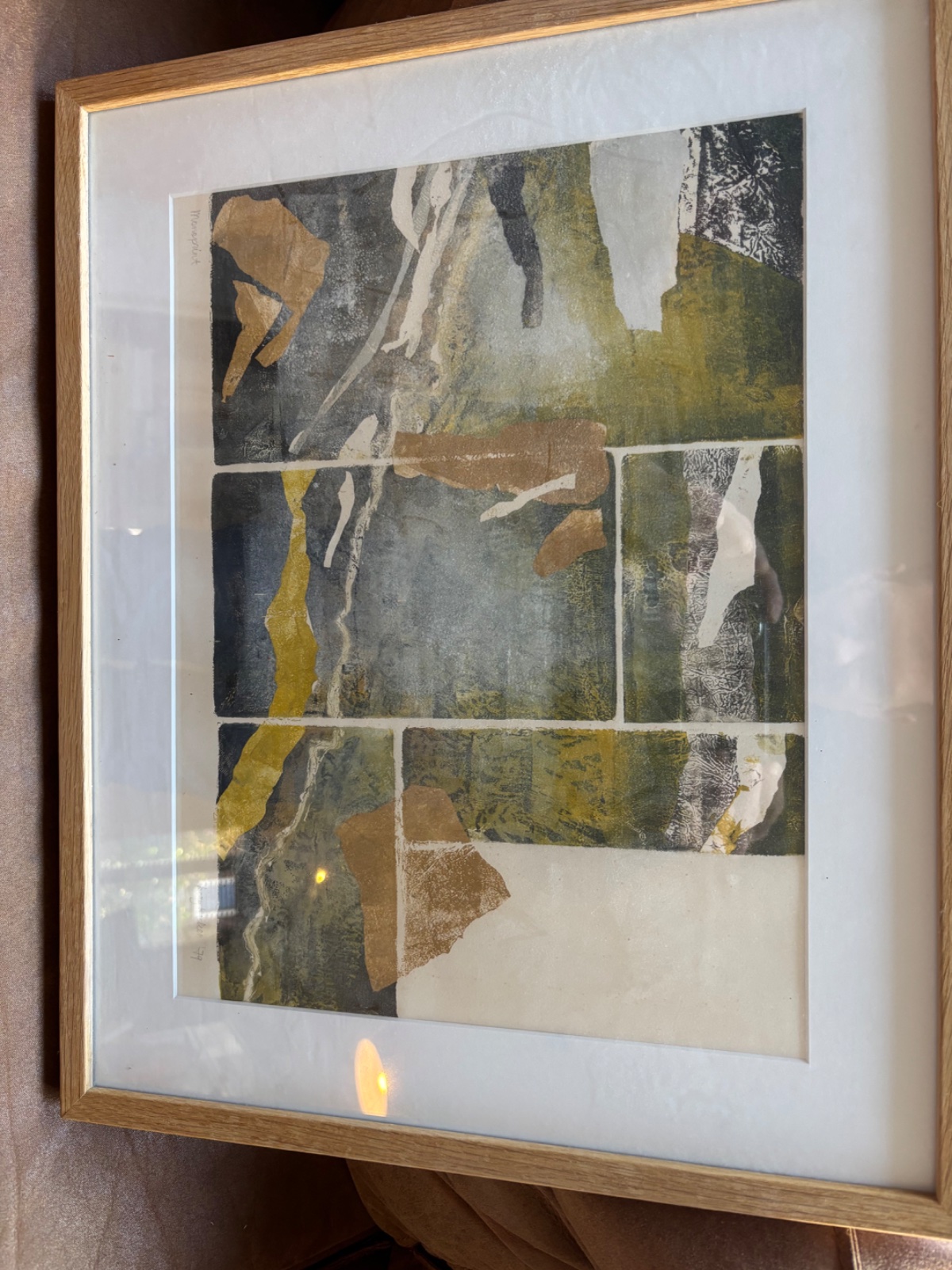
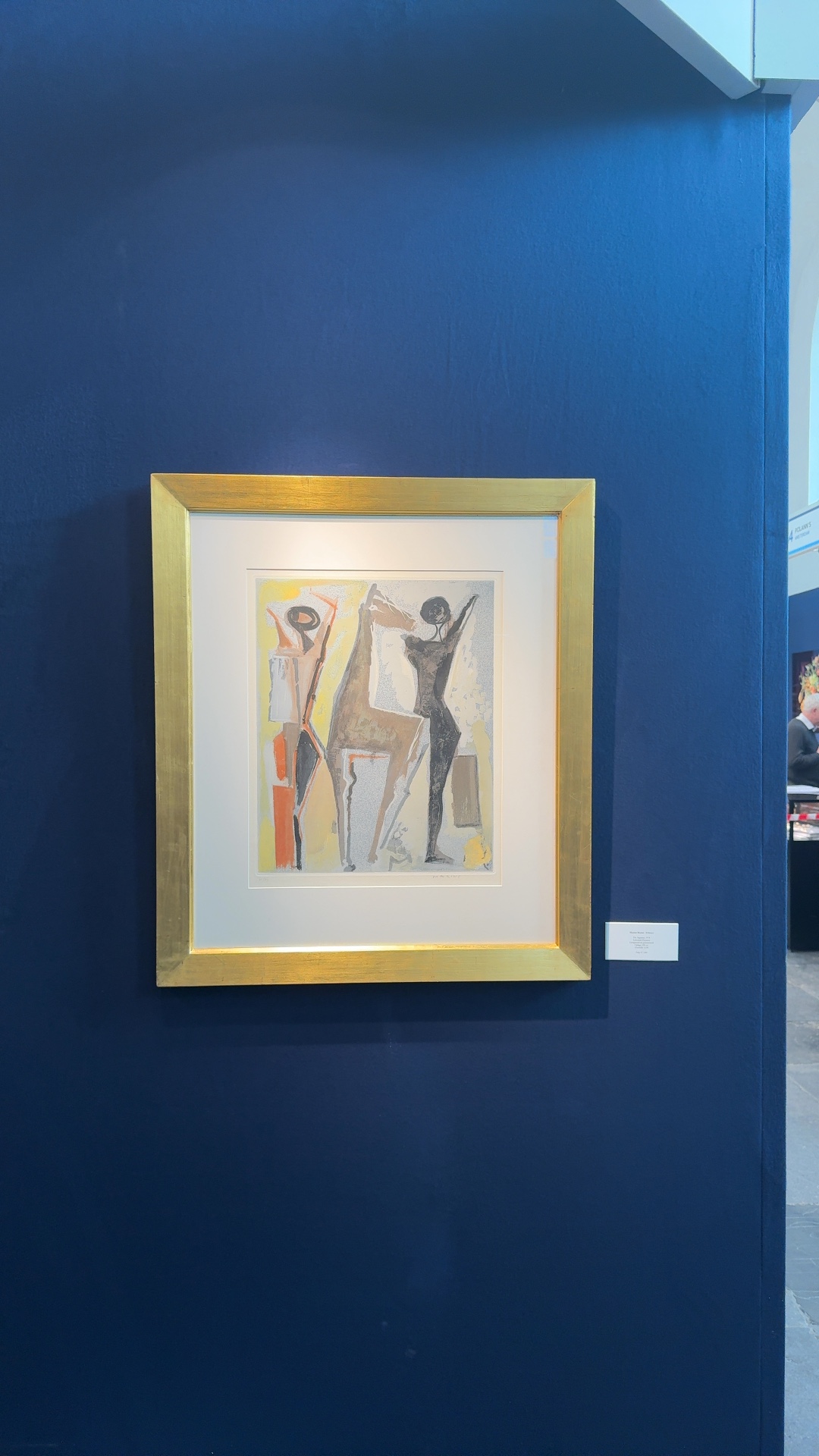
This appears to be an abstract mixed-media print, possibly a monoprint, characterized by its varied textures and layered visual elements. The composition features a geometric arrangement of rectangular shapes, populated with organic forms and gestural marks. The palette is muted yet rich, dominated by earthy greens, grays, and browns, with lively accents of mustard yellow and white. The varying opacity and texture within the print suggest a combination of printing techniques, possibly incorporating chine-collé or other collage elements, to achieve its distinctive surface.
CULTURAL ECHOES
Where This Object Echoes
The emphasis on gestural marks, non-representational forms, and exploration of process-driven techniques aligns with post-war artistic movements in both Europe and America.
The appreciation for irregular forms, natural textures, and a muted, earthy color palette resonates with principles found in Wabi-sabi, celebrating imperfection and ephermerality.
Ritual & Ceremonial Use
- •The placement in domestic or professional settings as a focal point for contemplation, bringing a sense of organic calm and artistic engagement to an interior space.
- •The ritual of engaging with abstract art, allowing for personal interpretation and eliciting a subjective emotional response, rather than solely narrative understanding.
Meaning Through Time
Abstraction as a rebellion against traditional representation and a path to pure emotional or intellectual expression.
Abstract prints are often viewed as sophisticated decorative elements, integrating art into contemporary design sensibilities, sometimes overshadowing their conceptual or technical origins.
HISTORICAL STORY
DID YOU KNOW?
Monoprinting is unique because, unlike other printmaking methods that produce editions, it creates only one unique impression, often mixing painting and printmaking techniques.
The varied textures visible in this piece are often achieved through unconventional methods, such as pressing textured surfaces or objects into the ink, or by applying different types of paper or materials to the printing plate.
MATERIAL & CONDITION
Surface
The surface exhibits a range of visual textures, from smooth, semi-transparent overlays to areas of granular or fibrous impression. The interplay of matte and possibly subtly-glossy areas, alongside what appears to be embedded material, creates a rich, haptic quality under the glass.
Weight & Feel
Given its framed presentation, the piece would feel moderately heavy, with the glazing and wooden frame adding significant weight to what is likely a relatively lightweight paper or board substrate.
Condition
The print appears to be in excellent condition, protected under glass. There are no readily apparent signs of discoloration, foxing, or physical damage to the artwork itself. The matting appears clean and the frame shows minimal wear.
RARITY ANALYSIS
Genuine antiques with fewer examples on the market. Named makers, documented provenance, or early production examples.
Typical Characteristics
- Limited production
- Named makers
- Growing collector demand
EXPERT ANALYSIS
Museum-Trained Art Historian
The confidence level is good given the clear visual evidence of a print, likely a monoprint, with a discernible term. However, the lack of a clear artist's signature or further provenance within the images limits definitive attribution and full understanding of its creation.
KEY EVIDENCE
- 1The visible 'Monoprint' inscription suggests a unique printmaking process, distinguishing it from an edition.
- 2The diverse textures, layering, and varied opacity indicate a sophisticated mixed-media approach within graphic arts.
- 3The abstract composition and earthy yet dynamic color scheme point to a mid-to-late 20th-century aesthetic trend.
- 4The overall presentation within a contemporary frame and matting implies care and appreciation for the artwork.
UNCERTAINTIES
- •The artist's full name or clear signature is not fully discernible, limiting precise attribution.
- •Without closer inspection, it's difficult to verify the exact printmaking techniques (e.g., whether chine-collé is present or merely printed effects).
- •The image reflection obscures some finer details of the artwork and any potential lower-left marks.
WHAT WOULD IMPROVE CERTAINTY
- →Obtain high-resolution, glare-free images of the entire print, with particular attention to the lower margin for signatures or edition numbers.
- →Examine the reverse of the artwork for any labels from galleries, previous owners, or auction houses.
- →If unframed, inspect the edges of the paper for watermarks or deckled edges typical of fine art paper.
- →Consult a printmaking expert to identify the precise techniques used and compare them to known artists working in abstract monoprint.
ESTIMATED VALUE
Updated: Feb 27, 2026
- Market comparables from auctions & retail
- Condition, completeness & craftsmanship
- Current collector demand & trends
- Low = quick sale, high = patient seller
For informational purposes only, not a formal appraisal.
ABOUT PRINTS & POSTERS
Vintage prints, posters, advertising signs, and graphic art.
Browse all Prints & PostersSHARE THIS CURIOSITY
Have your own curiosities to discover?
Scan Your Curiosity
COMMENTS
No comments yet. Be the first to share your thoughts!
Sign in to leave a comment