Silverplate Pierced Centerpiece Basket
QUICK FACTS
Categories
Era
Late 19th - Early 20th Century
Origin
🌍 International
Brand
Hoogsteing & Presburg
Rarity
Average (4/10)
Discovered
Feb 13, 2026
2 weeks ago
DESCRIPTION
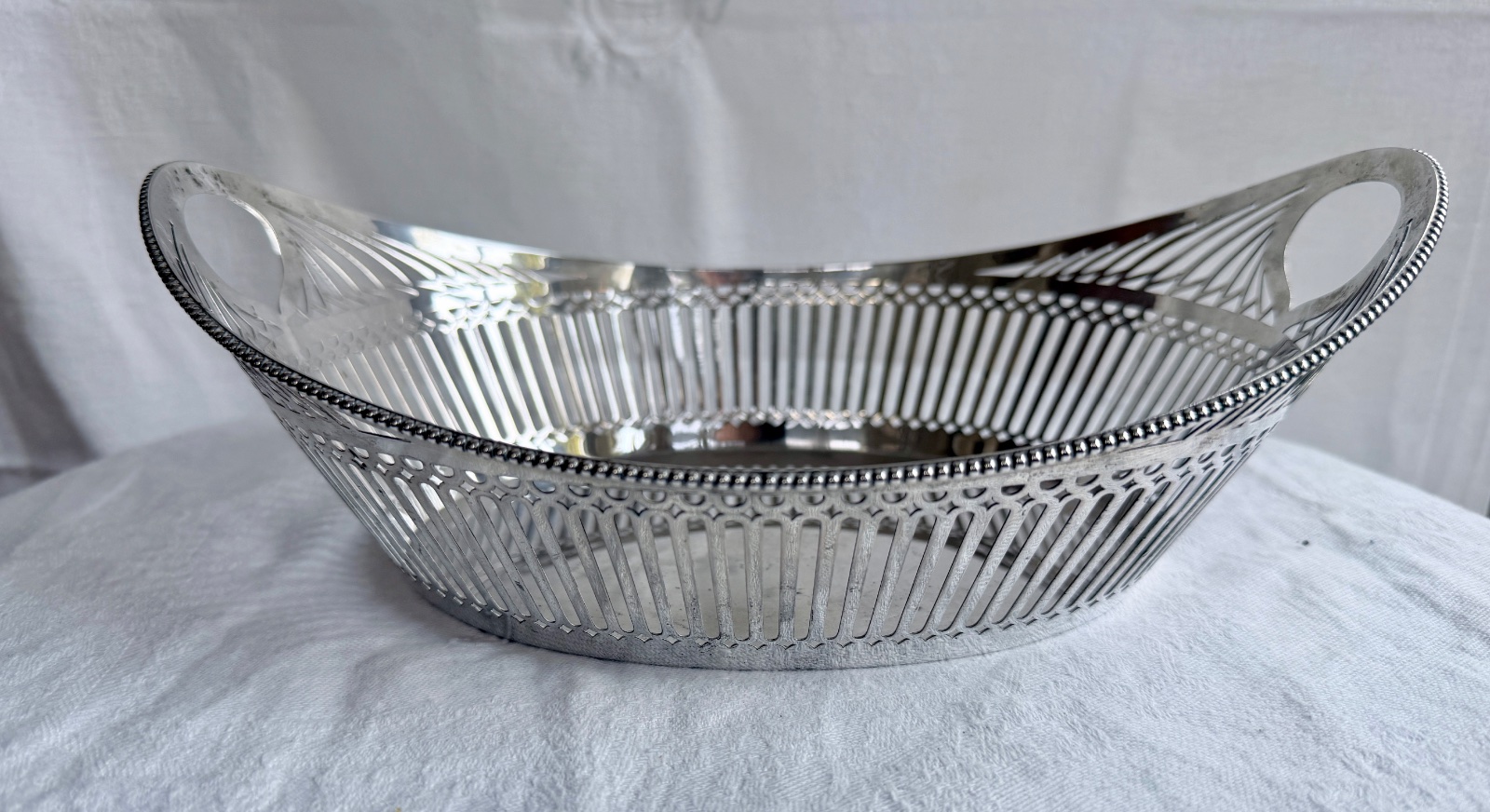
This appears to be a silverplate pierced centerpiece basket, likely used for fruit, bread, or rolls. The design features an intricate pierced or reticulated gallery with vertical fluting, terminating in handles at either end. The base is solid and polished, and the overall construction suggests a decorative domestic item from the late 19th to early 20th century. The absence of clear hallmarks in the primary images suggests it is either electroplated or a lower grade of silver, as sterling would typically be more explicitly marked.
CULTURAL ECHOES
Where This Object Echoes
Designs featuring pierced work and classical fluting were highly popular during the Neoclassical period and later revived in various decorative arts movements.
The emphasis on intricate decoration and dedicated serving pieces for formal dining tables was paramount during these periods.
Ritual & Ceremonial Use
- •Formal dining and entertaining, where such baskets would have held fresh fruit, sweetmeats, or rolls as part of an elaborate table setting.
- •Gift-giving for weddings or housewarmings, as silver and silverplate items were common and esteemed presents.
HISTORICAL STORY
DID YOU KNOW?
Before the advent of refrigeration, pierced baskets like this one were essential for keeping fruits and baked goods fresh by allowing air to circulate, preventing mold growth.
The process of creating such intricate pierced designs in metal, especially by hand, was a highly skilled craft, often involving sawing, filing, and chasing techniques.
MATERIAL & CONDITION
Surface
The surface exhibits a polished, reflective finish characteristic of silver or silverplate. The pierced work shows clean edges, and there's a delicate beaded rim along the top edge of the gallery. Minor surface scratching and some areas of tarnish or darkening, particularly within the pierced patterns and crevasses, are visible, indicating age and handling.
Weight & Feel
Based on its size and the material (likely silverplate over a base metal), this basket would feel moderately substantial, not overly heavy but not flimsy either, suggesting a reasonable gauge of metal was used in its manufacture.
Condition
The object appears to be in good overall condition for its age, though some surface wear and minor scratching are evident on the solid base and polished areas. There are no obvious signs of significant dents, cracks, or repairs, but professional cleaning and polishing would likely enhance its appearance. Some tarnish is present, particularly in the recessed areas of the piercing.
RARITY ANALYSIS
Typical antique shop fare. Requires some searching but regularly available. This is where most genuine antiques fall.
Typical Characteristics
- Standard antique shop items
- Regularly available
- Moderate collector interest
EXPERT ANALYSIS
Decorative Arts Specialist
Confidence is good based on clear visual characteristics of form, material appearance, and typical aging for a silverplate basket of this type. However, the lack of visible marks limits the ability to precisely date or attribute a maker.
KEY EVIDENCE
- 1Pierced, reticulated design indicative of late 19th/early 20th-century decorative metalwork.
- 2Polished, reflective surface consistent with silverplate.
- 3Form factor suggests a centerpiece or serving basket.
- 4Minor surface wear and tarnish aligned with an antique rather than modern reproduction.
UNCERTAINTIES
- •No visible maker's marks or hallmarks in the provided images, which prevents definitive confirmation of material (sterling vs. plate) or manufacturer.
- •The exact age cannot be pinpointed without specific date letters or company marks.
- •The extent of any replating or repairs is difficult to ascertain from these images alone.
WHAT WOULD IMPROVE CERTAINTY
- →Provide clear, magnified images of the underside of the base and any other areas that might contain marks or hallmarks.
- →Carefully inspect the surface for any faint traces of plating loss, particularly on high points.
- →Measure the item's dimensions (length, width, height) to better gauge its scale and potential use.
ESTIMATED VALUE
Updated: Feb 27, 2026
- Market comparables from auctions & retail
- Condition, completeness & craftsmanship
- Current collector demand & trends
- Low = quick sale, high = patient seller
For informational purposes only, not a formal appraisal.

ABOUT DECORATIVE OBJECTS
Ceramics, silver, porcelain, glassware, and decorative arts.
Browse all Decorative ObjectsSHARE THIS CURIOSITY
Have your own curiosities to discover?
Scan Your Curiosity
COMMENTS
No comments yet. Be the first to share your thoughts!
Sign in to leave a comment