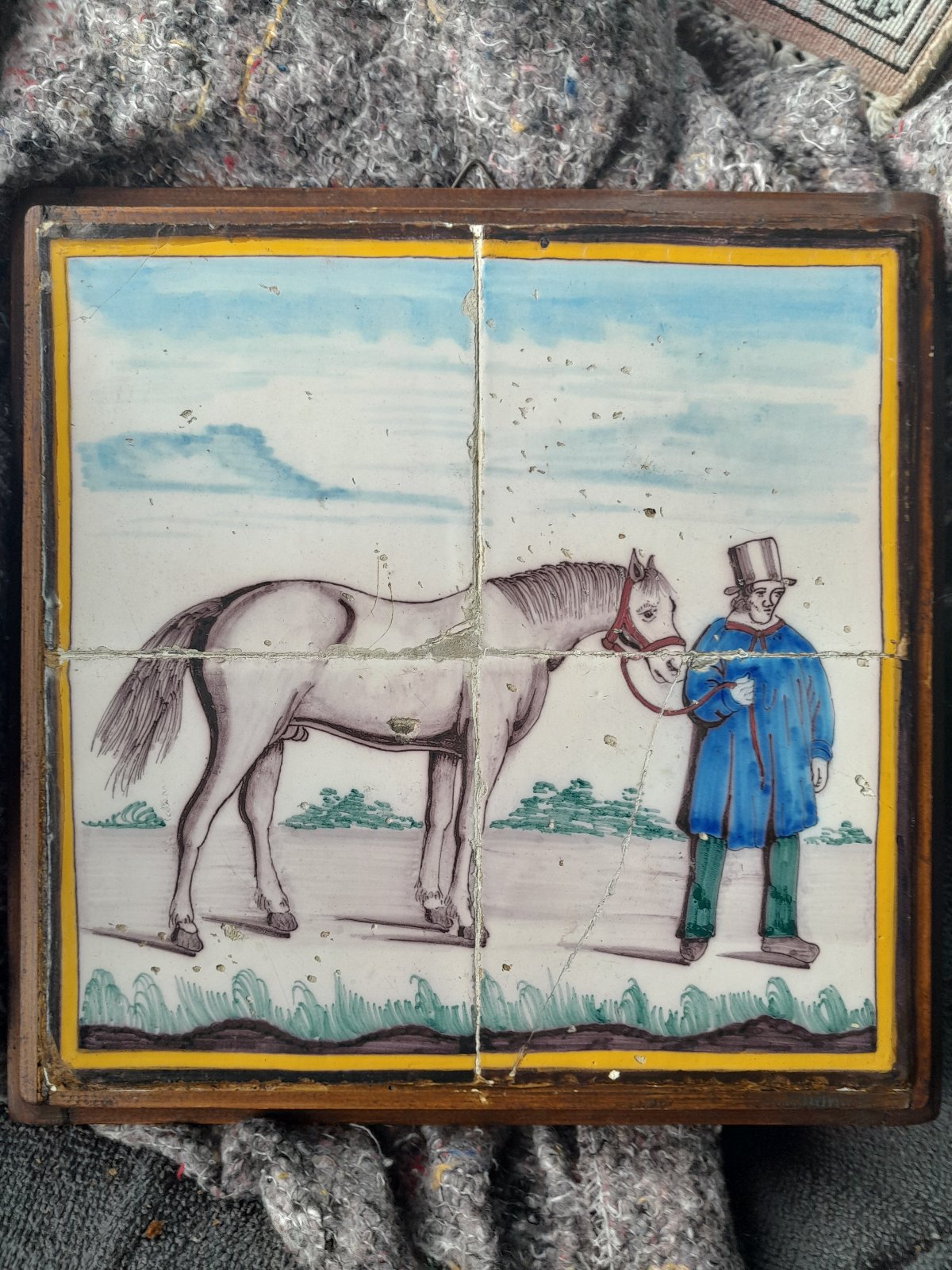
Equestrian Ceramic Tile Panel - Man and Horse
QUICK FACTS
Categories
Era
Late 19th - Early 20th Century
Origin
🌍 International
Rarity
Average (4/10)
Discovered
Feb 1, 2026
3 weeks ago
DESCRIPTION
This appears to be a decorative ceramic tile panel, composed of four individual tiles arranged to form a single image. The illustration depicts a gentleman in a top hat and blue coat, holding a horse by its reins, set against a stylized landscape background. The tiles are housed within a simple wooden frame, forming a complete decorative piece. The style of the illustration suggests an earlier folk art or traditional ceramic painting technique, possibly hand-painted or utilizing transfer printing with hand-finishing.
CULTURAL ECHOES
Where This Object Echoes
Traditional Dutch Delft tiles often feature rural scenes, animals, and people, though typically in blue and white. The multi-tile panel format is reminiscent of these traditions
Characterized by glazed ceramic tiles, Azulejos are famous for narrative scenes and decorative motifs, many forming large tableaux. Though distinct in style, the concept of a multi-tile image resonates.
Ritual & Ceremonial Use
- •Domestic display: such panels were often integrated into interior decoration, perhaps as part of a fireplace surround or a kitchen backsplash, or simply hung as wall art.
- •Gift-giving: as charming decorative items, these tiles could serve as gifts, showcasing popular motifs.
Meaning Through Time
Equestrian images symbolized aristocratic leisure, sporting pursuits, or the rural ideal, reflecting a societal preoccupation with horses as both utility and status symbols.
With the decline of horse-drawn transport, such imagery shifted to evoke nostalgia for a bygone era or a general appreciation for animal companionship and pastoral scenes.
HISTORICAL STORY
DID YOU KNOW?
Decorative ceramic tiles have been used for thousands of years, with notable examples from ancient Mesopotamia, through Islamic art, to European Delftware and Azulejos.
The practice of creating multi-tile panels, or tile pictures, allowed for larger, more complex scenes to be depicted than on single tiles, effectively turning a wall into a canvas.
MATERIAL & CONDITION
Surface
The surface indicates ceramic tiles with a glazed finish. Fine lines from the tile joints cut through the image. The glaze appears somewhat aged, exhibiting areas of crazing, which are fine crackles in the surface glaze, consistent with firing and aging processes.
Weight & Feel
Based on the ceramic material and wooden backing, this piece likely feels moderately substantial but not overly heavy, similar to a small framed picture or clock.
Condition
The tiles show visible crazing and some minor chips or loss at the edges and along the joint lines, particularly the vertical center. The wooden frame appears worn but structurally sound. The reverse side, backed with what looks like particle board, shows remnants of white adhesive or mortar, suggesting it was once installed or more securely affixed.
RARITY ANALYSIS
Typical antique shop fare. Requires some searching but regularly available. This is where most genuine antiques fall.
Typical Characteristics
- Standard antique shop items
- Regularly available
- Moderate collector interest
EXPERT ANALYSIS
Decorative Arts Specialist
My confidence is good for the object type and estimated era based on the visible materials, decorative style, and condition, particularly the glaze crazing. The lack of specific marks, however, prevents a more precise attribution or dating.
KEY EVIDENCE
- 1Composed of four individual glazed ceramic tiles.
- 2Stylized illustration of a man and horse suggests folk art or popular decorative style.
- 3Visible crazing on the glaze points to age and typical ceramic aging.
- 4Simple wooden frame implies a decorative, finished object for display.
- 5Particle board backing on the reverse is common for later mounting or framing of older tileworks.
UNCERTAINTIES
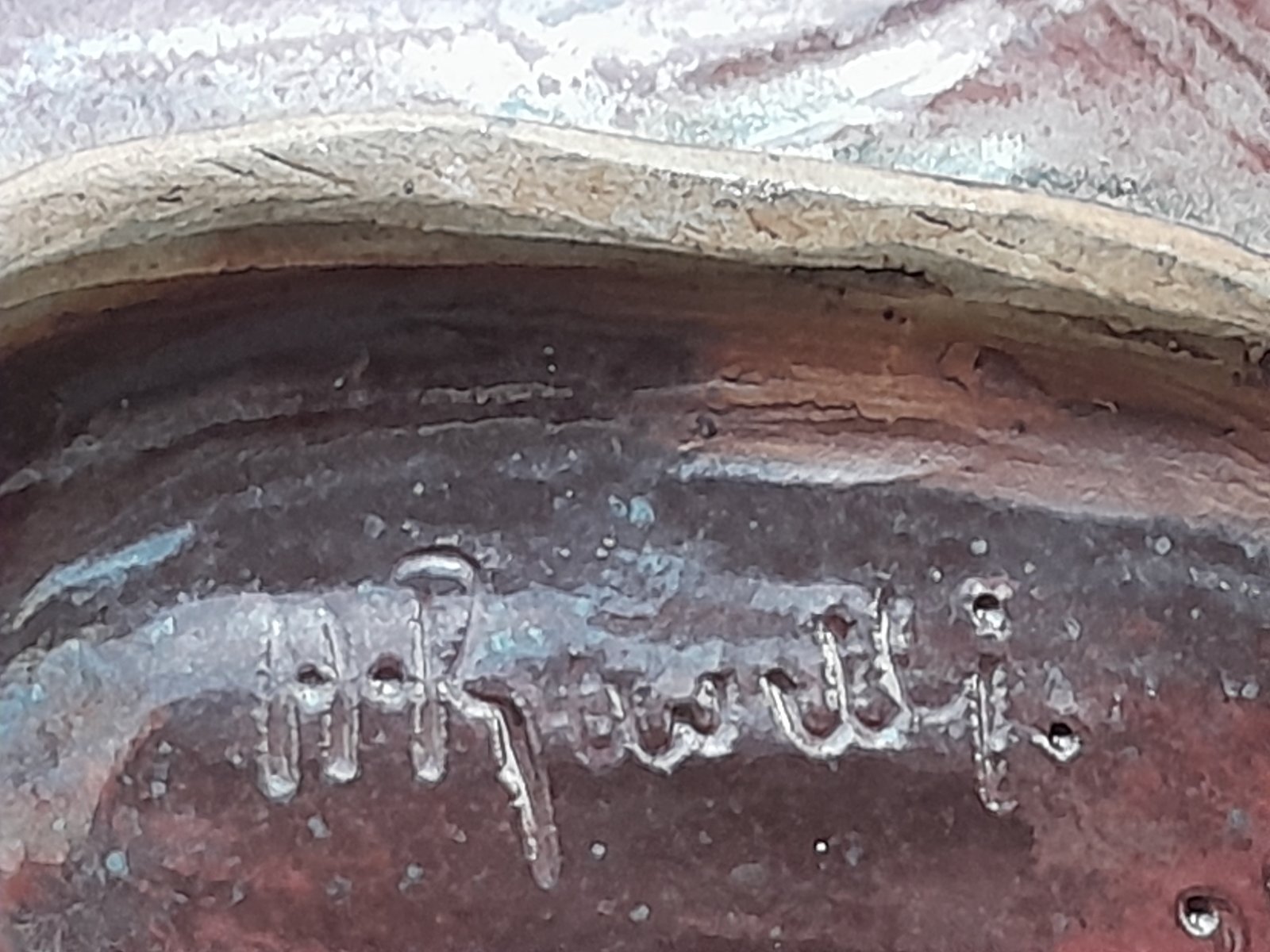
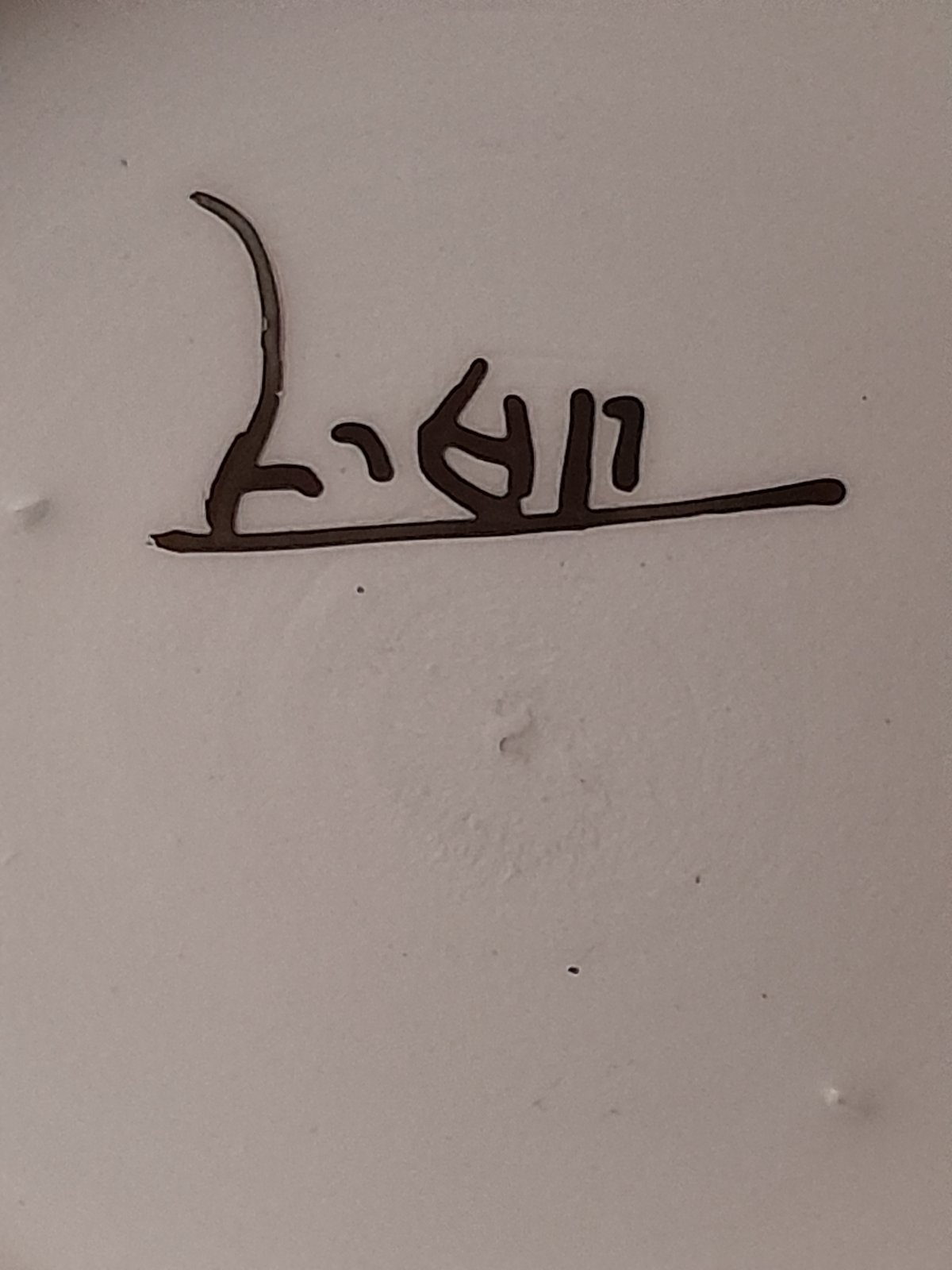
- •Absence of any visible manufacturer's mark or artist's signature on the tiles.
- •The generic nature of the style makes precise attribution challenging without further marks.
WHAT WOULD IMPROVE CERTAINTY
- →Examine the reverse side of the individual tiles (if possible without damage) for any impressed marks or factory stamps that may be hidden by the backing.
- →Carefully inspect the edges of the tiles and frame using magnification to identify any faint marks not immediately visible.
- →A UV light examination could reveal any areas of significant repair or overpainting on the tiles that are not apparent to the naked eye.
ESTIMATED VALUE
Updated: Feb 27, 2026
- Market comparables from auctions & retail
- Condition, completeness & craftsmanship
- Current collector demand & trends
- Low = quick sale, high = patient seller
For informational purposes only, not a formal appraisal.

ABOUT DECORATIVE OBJECTS
Ceramics, silver, porcelain, glassware, and decorative arts.
Browse all Decorative ObjectsSHARE THIS CURIOSITY
Have your own curiosities to discover?
Scan Your Curiosity
COMMENTS
No comments yet. Be the first to share your thoughts!
Sign in to leave a comment