Chinese Brass 'Dragon' Dish with Apocryphal Mark
QUICK FACTS
Categories
Era
Early 20th Century to Mid-20th Century
Origin
🇨🇳 China
Rarity
Average (4/10)
Discovered
Feb 20, 2026
1 weeks ago
DESCRIPTION
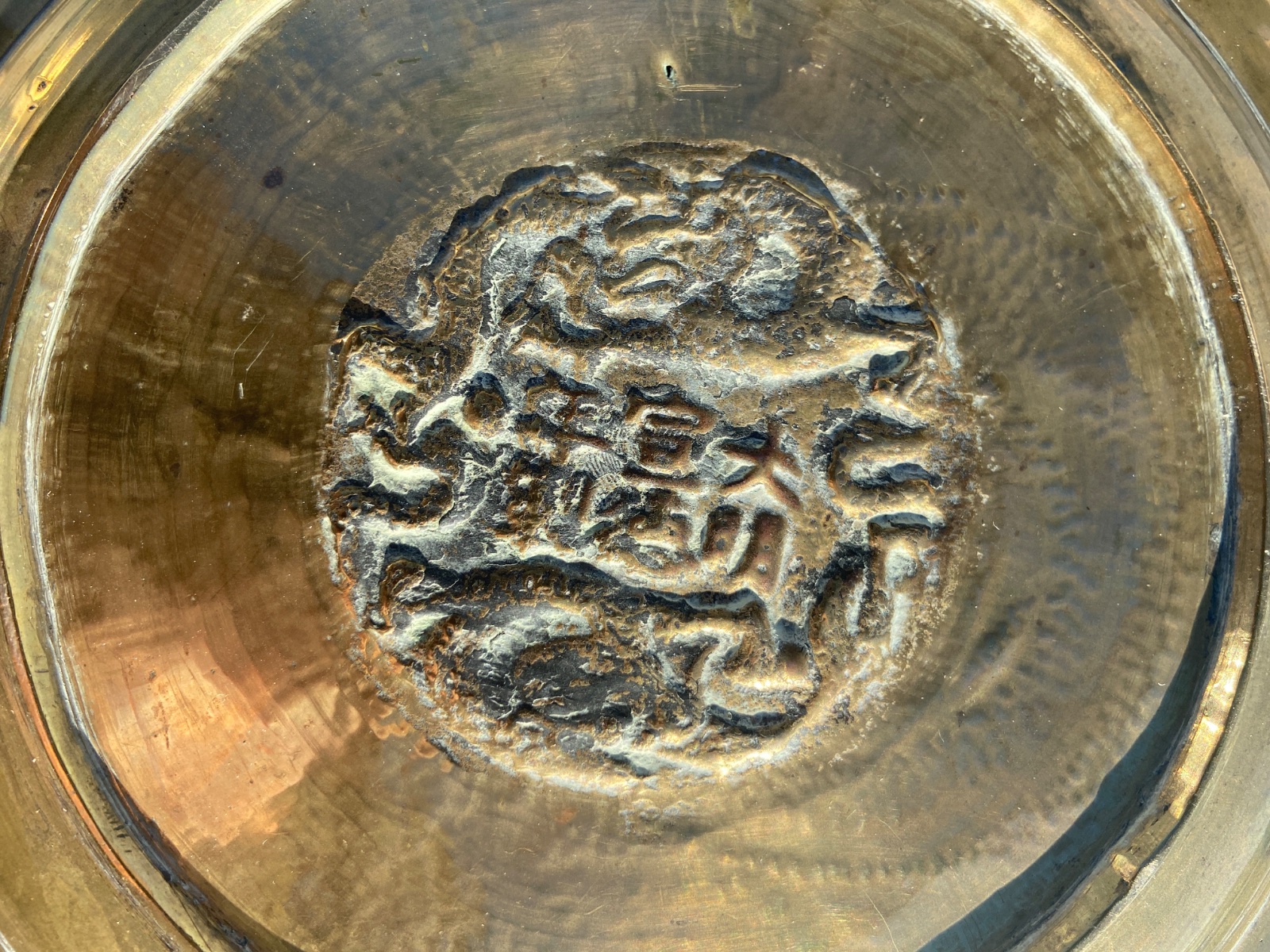
This is a circular brass dish, likely intended for decorative use, featuring extensive repoussé work. The primary motif on the obverse is a finely detailed, five-clawed dragon encircling a central boss, which is itself decorated with a geometric pattern. The border is adorned with Greek key (meander) patterns and auspicious cloud motifs. The reverse features a raised central mark, deeply recessed into the brass, which appears to be a stylized Imperial reign mark. The overall presentation is characteristic of Chinese brassware produced for both domestic and export markets.
CULTURAL ECHOES
Where This Object Echoes
The five-clawed dragon motif is a direct reference to the sovereign power of the Chinese Emperor, a symbol of authority and good fortune.
Repoussé and chased metalwork, particularly featuring mythological creatures and geometric borders, is a long-standing tradition across China, Korea, and Japan.
Ritual & Ceremonial Use
- •Historically, such dishes might have been used in ceremonial offerings or for displaying auspicious items during festivals, though later examples were largely decorative.
- •The aesthetic appreciation of detailed metalwork as a form of artistic expression and craftsmanship for domestic adornment or export trade.
Meaning Through Time
The dragon motif strictly conveyed imperial authority and was an exclusive symbol, its usage strictly controlled by sumptuary laws.
The dragon motif became more broadly used in commercial art and decorative items, often for export, losing some of its strict imperial exclusivity while retaining its auspicious symbolism.
HISTORICAL STORY
DID YOU KNOW?
Despite their fearsome appearance, Chinese dragons are typically benevolent beings, often associated with water and rain, bringing prosperity and good harvests.
The 'Greek key' or meander pattern, commonly found in Chinese art, is known as the 'hui' pattern (回字紋) and symbolizes eternity, wealth, and continuous good fortune.
MATERIAL & CONDITION
Surface
The surface is patinated brass, with areas of darker oxidation and verdigris, particularly in the recessed areas of the repoussé design. The raised surfaces show more polished or rubbed brass. The central mark on the reverse is deeply cast or stamped, appearing almost crude in contrast to the relief work on the obverse.
Weight & Feel
Given its material and size, this dish would likely feel substantial and weighty in hand, commensurate with solid brass construction rather than lightweight sheet metal.
Condition
The dish exhibits clear signs of age and use, including overall oxidation, verdigris buildup in relief details, and some surface scratches consistent with handling and environmental exposure. No significant dents or structural damage are immediately apparent.
RARITY ANALYSIS
Typical antique shop fare. Requires some searching but regularly available. This is where most genuine antiques fall.
Typical Characteristics
- Standard antique shop items
- Regularly available
- Moderate collector interest
EXPERT ANALYSIS
Asian Art Specialist
The visual evidence clearly indicates Chinese decorative brassware with traditional motifs. My confidence in the 'estimated era' and 'authenticity risk' is moderate due to the ambiguity of the mark, which is a common challenge with such items. Further clarity on the mark would refine the assessment.
KEY EVIDENCE
- 1The primary material is brass, exhibiting typical patination and oxidation for its age.
- 2The obverse features a prominent five-clawed dragon motif, a classic symbol of Chinese imperial power and good fortune.
- 3The reverse has a deeply impressed, highly stylized character mark which appears to be an apocryphal reign mark rather than an authentic one.
- 4Decorative elements include traditional Greek key (meander) patterns and cloud motifs, common in Chinese art.
- 5The repoussé technique is clearly visible, shaping the metal from the reverse to create the raised design on the front.
UNCERTAINTIES
- •The reign mark on the reverse is indistinct and highly stylized, which often suggests it is a decorative or apocryphal mark rather than a genuine imperial one.
- •The overall quality, while good, doesn't immediately suggest a high-end Imperial workshop, but rather commercial production typical of the early to mid-20th century.
WHAT WOULD IMPROVE CERTAINTY
- →A magnified close-up image of the reign mark on the reverse would be crucial for any attempt at translation or identification.
- →Examination of the foot-rim (if any) and overall construction to assess the manufacturing techniques and potential age.
- →Comparison with known examples of documented Chinese brassware from different periods to pinpoint stylistic nuances.
- →Consider material analysis to confirm the composition of the alloy more precisely if there are doubts about it being brass.
ESTIMATED VALUE
Updated: Feb 27, 2026
- Market comparables from auctions & retail
- Condition, completeness & craftsmanship
- Current collector demand & trends
- Low = quick sale, high = patient seller
For informational purposes only, not a formal appraisal.
SHARE THIS CURIOSITY
Have your own curiosities to discover?
Scan Your Curiosity
COMMENTS
No comments yet. Be the first to share your thoughts!
Sign in to leave a comment